Who Buys Pahrump Land With Easement Issues?
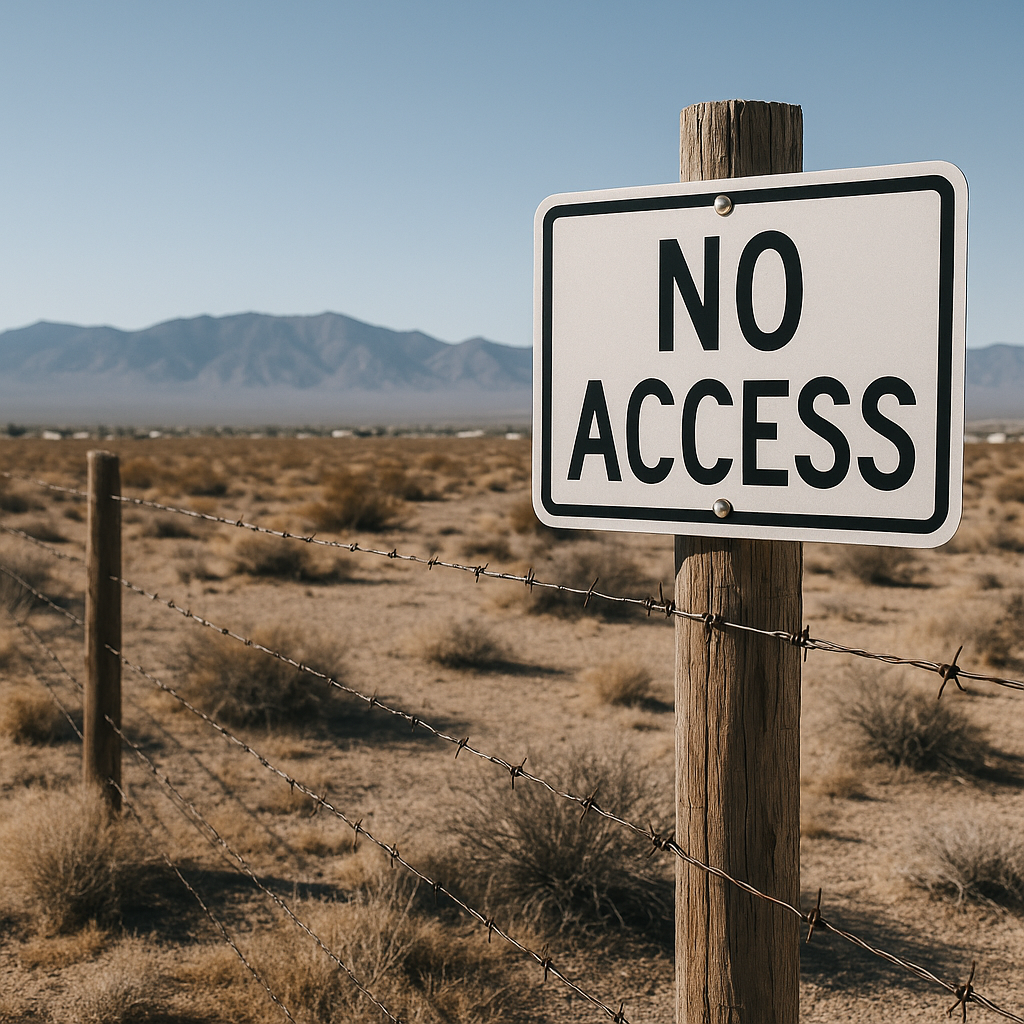
A Pahrump parcel with an easement issue is not automatically unsellable. But the right buyer depends on a distinction many owners miss: does the parcel have a recorded legal right of access, an access route that only appears to exist, or no documented access at all?
That distinction changes who will make an offer, what they will need to review, and how much uncertainty they will price into the deal.
For an absentee owner asking who buys Pahrump land with easement issues, the most realistic buyers are usually land investors, adjacent owners, small developers with local due-diligence capacity, and direct land buyers willing to evaluate a nonstandard title or access file. A conventional retail buyer seeking an immediate homesite is often less likely to proceed until the access question is resolved.
First, separate “easement issue” from “no access”
Owners often use these phrases interchangeably, but they describe very different situations.
A recorded access easement exists, but it needs interpretation
This is generally the most marketable category. The deed, recorded plat, easement document, or title records may establish an ingress-and-egress easement, yet a buyer still needs to know where it lies and whether its terms allow the intended use.
Common questions include:
- Is the easement appurtenant to the parcel, or personal to a named party?
- Does it permit vehicle access, utilities, or both?
- Is the route described by a recorded document or only by a broad legal description?
- Is the access strip wide enough for anticipated use?
- Is someone blocking, fencing, or using the route in a way that could create a dispute?
A buyer may still be interested if the documentation is clear and the physical route is usable. They will not necessarily value the lot like a similar parcel with direct public-road frontage, but the issue may be manageable.
There is a road or trail to the property, but the legal right is unclear
This is common in rural areas. A dirt road may appear on aerial imagery, be used by neighbors, or have existed for years. None of that alone proves that the owner has a legal right to use it.
A buyer will want to know who owns the land under the route, whether the route is public or private, and whether an easement was ever recorded. They may also investigate whether the route crosses Bureau of Land Management land, private parcels, or a combination of both. Do not assume a visible road creates permanent access.
This category can still attract investors and neighbors, but expect more conservative offers and a longer diligence period.
The parcel appears landlocked, with no recorded access located yet
A landlocked parcel has the narrowest buyer pool. It may have potential access rights under facts that need legal review, but a seller should not advertise that possibility as a certainty.
Buyers who consider these parcels tend to be experienced land investors, adjacent owners who can combine the parcel with their own land, or specialists prepared to pursue an access solution after closing. Their offers normally reflect the cost, time, and risk of that work.
The buyer most likely to fit each situation
Rather than asking for one generic “cash offer,” match the buyer to the access profile.
| Access profile | Likely buyer | What drives the offer |
|---|---|---|
| Recorded easement with usable route | Investor, homesite buyer, builder, local developer | Terms of easement, road condition, utilities, zoning and site feasibility |
| Recorded easement but route is blocked or disputed | Investor or buyer experienced with title/neighbor issues | Strength of documents, likely cost of resolution, cooperation of affected owners |
| Physical route but no clear recorded right | Land investor, adjacent owner, speculative buyer | Ownership beneath route, title findings, chance of documenting access |
| No known access | Adjacent owner or high-risk land investor | Parcel size, strategic value, probability and cost of creating access |
An adjacent owner deserves special attention. A parcel with weak access can be far more valuable to the person whose property it touches than to a buyer seeking a stand-alone homesite. The neighbor may gain acreage, privacy, room for a future structure, or control over a boundary. That does not mean they will pay a premium, but it can create a practical sale path.
What a serious buyer will ask for before making a meaningful offer
The fastest way to lose a credible buyer is to describe an easement vaguely and then be unable to supply the underlying records. You do not need to solve every access question before seeking offers, but you should make it possible for a buyer to evaluate the issue.
Gather these items first:
- The vesting deed and prior deed, if available. Review the legal description and any references to easements, exceptions, or recorded maps.
- The parcel number and current county information. In Pahrump, buyers commonly begin with the Nye County Assessor parcel record, but assessor mapping is not a legal access determination.
- Any title policy, preliminary title report, or recorded easement document you have. Even an older policy can point a title company or buyer toward relevant recording information.
- A plat, parcel map, survey, or legal-description exhibit. This may show whether the claimed access is defined, though it should not be treated as current legal advice.
- Recent photos or video of the approach route. Show gates, fences, washes, road surface, signs, and the point where the route reaches the parcel. Date the photos and avoid implying that use of the road is authorized merely because it is open.
- Any correspondence about access. This could include letters from neighbors, road-maintenance arrangements, or prior title communications. Share it honestly; undisclosed disputes tend to emerge during diligence anyway.
A buyer who purchases land directly can often evaluate a complicated file more efficiently than a retail buyer relying on standard financing. Still, “cash” does not mean “no questions.” A responsible buyer will want title and access reviewed before closing.
Price the uncertainty, not just the acreage
Two nearby parcels can have similar size, zoning, and desert views but very different value if one fronts a maintained public road and the other depends on an uncertain private route.
Avoid using only nearby asking prices to set expectations. Ask instead: Would the comparable parcel still command that price if the next owner had to prove or negotiate access?
A recorded, usable easement may create a discount but retain ordinary land-market appeal. An undocumented route usually brings a larger discount because the buyer must spend money on title review, possible surveying, negotiations, legal counsel, and potentially road work. A truly landlocked parcel may be valued chiefly for assemblage or speculation.
The sensible approach is not to hide the problem in hopes of receiving a higher offer. It is to let qualified buyers price a defined risk. Clear documentation can narrow that risk; unsupported assurances cannot.
Should you fix the easement before selling?
Sometimes, but not always.
It may be worth pursuing clarification before sale when a modest, cooperative step could materially expand the buyer pool—for example, obtaining a properly drafted and recorded access easement from a willing neighbor. If the parcel otherwise has strong homesite potential, the added certainty may justify the effort.
It may not make sense when the access path is disputed, several owners are involved, the route crosses difficult terrain, or the likely resolution requires substantial legal and survey expense. In that case, selling as-is to a buyer who understands the constraint may be the better business decision.
Be cautious about paying for improvements before confirming that the legal right to use the route exists. Grading a road, placing gravel, or removing vegetation does not create an easement and can create new conflict if done without authority.
How to describe the parcel without creating problems
Use facts, not conclusions. A careful description might say:
“Parcel is accessed in practice by an unpaved route from [road name]. Seller has [recorded easement document / no confirmed recorded access document]. Buyer should independently verify legal access, road condition, permitted use, and development feasibility.”
If you have a recorded easement, identify its recording reference if available. If you do not know whether the route is legally valid, say so. Phrases such as “guaranteed access,” “private road included,” or “buildable with road access” should not be used unless the records support them.
How Ultimate Land Deals can be relevant
Ultimate Land Deals evaluates off-market vacant land directly from owners and can review whether a parcel fits a direct purchase, an assignment to an appropriate buyer, or a resale strategy after closing. For a Pahrump lot with access uncertainty, the useful starting point is the actual document trail—not a claim that every easement issue can be solved.
Providing the parcel number, deed, any title paperwork, and what you know about the route allows a buyer to determine whether the issue is a manageable recorded-easement question or a higher-risk access problem. If the property is not a fit for a straightforward acquisition, that conclusion is still more useful than spending months marketing it to buyers who expect uncomplicated road frontage.
Frequently asked questions
Can I sell Pahrump land if the easement is not maintained?
Yes, but condition matters. A valid access easement does not necessarily obligate someone else to grade or repair the road. Buyers will consider who has maintenance rights or responsibilities, whether the route is passable in ordinary conditions, and what work may be needed for their intended use.
Does a dirt road on Google Maps prove legal access?
No. Aerial or mapping imagery can help identify a route, but it does not establish ownership, public status, or easement rights. A title review and recorded documents are more important.
Can a title company tell me whether my parcel has access?
A title company can identify recorded matters affecting title and may raise access-related exceptions or concerns. Whether a particular easement provides adequate legal and practical access for a planned use can require further review by a surveyor, land-use professional, or attorney. This article is not legal advice.
Should I contact neighbors before seeking buyers?
It can be worthwhile when a neighbor may be a natural buyer or when a cooperative neighbor could clarify an existing route. Do not pressure a neighbor or make assumptions about their property rights. If the relationship is contentious, let title documentation and professional advice guide the next step.