
Who May Buy Land in Port Charlotte? Seller Guide
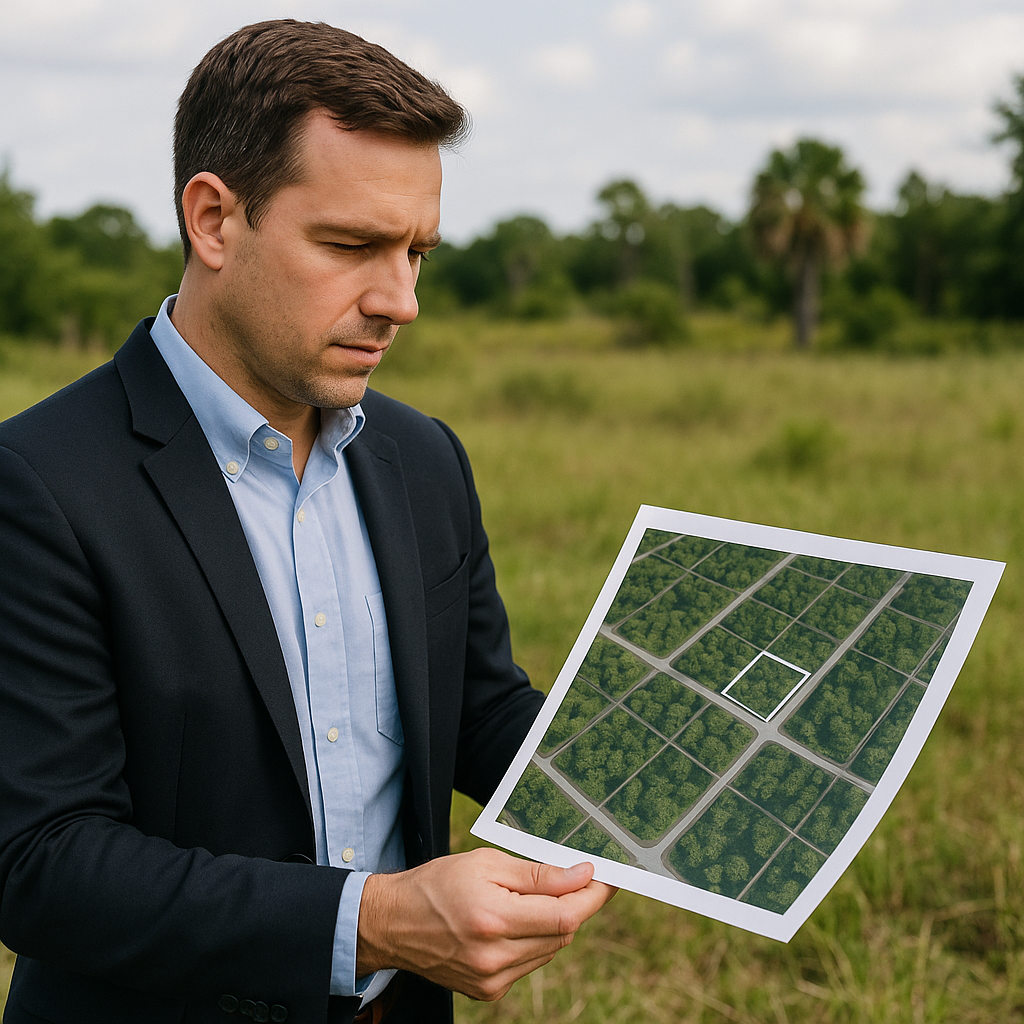
A person or company may express interest in a Port Charlotte lot, but the useful question is whether the buyer’s written terms fit the specific parcel and your selling goals. Confirm the parcel, ask what the buyer has reviewed, and read the agreement before deciding.
Ultimate Land Deals states on its homepage that it purchases vacant Florida land and lists Port Charlotte among the areas where it buys. On a company-authored Port Charlotte guide, Ultimate Land Deals says it specializes in off-market vacant-land acquisition and may purchase and hold or resell land, assign a purchase contract, or close and offer property to builders, developers, or investors. Those statements describe the company’s own stated approach; ask how any proposed transaction will be handled for your parcel in writing. Ultimate Land Deals’ Port Charlotte guide
Start with the parcel and the written offer
Before relying on a buyer’s description of the lot or a promised closing path, assemble the parcel ID, legal description, tax information, and any surveys or notices you have. Ask the potential buyer:
- What parcel information have you reviewed?
- What due-diligence items remain?
- What contingencies, cancellation rights, and closing date are in the proposed agreement?
- Is the named buyer the party expected to close, or does the agreement address assignment, nomination, or substitution?
- Which closing agent will handle the transaction, and what remote-signing or notarization steps does that agent require?
If an agreement is unclear, ask a title company, qualified real-estate attorney, or other qualified local professional to explain the documents and title-related questions before you sign.
Use official records as a starting point
Charlotte County’s Official Records system includes a dedicated Legal Description search, with fields for a legal description, parcel ID number, date range, and document type. You can use it to locate recorded documents associated with your parcel or to identify names appearing in prior transactions.
The Clerk advises users that it provides the electronic system as a public service without a warranty or guarantee of accuracy or reliability, and it recommends searching possible spelling variations of proper names. Clerk electronic-records notice
Use a record search to prepare questions for a potential buyer and for your closing professional. Repeated appearances by a name in records can be a reason to ask that party directly about current interest in your parcel; it is not a substitute for reviewing the proposed transaction.
Verify parcel conditions with county resources
Charlotte County’s GIS layer information describes mapping layers that include parcel boundaries, zoning, future land use, FEMA flood zones, road-maintenance entities, MSBU taxing districts, and the City of Punta Gorda boundary. Review the applicable layers for the exact parcel rather than relying on a neighborhood label or listing description.
For land use, the County explains that future land-use designations establish general ranges of uses, while zoning districts contain specific permitted-use lists. The County also states that a future land-use designation does not guarantee the maximum development allowed on a specific site. Charlotte County future land-use guidance
Flood information is a separate question. Charlotte County provides a floodplain-information platform for looking up flood-zone information and base flood elevation. Its flood page also explains that flooding can occur throughout the County. Charlotte County flood information
Ask a buyer which parcel conditions affect its offer and whether any of those conditions are contract contingencies.
Keep tax-deed search results in context
Charlotte County maintains a separate tax-deed search with fields including sale date, certificate number, case number, parcel ID, applicant, owner, status, base bid, high bid, and surplus. If you review those results, identify the parcel and the result’s context before comparing it with a proposed private sale.
Compare sale routes by terms, not labels
Whether you contact a direct buyer, list through an agent, or sell independently, compare the same core terms:
- Price and expected net proceeds;
- Due-diligence and cancellation provisions;
- Earnest-money terms;
- Closing date and extension rights;
- Closing costs and other stated charges;
- Assignment, nomination, or substitution language; and
- The closing agent’s required documents and process.
A written offer gives you specific terms to review. Do not assume that a buyer’s label, stated plan, or use of the word “cash” answers those questions.
FAQs
Can I research names connected with local land transactions?
Yes. The Clerk’s Official Records system has a Legal Description search. Search spelling variations as the Clerk recommends, then ask a potential buyer directly whether it is interested in your parcel and on what terms.
Should I rely on a buyer’s statement that the lot supports a particular use?
Ask what the buyer has verified for the parcel. County guidance distinguishes future land use from zoning and says future land use does not guarantee maximum development on a specific site.
Can a buyer assign my contract?
Review the particular agreement for any assignment, nomination, or substitution language. If the effect of that language is important to your decision, request clarification before signing.
Can I complete the sale remotely?
Ask the proposed closing agent what signing, notarization, identification, document-delivery, and funding steps it requires for your transaction.
Sources
- Ultimate Land Deals homepage
- Ultimate Land Deals: Port Charlotte Florida Off Market Residential Lots Guide
- Charlotte County Clerk Legal Description search
- Charlotte County Clerk electronic-records notice
- Charlotte County GIS layer information
- Charlotte County future land-use guidance
- Charlotte County flood information
- Charlotte County tax-deed search