
Sugar Mill Woods Lots: Builder Parcel Review
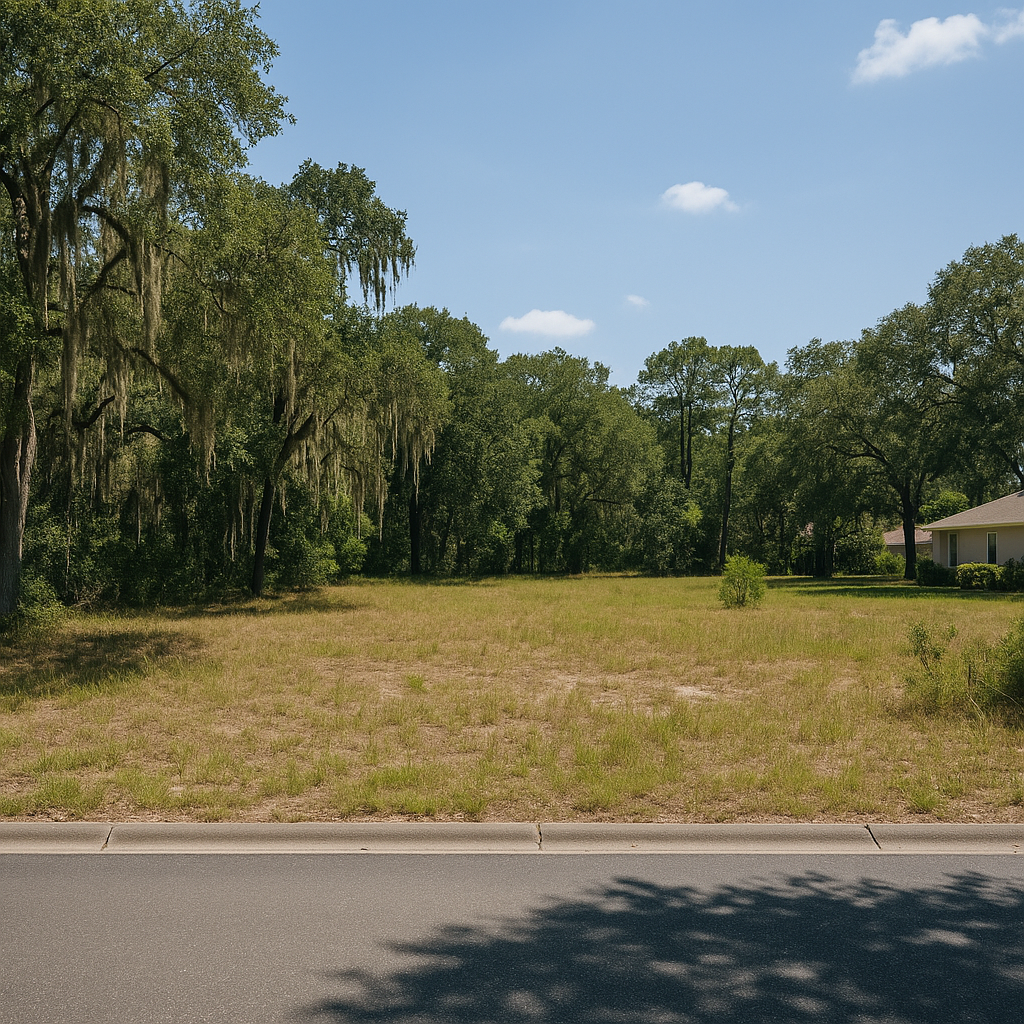
A vacant Sugar Mill Woods parcel should be reviewed against the builder’s intended project before contract protections are removed. Start with the exact parcel, then verify the current records, wastewater and utility questions, site conditions, and any applicable association documents. Ultimate Land Deals publishes information about off-market Florida land opportunities; a subdivision name or seller description should not replace parcel-level review.
Vacant, available, and ready for a specific plan are different questions
A listing or owner conversation may describe a lot as “buildable” because homes are nearby. That can justify further review, but it does not answer whether the parcel fits a particular home plan.
| Term | Useful meaning |
|---|---|
| Vacant | The parcel is presented as having no existing home. |
| Available | An owner may be willing to discuss a sale. |
| Suitable for the proposed plan | A conclusion to evaluate using the exact parcel, intended home, current records, and applicable review processes. |
Start with a parcel identity file
Before discussing a finished-lot price, gather the parcel identification number, legal description, mapped location, address if assigned, owner information, and the subdivision or village name used in available records.
Citrus County’s GIS Address Lookup provides fields for property summaries, setbacks, utilities, future land use, current zoning, building permits, other applications, and code-compliance information. The County states that its GIS information must be independently verified, so use it to organize questions rather than as a final determination. Citrus County Property Appraiser records also offer owner, address, real-property, assessment-roll, sales-data, parcel-map, and aerial-search tools.
A mismatch between the mapped parcel, legal description, seller information, or lot being discussed should be resolved before the deal advances.
Evaluate the intended home, not just the neighborhood
Once a seller is receptive, review the lot against a specific concept, such as the proposed footprint, driveway location, garage orientation, drainage approach, and wastewater assumption.
Confirm the current land-use information
Review the GIS zoning, future-land-use, and setback fields for the specific parcel, then ask the relevant local offices what current requirements apply to the proposed use. Identify recorded plats, easements, and other documents that should be reviewed for the proposed layout.
Useful questions include:
- Does the proposed home fit the current parcel information and applicable dimensional requirements?
- What setbacks, easements, or other recorded items should the team account for in the layout?
- What parcel-specific questions should be addressed before a permit application is prepared?
Address wastewater and utility questions early
The County GIS page advises users of property not on public sewer to check septic requirements with the Health Department. The Florida Department of Health in Citrus County’s onsite sewage page states that county health department offices continue to handle septic permitting and inspection.
For a proposed home, ask what information is needed for the onsite sewage review and whether the planned house placement and bedroom count affect that process. If the project depends on public water, sewer, or another utility connection, obtain current information from the applicable provider.
Identify any applicable association
“Sugar Mill Woods” should not be treated as a single set of association controls. Confirm whether the particular lot is tied to a master association, sub-association, or other governing documents.
For example, Cypress Village POA’s seller information describes Cypress Village as a master association with 13 sub-associations and says additional restrictions may exist. It also identifies governing documents, financial statements, budgets, and deed-restriction information among materials sellers should provide prospective buyers. This supports verifying the association connected to the specific lot; it does not establish that every Sugar Mill Woods parcel is in Cypress Village.
Request the applicable governing documents and current association information during diligence. Confirm the requirements relevant to the proposed project directly with the association or appropriate professional.
Structure diligence around open questions
The agreement and diligence process should identify the facts the buyer needs to verify for the intended project. Depending on the parcel and transaction, those questions may concern the legal description, title documents, survey information, current zoning and land-use information, wastewater or utility path, site layout, and association records.
Where Ultimate Land Deals introduces an owner-held or off-market parcel, request the parcel information and available documents, then review the written purchase terms. Its Florida off-market guide describes direct purchases, assignments, and resales as possible transaction structures, so the buyer should confirm the named parties, assignment provisions, diligence period, deposits, and closing terms in the agreement itself. Read the company’s Florida off-market land guide.
A practical acquisition checklist
Before making a final acquisition decision, the team should be able to address:
- What exact parcel is being considered, and do the available records match the transaction?
- What specific home or use is being evaluated?
- What current zoning, future-land-use, setback, and application information appears in County records?
- What wastewater and utility questions remain for the proposed plan?
- Which association, if any, applies, and which documents should be reviewed?
- Which answers remain open and should be addressed during diligence?
If key answers remain unresolved, the lot may still be a lead, but the buyer should keep those questions visible in the diligence process rather than treating the subdivision name as a project conclusion.
FAQs
Can a builder use Citrus County GIS as the final answer on a lot?
No. Citrus County says the GIS information must be independently verified. It is a useful starting point for identifying zoning, future land use, setbacks, utilities, permits, applications, and related questions for the parcel.
When should septic questions be raised?
Raise them while evaluating the proposed project. Citrus County GIS directs users to check septic requirements with the Health Department when a property is not on public sewer, and the Citrus County Health Department handles septic permitting and inspection.
Should association documents be reviewed during diligence?
Yes. Confirm the association tied to the specific lot and request the relevant governing documents and current information before relying on a proposed project concept.