Sell Vacant Land in North Carolina Fast for Cash
If you want to sell vacant land in North Carolina—especially as an out-of-state or absentee owner—you’ve probably realized it’s very different from selling a house.
No structure. No rental income. No traditional buyers dreaming about a kitchen remodel.
Instead, you’re dealing with zoning, utilities, access, soil tests, and a smaller pool of buyers who know exactly what they want.
This guide walks you step by step through how to sell vacant land in North Carolina quickly and safely, what to watch out for, and how Ultimate Land Deals can make it a fast, digital, no-agent process.
Why Selling Vacant Land in North Carolina Is Different
Selling a house in North Carolina is familiar: list it on the MLS, host showings, wait for offers, then close.
To sell vacant land in North Carolina, you’re often facing:
- Fewer retail buyers – Most buyers are investors, builders, or developers.
- More due diligence – Survey issues, wetlands, soil/perc tests, access, zoning, and floodplain questions.
- Longer time on market – Land often sits for months or even years when listed traditionally.
- Pricing challenges – Few comparable sales ("comps"), and values can vary block to block.
For absentee landowners, the challenge is bigger:
- You may have never visited the property.
- The land might be a tax burden instead of an asset.
- Coordinating agents, showings, and paperwork from another state is a hassle.
This is exactly the problem Ultimate Land Deals was built to solve.
Step 1: Get Clear on Your Land and Your Goals
Before you try to sell vacant land in North Carolina, gather the basics so you can speak confidently with buyers or professionals.
Key Property Details to Collect
You don’t need to live in North Carolina to do this. Most information is online:
- County & parcel number (APN) – Found on your tax bill or county property appraiser website.
- Acreage & dimensions – From county GIS maps or previous surveys.
- Zoning – Residential, agricultural, commercial, etc.; affects who will want to buy.
- Access – Paved road, gravel road, or landlocked (no legal access)?
- Utilities – Availability of water, sewer, electricity, and internet.
- HOA/POA – Any homeowner or property owner association restrictions or fees.
- Back taxes or liens – Check your tax status; buyers will ask (or discover in title).
Clarify Your Objective
Ask yourself:
- Do you want to maximize price, even if it takes 6–12 months?
- Or do you want to sell vacant land in North Carolina fast, even if that means a discount for speed and certainty?
There is no wrong answer—but your goal will determine the best selling strategy.
Step 2: Understand the North Carolina Land Market
North Carolina is a big, diverse state. To sell vacant land in North Carolina smartly, you need a sense of the local market dynamics.
Where Is Demand Strong?
Demand varies significantly by region:
- Charlotte & surrounding counties – Strong demand for infill lots and suburban development.
- Raleigh–Durham (Triangle) – High growth, strong buyer demand for residential and mixed-use land.
- Greensboro–Winston-Salem (Triad) – Steady residential and industrial interest.
- Coastal areas (Wilmington, Morehead City, Outer Banks) – Attractive but subject to flood zones and environmental rules.
- Western NC & mountains (Asheville, Boone) – Popular for resort, recreational, and second-home lots.
Rural acreage can also have value—but buyer pools are smaller and marketing is different.
Step 3: Price Your Land Realistically
The most critical step to sell vacant land in North Carolina is pricing it correctly from day one.
How to Research Comparable Land Sales
Use these tools and methods:
- County GIS & tax records – Look for recent vacant land sales near your parcel.
- Online platforms – LandWatch, Land.com, Zillow, Realtor.com (filter for land only).
- Local brokers’ listings – Even asking prices (not just sold prices) give ballpark expectations.
When analyzing comps, pay attention to:
- Location – Same county is not enough; look at nearby neighborhoods or subdivisions.
- Lot size – Price per acre can change drastically with lot size.
- Zoning & use – R-1 residential vs agricultural vs commercial.
- Topography & access – Steep slopes or no road access reduce value.
Set a Realistic Asking Price
To sell vacant land in North Carolina in a reasonable time frame, consider:
- Pricing slightly under similar listings if you want to move quickly.
- Accounting for utilities, access, and buildability—prime, build-ready lots can command higher prices.
- Understanding that retail listing prices ≠ actual market value—many land listings are overpriced and sit for years.
If you’re unsure, a local land agent or professional land buyer can give you a pricing opinion.
Step 4: Choose How You Want to Sell
To sell vacant land in North Carolina, you typically have four main options. Each has trade-offs in speed, price, and effort.
1. List with a Real Estate Agent
Pros:
- Agent handles marketing, buyer inquiries, and paperwork.
- Potential for higher retail price if the market is hot.
Cons:
- Land specialists are fewer than residential agents—many agents are not land experts.
- Commissions typically 6% or more of the sale price.
- Listings can sit for months or years, especially in slow or rural markets.
- You may need to sign a long-term listing agreement.
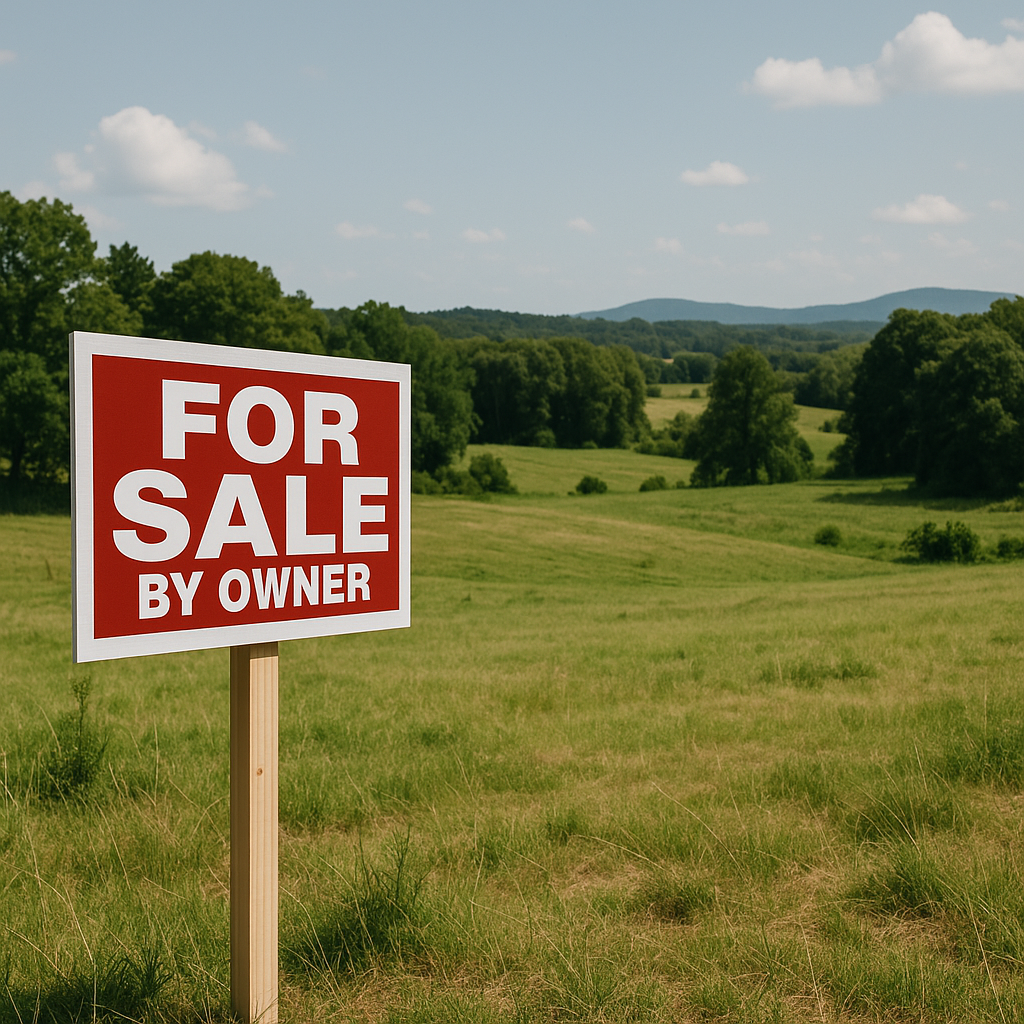
2. Sell By Owner (FSBO)
Pros:
- No agent commission.
- Full control over price and negotiations.
Cons:
- You handle everything: marketing, calls, showings, contracts, and coordination with title.
- Lower visibility without MLS access.
- Easy to overlook important details (disclosures, due diligence, contract language).
3. List on Land Marketplaces & Classifieds
You can post your property on:
- Land-specific sites like LandWatch, Land And Farm, or LandFlip.
- General sites like Zillow, Facebook Marketplace, or Craigslist.
Pros:
- Lower cost than hiring an agent.
- Exposure to land investors and builders.
Cons:
- You still conduct all negotiations and handle vetting buyers.
- Buyer inquiries can be time-consuming and unqualified.
4. Sell Directly to a Professional Land Buyer (Cash Buyer)
This is where Ultimate Land Deals operates.
Pros:
- Fast cash offers with no bank financing.
- No agents, no showings, no MLS.
- Remote-friendly: everything handled digitally and via title company.
- Often no repairs, no clearing, no improvements required.
Cons:
- Cash investors pay below top-of-market retail in exchange for certainty, speed, and handling all the legwork.
If your top goal is to sell vacant land in North Carolina quickly and simply, especially as an absentee owner, this route is usually the most predictable.
Step 5: Prepare Your Land (and Your Paperwork)
You don’t need to spend money improving the land, but a little preparation makes it easier to sell vacant land in North Carolina.
Minimal Physical Prep
- Clear basic debris if feasible (trash, obvious hazards).
- Mark approximate boundaries if you know them (with flags or stakes) so visitors can orient themselves.
- Check access – Make sure there’s a visible path or road entrance if allowed.
Most professional buyers, builders, and developers are comfortable buying land in “as-is” condition, but clarity helps them evaluate faster.
Organize Your Documents
Gather:
- Deed or closing statement from when you bought the land.
- Any surveys, soil tests, or perc test results.
- Any HOA/POA documents and fee information.
- Latest property tax statement.
You can still sell vacant land in North Carolina without all of this on hand, but it speeds up due diligence and closing.
Step 6: Market Your Property Effectively (If Not Selling Direct to a Buyer)
If you decide not to sell directly to a cash buyer and instead list it yourself or with an agent, effective marketing is crucial.
Create a Strong Listing Description
Highlight:
- Location – Distance to major cities, towns, highways, or attractions.
- Allowed uses – Residential, mobile home, recreational, agricultural, etc.
- Utilities – Availability of water, sewer/septic, power, internet.
- Access & roads – Paved, gravel, private.
- Nearby amenities – Schools, shopping, lakes, mountains, coast, parks.
Use clear, honest language. Experienced buyers will verify everything.
Include Quality Maps and Photos
Most land buyers start online. Provide:
- Satellite images with the parcel clearly outlined.
- Topo maps if slope or elevation is relevant.
- Plat or survey if available.
- Ground photos showing road frontage, access, and general terrain.
The easier it is for a buyer to understand your property from their computer, the faster you can sell vacant land in North Carolina without constant questions.
How Ultimate Land Deals Helps You Sell Vacant Land in North Carolina
Ultimate Land Deals isn’t just another land wholesaler. We’re a specialized vacant land company that works directly with property owners, builders, developers, and investors across Florida, Arizona, Nevada, North Carolina, and other growing markets in the USA.
Here’s how we work when you want to sell vacant land in North Carolina.
1. We Make a Fast, Data-Driven Cash Offer
You contact us with your property details (or we contact you through direct mail, phone, or online). Then we:
- Pull county records, GIS data, and market comps.
- Evaluate zoning, access, utilities, and buildability.
- Consider demand from our network of builders, developers, and investors.
Based on this, we present you with a straightforward cash offer—no obligation.
2. We Decide the Best Strategy Behind the Scenes
Once you accept our offer, we handle the strategy. For each parcel in North Carolina, we may:
- Buy it directly from you and hold it.
- Assign the contract to another pre-screened buyer (like a builder or investor).
- Close on it, then resell it to our end buyer network.
You don’t have to worry which route we use—the price and terms we agree with you do not change based on our internal strategy.
3. We Coordinate the Entire Transaction for You
One of the biggest headaches when trying to sell vacant land in North Carolina as an absentee owner is managing the process remotely.
We streamline it by:
- Working with a reputable local title company or attorney.
- Handling title searches, due diligence, and required paperwork.
- Using email, e-signatures, and remote notarization (where allowed) so you don’t have to travel.
You sign your documents, the title company handles recording and disbursement, and you receive your funds—often by wire transfer or overnight check.
4. We Keep It Simple: No Agents, No Hidden Fees
When you sell vacant land in North Carolina to Ultimate Land Deals:
- There are no real estate agent commissions.
- We typically cover most standard closing costs.
- There are no marketing expenses, no showings, no open houses.
Our goal is straightforward: give you a fast, fair, and transparent exit from land you no longer want, while we focus on matching properties with builders, developers, and investors who need them.
When a Direct Cash Sale Makes the Most Sense
Selling through an agent or by owner can work—but it’s not for everyone. A direct sale to a company like Ultimate Land Deals is often the best fit if:
- You’re an absentee landowner who doesn’t want to travel to North Carolina.
- You’ve inherited land and don’t know what to do with it.
- You’re tired of paying property taxes on land you’re not using.
- The land has issues (overgrown, remote, access questions) that scare away retail buyers.
- You want to sell vacant land in North Carolina quickly to free up cash for other uses.
If any of these describe your situation, speed, certainty, and simplicity may matter more than squeezing out every last dollar.
How to Get Started Selling Your North Carolina Land to Ultimate Land Deals
If you’re ready to explore a simple way to sell vacant land in North Carolina, here’s how to start:
Gather your basic property details
- County, parcel number (APN), approximate size, and any documents you have.
Reach out to Ultimate Land Deals
- Contact us through our website or respond to our mail/phone outreach with your parcel information.
Receive your no-obligation cash offer
- We’ll evaluate your land and present a clear offer and timeline.
Review and decide
- If the price and terms work for you, we move forward with title and closing. If not, there’s no pressure.
Close and get paid
- Sign documents remotely, and receive your funds once the title company completes the closing.
This entire process is designed so you can sell vacant land in North Carolina from anywhere in the country without disrupting your life.
Conclusion
To successfully sell vacant land in North Carolina, you need three things:
- A clear understanding of your land and local market conditions.
- A realistic pricing strategy and the right sales channel for your goals.
- A simple, reliable way to get from offer to closing—especially if you’re an absentee owner.
You can list with an agent, sell by owner, or market your property on land platforms. But if you value speed, convenience, and certainty over a long, uncertain listing process, selling directly to a professional land buyer can be the smartest route.
Ultimate Land Deals specializes in purchasing vacant land in North Carolina and other growth markets, providing fast cash offers, a digital, no-agent process, and full coordination from offer to closing.
If you’re ready to stop worrying about unused land and want a simple, straightforward way to move on, consider getting a cash offer from Ultimate Land Deals today and see how easy it can be to sell your vacant land in North Carolina.