
How to Sell Vacant Land in Burlington County, NJ
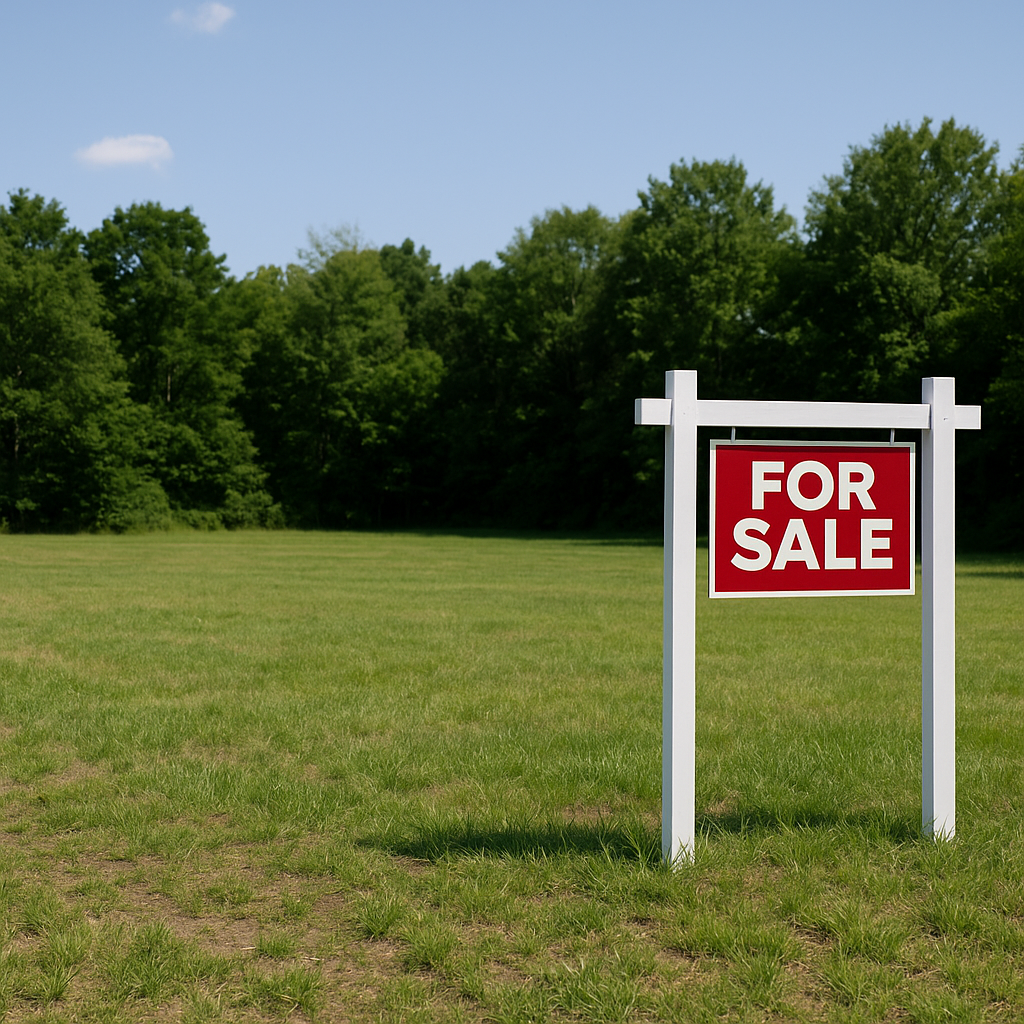
To sell vacant land in Burlington County, NJ, first determine what kind of buyer can realistically put the parcel to use. Burlington County is not one land market. A small residential lot near established utilities in Evesham or Mount Laurel is evaluated very differently from a wooded parcel in the Pinelands, a former farm field in Pemberton, or acreage along a rural road with no confirmed septic path.
That matters because the best sale route follows the land’s likely end use—not its acreage, tax assessment, or a nearby listing price. An absentee owner can save time and avoid weak offers by sorting the parcel into the right buyer category before marketing it or accepting a direct cash offer.
Start with a practical question: what can a buyer reasonably do with this parcel?
Do not begin with “What are acres selling for in Burlington County?” Start with a more useful question:
Could a buyer build, hold, farm, assemble, conserve, or divide this particular parcel—and what would have to be true for that plan to work?
The answer usually places vacant land into one of four sale paths.
1. A ready-to-build residential lot
This is the strongest category for many individual lot sales. It does not mean the lot merely sits in a residential zone. A builder or homeowner will usually want a credible path for:
- Legal road frontage and practical driveway access
- A house footprint that fits setbacks and lot coverage rules
- Public water and sewer availability, or an on-site septic solution
- No major wetland, floodplain, drainage, or easement conflict where the home must go
- A use permitted by the municipality and, where relevant, Pinelands regulations
A buildable-looking lot can still be a difficult sale if the usable area is much smaller than the parcel boundary suggests. For example, a two-acre wooded lot may have enough acreage on paper but limited upland area after wetlands, buffers, and setbacks are considered.
If your land falls into this category, likely buyers include local custom builders, neighboring owners, and buyers planning their own home. The sale materials should make the parcel easy to underwrite: tax map, lot dimensions, utility information, known approvals, surveys, and access details.
2. A parcel with development potential but unresolved work
Some Burlington County parcels have a plausible future use but are not ready for a permit or construction contract. They may require survey work, wetlands delineation, a septic investigation, utility-extension analysis, subdivision approvals, or confirmation of Pinelands constraints.
This is still sellable land. It simply appeals to a buyer willing to take on entitlement and site-risk work. That buyer will not value it like a finished building lot, because their purchase price must account for time, engineering costs, uncertainty, and the chance that the preferred plan does not receive approval.
Owners sometimes lose credibility by advertising this kind of land as “buildable” based only on a residential zoning label. A better description is specific and supportable: residentially zoned parcel; buyer to complete due diligence regarding wetlands, septic, utilities, and approvals. If you have prior engineering, soil, survey, or municipal correspondence, provide it rather than making conclusions the documents do not support.
3. Agricultural, recreational, or conservation-oriented land
Larger rural and wooded tracts may be more attractive to farmers, adjacent owners, hunting or recreation buyers, conservation-minded purchasers, or long-term land investors than to residential builders.
For these parcels, the important facts are different:
- Is there deeded and usable access?
- Is the property enrolled in farmland assessment, woodland management, or another preferential tax program?
- Are there conservation easements, agricultural restrictions, or deed restrictions?
- Is the parcel within the New Jersey Pinelands Area, and if so, what management area and development rules apply?
- Are there active farm leases, hunting arrangements, timber rights, or crop rights?
Farmland assessment can reduce property taxes, but it is not proof that the land can be subdivided or converted to residential use. Likewise, a property described locally as “farm land” may have environmental, access, or zoning limits that materially affect its buyer pool.
4. A hold, assemblage, or neighbor parcel
Not every parcel supports an immediate independent use. A narrow remnant, landlocked tract, undersized lot, or parcel with substantial site constraints may be worth most to an adjoining owner.
That does not make it worthless. It changes the marketing strategy. A neighbor may gain privacy, added yard area, access, drainage control, a future assemblage position, or protection against nearby development. Those benefits can produce a better outcome than broadly marketing the land as a speculative building site.
Before assuming a parcel is landlocked, review the deed and title records. Physical lack of a driveway is not always the same as lack of legal access, and a visible trail is not always a recorded right of way.
Build a sale file before asking buyers for a number
An absentee owner does not need to commission every possible study before selling. But buyers should receive enough accurate information to decide whether the parcel fits their criteria. A thin listing often attracts high preliminary prices followed by retrades, cancellations, or long inspection periods.
Gather these records first:
- Current tax information and parcel identifiers. Include municipality, block, lot, acreage shown by the assessor, annual taxes, and any special assessment or exemption information.
- The recorded deed and any survey you have. Older surveys can still be useful, but identify them by date rather than presenting them as current boundary verification.
- A location map and access description. Note the road name, whether the parcel fronts a public road, and any known recorded easement.
- Prior land-use documents. Save zoning letters, subdivision approvals, wetlands reports, septic records, Pinelands correspondence, engineering plans, and utility communications.
- Known occupancy or use arrangements. Disclose farm leases, hunting permissions, informal neighbor use, stored equipment, or access arrangements that may need to end before closing.
- Photographs that show the actual ground. Road frontage, entrances, terrain, woods, cleared areas, drainage features, utility poles, and neighboring development are more helpful than aerial imagery alone.
Do not alter, summarize, or overstate technical reports. Send the underlying document and let the buyer conduct its own review.
Check the three Burlington County issues most likely to change a land offer
Pinelands status
A significant portion of Burlington County is affected by Pinelands planning and environmental rules. A parcel’s municipality alone does not answer the question. The management area, zoning, existing approvals, and proposed use can all matter.
If the land is in or near the Pinelands Area, buyers may want to verify whether a proposed home, subdivision, commercial use, or utility plan is permitted and what approvals apply. This does not automatically prevent a sale. It means an offer based on an aggressive development assumption deserves more scrutiny.
Water, sewer, and septic reality
“Utilities nearby” is not the same as a connection being available at the lot line at an acceptable cost. Ask the relevant utility or municipality what service is available, whether capacity or extension requirements apply, and who pays for connection or main-extension work.
For land without public sewer, a buyer may need to establish that an on-site wastewater system can be designed and approved. Soil conditions, wetlands, lot layout, and local requirements can affect that outcome. If you have a prior septic or soil evaluation, disclose its date and scope; do not assume it remains valid for a new project.
Wetlands, flood conditions, and usable upland area
County GIS layers and online maps are valuable screening tools, but they are not a substitute for a site-specific delineation, survey, or regulatory determination. A buyer may need those items before committing to a particular building envelope.
For an owner, the practical task is not to solve every environmental question. It is to avoid pricing or representing the entire acreage as usable residential land when obvious constraints may reduce the workable site.
Choose the sale method that matches the parcel’s buyer pool
Once you understand the likely use, select a method with the right balance of price, time, and certainty.
| Sale route | Usually best for | Main tradeoff |
|---|---|---|
| Local broker or targeted land marketing | Clear residential lots, acreage with broad demand, or land where buyer competition may matter | More time, showings, commissions, and a higher chance of inspection contingencies |
| Direct sale to a builder or developer | Parcels that fit a specific building program or assemblage | Buyer may require a due-diligence period and price the land around project risk |
| Direct cash sale to a land buyer | Owners who value a simpler remote process, a defined closing timeline, and no listing process | The offer generally reflects the buyer’s carrying costs, diligence risk, and resale or development margin |
| Neighbor outreach | Undersized, constrained, landlocked, or privacy-value parcels | A small buyer pool can limit leverage unless more than one neighbor has a reason to buy |
Ultimate Land Deals evaluates off-market vacant land for direct purchase, assignment, or resale and can coordinate the process through title and closing. For an owner considering a direct sale, the useful first step is to provide the parcel location, tax identifier, access details, and any documents that bear on its use. A serious buyer should be able to explain what information it needs and what conditions remain before closing.
Compare offers by the assumption behind the price
A high offer is not necessarily the best offer if it depends on a use the buyer has not verified. Ask each buyer:
- What is your intended use or resale plan for the parcel?
- Is the offer contingent on zoning, wetlands, septic, utility, survey, or title review?
- How long is the inspection or due-diligence period?
- Can you cancel for any reason during that period?
- Who selects the title company, and who pays which closing costs?
- Is the buyer allowed to assign the contract?
- What deposit is being made, when does it become non-refundable, and what is the closing date?
An assignment provision is not automatically a problem. Some land buyers contract a parcel and then place it with a builder, investor, or end buyer. The important point is transparency: know whether the named purchaser plans to close with its own funds or may transfer its contractual position, and make sure the contract states your protections clearly.
A practical next move for an absentee owner
If you have not visited the land recently, start with a document review and a current look at the site before setting a price. Confirm the parcel has not developed an access issue, dumping problem, encroachment, unauthorized use, or changed drainage condition. Then identify which of the four buyer paths fits best.
That sequence is more valuable than chasing a generic per-acre number. In Burlington County, a parcel’s sale price and closing certainty turn on the buyer’s actual ability to use the land—not simply the fact that it is vacant.