
Selling a Summit, NJ Home With Redevelopment Potential
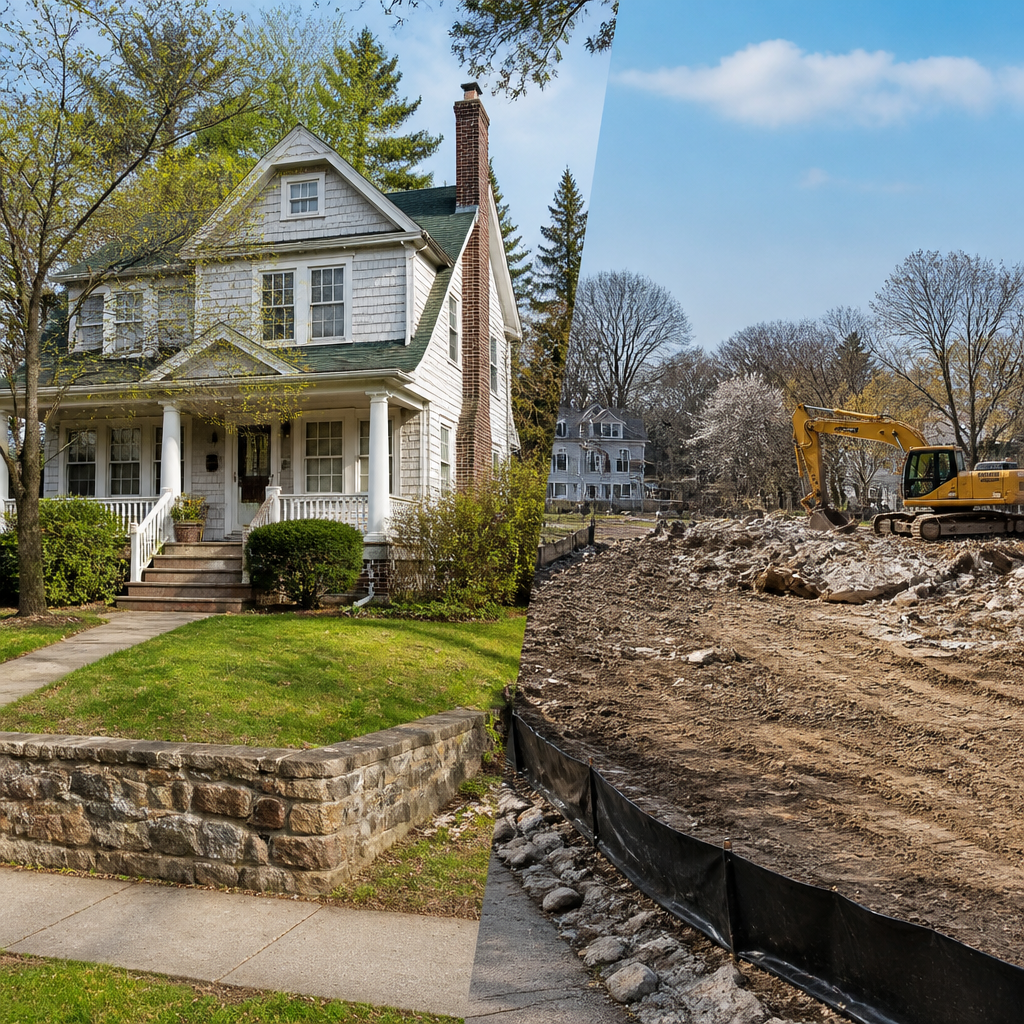
This guide from Ultimate Land Deals is for Summit homeowners considering whether to sell an existing home, market it to buyers interested in redevelopment, or make improvements before listing.
When a seller or buyer refers to a property's “lot value,” the important question is what has been verified about the particular parcel and the buyer's proposed project. Summit states that, depending on the type of construction project, prior zoning approval may be required before building permits can be issued. Property and land-development work can also require prior approval by the Planning Board and/or Zoning Board of Adjustment. See the City's Planning & Zoning page.
Compare the sale paths
| Selling path | What the seller can present | Questions to address before listing |
|---|---|---|
| Renovate and sell as a house | An existing residence, with completed or planned improvements | What work is needed, what will it cost, and how will it affect the expected sale timeline? |
| List in present condition | An existing home, with property information available to prospective buyers | What condition, title, survey, tax, and prior-project records can be provided? |
| Seek buyers interested in redevelopment | An as-is property while the buyer evaluates its own plans | What zoning, site, demolition, and approval questions should the buyer verify? |
No path is automatically best. Compare potential sale proceeds with repair costs, carrying costs, closing charges, concessions, and the terms of any offer.
Questions to verify before describing redevelopment potential
Start with the street address, block and lot, deed, survey if available, tax information, and any prior plans or approvals. Then identify the exact project a buyer may be considering rather than making a broad statement that the parcel is “build-ready.”
Zoning and project review
Ask Summit Planning & Zoning about the specific proposed path, such as a construction project, addition, change in use, or subdivision. The City directs owners to its Development Regulations Ordinance and notes that prior zoning approval may be required for some construction projects. Its Planning & Zoning office can be contacted to confirm whether a proposed project requires prior zoning approval. City of Summit Planning & Zoning
City forms and project materials
Summit's Department of Community Services document center lists zoning materials, Planning Board and Zoning Board applications, site-plan and subdivision applications, construction forms, and demolition materials. It also lists materials relating to floodplain permits, grading and soil erosion, steep slopes, tree removal, and engineering. Those listings are useful starting points for identifying questions about a specific parcel; they do not establish that a particular requirement applies. Summit DCS Document Center
The document center includes a demolition application and demolition checklist. A seller considering demolition should review the current City materials and ask the appropriate office about the proposed work before presenting the property as cleared or ready for a future project.
Recorded land documents
Review the deed and relevant recorded documents with appropriate real-estate and title professionals. The Union County Clerk's Public Land Records page says its online system contains information recorded beginning June 1, 1977, through the date shown on its search page. It offers searches by name, book and page, instrument number, and date range. The Clerk also says its Record Room has copies of county land transactions from 1857 to the present.
Marketing language that stays accurate
Use specific, conditional language and identify documents that are actually available. For example:
“Existing home offered as-is. Buyer to complete independent due diligence regarding zoning, demolition materials, site conditions, utilities, permits, and any redevelopment plans. Available property records include [list only documents actually available].”
Avoid stating that a parcel is approved for demolition, subdivision, or a particular new project unless documentation supports that exact statement. Ask prospective buyers what they intend to verify and make relevant property documents available where appropriate.
Offer and closing questions
Before accepting an offer, review the written terms with appropriate New Jersey real-estate and title professionals. Items to discuss include inspection access, due-diligence timing, deposit treatment, financing contingencies, assignment provisions, closing date, and title objections.
Also account for New Jersey's Realty Transfer Fee. The State says the fee applies to the seller of real property for recording a deed for sale unless the deed or transfer qualifies for an exemption. The State also describes an additional graduated-percent fee for certain transfers with consideration above $1 million. Confirm the transaction details with the closing professional and review the New Jersey Division of Taxation's Realty Transfer Fee guidance.
A practical next step
Before choosing a sale route, assemble the available parcel records and write down the buyer's proposed use as a question to verify. A clear property file and careful listing language can help sellers compare offers without presenting an unverified possibility as an established project right.
Sources
- City of Summit Planning & Zoning
- City of Summit DCS Document Center
- Union County Clerk Public Land Records
- New Jersey Division of Taxation: Realty Transfer Fee
FAQs
Can I market a Summit property to buyers interested in redevelopment?
Describe the existing property and invite buyers to conduct their own due diligence. Use records that are actually available, and avoid representing a particular project as approved unless documentation supports that statement.
What should I ask Summit Planning & Zoning?
Describe the specific project being considered and ask whether prior zoning approval may be required. The City says the answer can depend on the type of construction project and that some property and land-development work can involve the Planning Board and/or Zoning Board of Adjustment.
Where can I begin looking for recorded land documents?
The Union County Clerk's online public land-records page provides name, date-range, book-and-page, and instrument-number search options for its stated online date range. The Clerk also says its Record Room has copies of county land transactions from 1857 to the present.
Should I demolish before selling?
Review Summit's demolition materials and ask the appropriate City office about the proposed work. Compare the expected cost and timing with offers for the existing as-is property before deciding.