
Sell My Palm Coast Lot for Cash: Compare the Right Offer
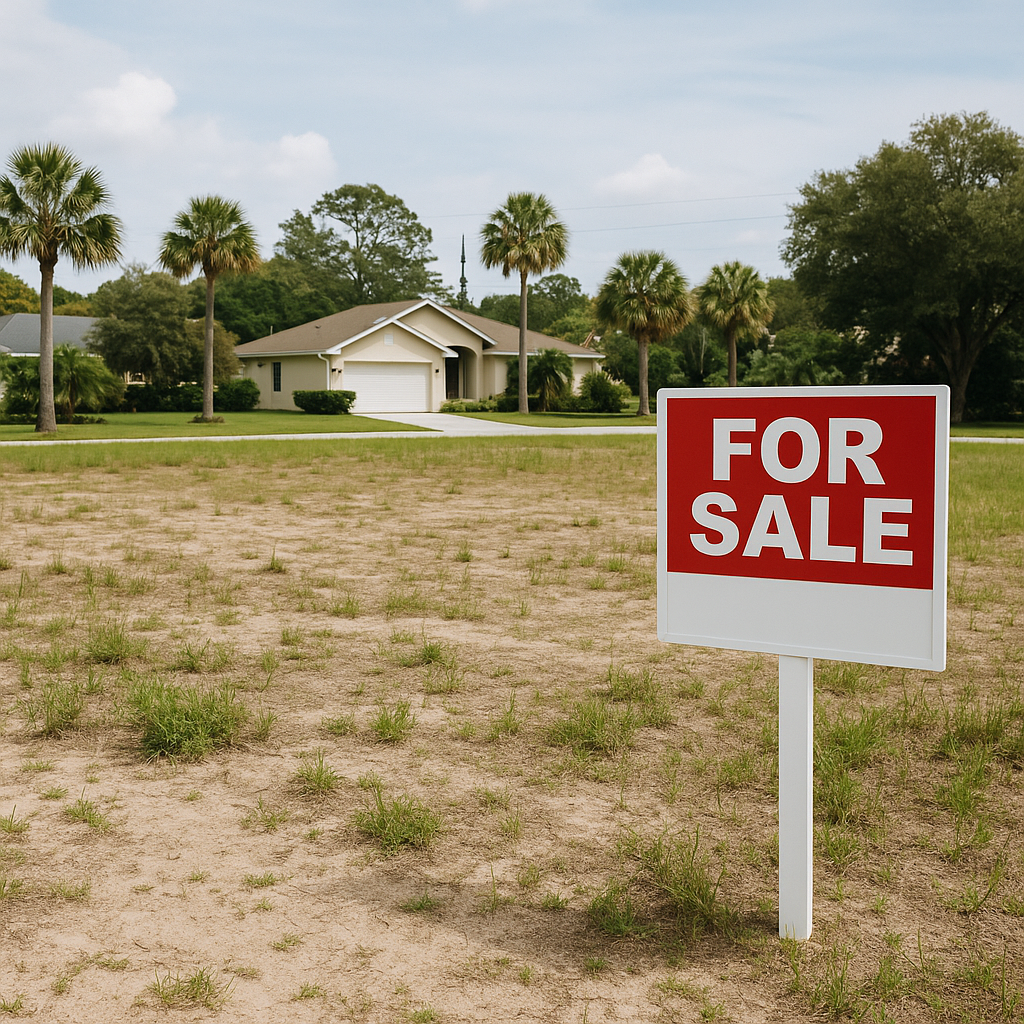
If you want to sell your Palm Coast lot for cash, the important comparison is not “cash offer versus listed price.” It is net proceeds, certainty, and the buyer’s ability to close on this particular parcel.
A vacant lot can attract several very different kinds of cash buyers: a neighboring owner, a local builder, a land investor, or a company that intends to resell or assign the contract. All may use the word cash. Their offers can still differ sharply in inspection periods, closing costs, assignment rights, requested price reductions, and the likelihood of closing once they investigate the lot.
For an absentee owner, the practical goal is to make the parcel easy to evaluate and then compare offers on the same terms. Here is a workable process.
1. Identify the lot the way a buyer will underwrite it
Do not rely only on a street address or a description such as “my lot near Palm Coast.” Start with the identifiers a title company, surveyor, and serious buyer will use:
- Flagler County parcel or tax identification number
- Recorded legal description, often including subdivision, section, block, and lot
- Street address, if one has been assigned
- Approximate lot dimensions and acreage shown in county records
- Current tax amount and whether taxes are paid
- Your deed and the names shown as owners
Palm Coast has many platted residential lots, and two parcels on nearby streets can have different practical value. A buyer may look at road frontage, surrounding development, flood exposure, drainage conditions, whether water and sewer are available or nearby, and the rules that apply to the parcel’s actual location.
Also confirm whether the lot lies within the City of Palm Coast or in unincorporated Flagler County. Mailing addresses and local descriptions do not always settle the jurisdiction question. A buyer evaluating a future home site will want to know which government’s development rules, utility systems, and fee structure may apply.
You do not need to commission every report before requesting an offer. But providing accurate basics prevents a buyer from pricing the lot as an unknown, higher-risk parcel.
2. Ask for a cash offer with terms, not just a number
A text message saying “I can pay $25,000 cash” is not enough to compare with another offer. Request the material terms in writing. A credible offer should make clear:
- Purchase price — the amount shown on the contract.
- Who pays closing costs — including title, recording, transfer-related charges, and any settlement fees customarily allocated in the transaction.
- Inspection or due-diligence period — how long the buyer can investigate and whether they can cancel.
- Earnest money — how much is deposited and when.
- Closing target — and whether it starts only after title review or another event.
- Assignment language — whether the buyer can transfer the contract to another party.
- Requested seller obligations — such as curing liens, paying delinquent taxes, signing affidavits, or providing documents.
A cash buyer does not need lender approval, which can simplify a sale. Cash does not mean the buyer will skip title work, investigate the property, or close regardless of undisclosed problems. Those are normal protections. The question is whether the contract gives the buyer a reasonable, defined review period or an open-ended option on your land.
A simple comparison example
Offer A is $30,000 but asks you to pay $2,500 in closing-related expenses and gives the buyer 45 days to inspect.
Offer B is $28,500, covers the stated closing costs, uses a 10-day due-diligence period, and schedules closing shortly afterward.
Offer A may still be better, but its effective difference is only $1,000 before considering the extra time and uncertainty. If Offer A’s buyer can renegotiate late or walk away with little money at risk, the higher headline price may not justify the delay.
3. Check the items that most often change a Palm Coast lot offer
Before you treat an offer as final, ask what assumptions support it. This is not an invitation for a buyer to manufacture deductions; it is a way to expose issues early rather than two days before closing.
Ask directly:
- Is the price subject to a flood, drainage, wetland, soil, or environmental review?
- Is the buyer assuming the lot has public road access and usable frontage?
- Has the buyer checked the likely water, sewer, septic, and power path?
- Is the offer contingent on a particular zoning or development use?
- Are there unpaid property taxes, code liens, municipal charges, association claims, or other amounts the buyer expects to be resolved?
- Is the buyer relying on a current survey, or will a boundary or encroachment question need more work?
The point is not to make every seller become a land-development expert. It is to find out whether the buyer has priced the actual parcel or merely made a broad initial offer based on acreage, a map pin, or a nearby sale.
A buyer who cannot explain the basis for the offer may simply be reserving the right to reduce it later. A buyer who identifies a concern should be able to state what they need to verify and how that finding could affect the transaction.
4. Separate normal title work from a problem that delays the sale
A cash sale still closes through a title or closing process. The closing agent will generally need to confirm the owners who must sign, review recorded matters, collect payoff information where applicable, and prepare the deed and settlement documents.
For an absentee owner, delays often come from missing paperwork rather than the lot itself. Before signing a contract, locate:
- A copy of your deed
- Government-issued identification matching the ownership name, or documents explaining a name change
- The latest tax bill or parcel number
- Contact information for any co-owner
- Any notices involving liens, assessments, code enforcement, homeowners’ associations, or estates
If you own the property in a trust, LLC, or other entity, the closing agent may need the authority documents for the person signing. If a deceased owner remains on title, or if a former spouse or co-owner may still have an interest, disclose that before committing to a closing date. The correct solution depends on the ownership record and should be handled with the title company and, when needed, a Florida real-estate or probate attorney.
5. Decide whether an assignment clause matters to you
Some land buyers contract to purchase a parcel and then assign their contract to another buyer. That approach is not automatically improper. It can provide an owner with a buyer and a defined sale path without the owner having to market the lot.
It does, however, change what you should evaluate.
If a buyer may assign, ask:
- Does the original buyer remain responsible if the assignee fails to close?
- Is earnest money deposited with a neutral closing agent?
- Can the buyer extend the inspection period without your written agreement?
- Will your price and other core terms remain unchanged after assignment?
- Who will communicate with the title company and you during the closing?
An owner who values a quick, low-contact transaction may be comfortable with an assignment clause if the deadlines, deposit, and cancellation rights are clear. An owner who wants the named buyer to close may prefer a contract that prohibits assignment or requires written consent. Either choice is more sensible than discovering the issue after signing.
6. Use a short decision rule instead of chasing the highest claim
Once you have written terms, rank each offer on three factors:
| Question | Why it matters |
|---|---|
| What is my estimated net at closing? | The purchase price can conceal seller-paid costs or required payoffs. |
| What must happen before the buyer is committed? | Broad contingencies can turn a contract into a prolonged test period. |
| Can this buyer and closing agent explain the path to closing? | Clear communication is especially important when you live out of state. |
The strongest offer is often the one that gives you an acceptable net amount, a specific due-diligence window, a credible closing process, and no surprise obligation to solve issues the buyer never mentioned.
If the lot is in a location where builders are actively seeking homesites, a traditional listing or direct outreach to local builders may produce a higher price than a quick cash transaction. That route can make sense when you have time to market the parcel and tolerate more showings, questions, and negotiation. A direct cash sale is more fitting when speed, simplicity, and a remote closing matter more than maximizing the top possible asking price.
A practical way to request a direct offer
When contacting a land buyer, send the parcel number, property address or legal description, county, approximate lot size, and any facts you know about taxes, access, utilities, or ownership. Then ask for a written offer stating the price, closing-cost allocation, due-diligence period, earnest money, projected closing date, and whether the contract is assignable.
Ultimate Land Deals evaluates off-market vacant land and can determine whether a parcel is a direct-purchase fit, an assignment opportunity, or better suited to another buyer. Regardless of whom you contact, insist on a written agreement and let a qualified title or closing professional explain the documents before you sign.
FAQs
Can I sell a Palm Coast lot for cash if I live in another state?
Usually, yes. Many vacant-land closings are handled remotely through email, phone, electronic coordination, and documents sent for notarization. The title company will specify its signing and identity-verification requirements. Remote closing does not eliminate the need for every required owner to sign.
Do I need a real-estate agent to accept a cash offer?
No. An owner can sell directly to a cash buyer. An agent may still be useful if you want broad market exposure, pricing advice, and negotiation support. In a direct sale, the title company or closing agent handles closing documents, but does not replace independent legal or financial advice.
Should I pay for a survey before asking for cash offers?
Not automatically. If county records, the legal description, and the lot configuration are straightforward, a buyer may be able to evaluate the parcel without a new survey. A survey can be worthwhile when boundaries, encroachments, corner locations, or frontage are uncertain, but ask the closing professional or buyer what issue it would resolve before spending the money.
How quickly can a cash lot sale close?
The timeline depends on title review, document availability, tax or lien questions, and the buyer’s diligence period. A cash transaction can avoid lender delays, but a realistic closing date should still allow the title company to complete its work and give all parties time to sign correctly.