
Sell Palm Bay Land With Code Violations: Owner Checklist
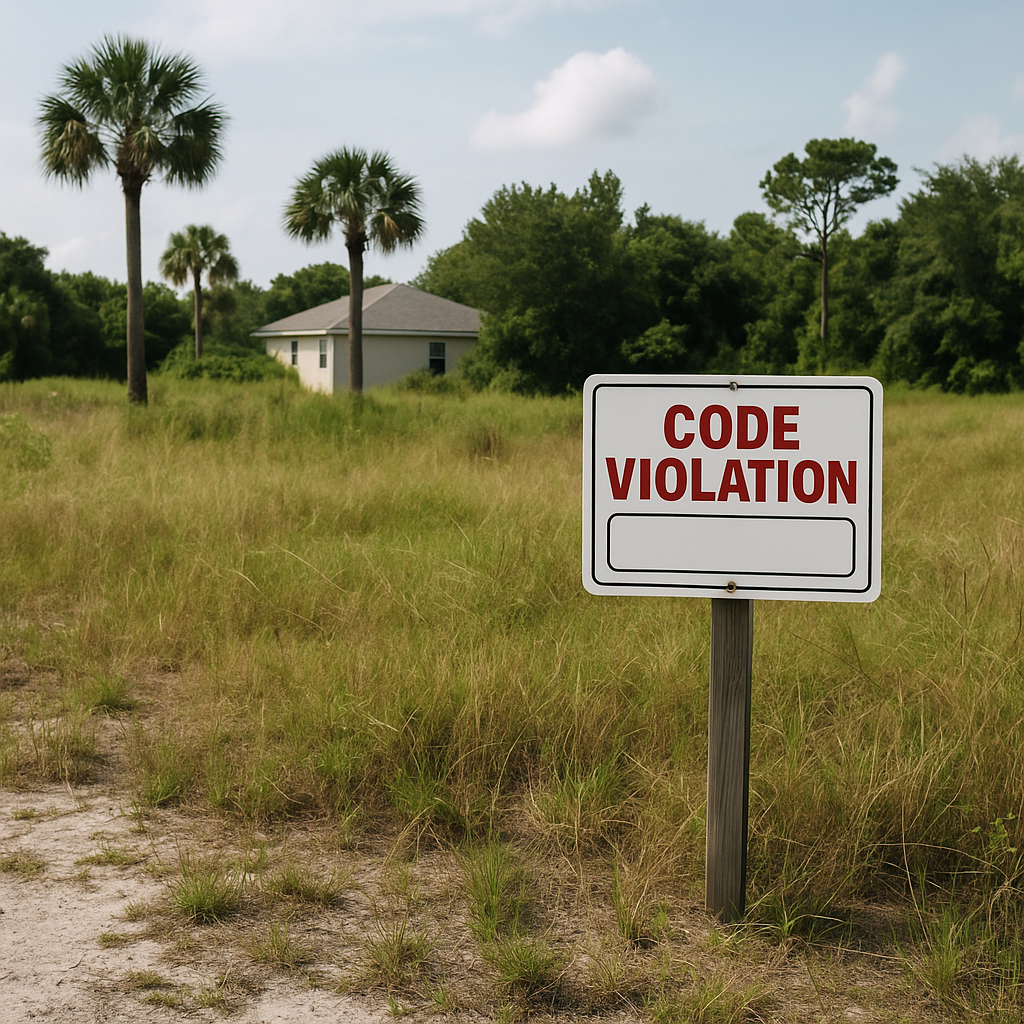
Selling Palm Bay Land With Code Violations: Price the File, Not the Rumor
You can request offers to sell Palm Bay land with code violations before every question is resolved, but an owner should not price the property—or accept a low offer—based on a vague statement that the lot has “a violation.” First determine what is documented, what remains an allegation or visible condition, and what a buyer would need to review before closing.
For an absentee owner, the useful goal is a compact issue file: the parcel identifier, the City’s correspondence, the current condition of the lot, and any records showing what has or has not been corrected. Ultimate Land Deals publishes this guide for Florida landowners. Its selling page describes a process in which the company reviews property details, county records, market activity, and nearby sales before making a no-obligation cash offer; the specific terms of any transaction should be confirmed in the written offer. Ultimate Land Deals’ selling process
Begin with one question: is there an open City matter, or only a concern about the lot?
A neglected lot can produce several different conversations that should not be merged into one label. A buyer who hears “code problem” will want to know whether there is an actual City notice or case, whether an issue has been corrected, or whether someone is simply worried about conditions seen in photographs or on a drive-by.
Palm Bay’s service directory identifies Code Compliance as the contact for code violations, provides a phone number and email address, and links to an online portal for reporting violations and paying Code Board and nuisance violations. The directory also tells people who have corrected a violation to notify Code Compliance. That makes Code Compliance the sensible first contact for confirming the City’s current file and asking what documentation it can provide. City of Palm Bay Code Violations directory
Ask for a written answer, or preserve a dated note of the response, to these narrow questions:
- Is there an open matter associated with this parcel or owner name?
- What reference or case number should be used in later communications?
- What notice, order, hearing record, balance, or compliance record can the City provide?
- Does the City need anything from the owner to update its records after a condition is addressed?
- Who should a prospective buyer or title professional contact for current status?
Do not substitute a neighbor’s report, an old photo, or a buyer’s assertion for the City record. Those items can be useful context, but they are not a complete status answer.
Sort the issue before asking for a price
Use a separate line in your file for each category below. The purpose is not to decide the outcome yourself; it is to prevent a single unresolved concern from being presented as four different problems.
| Issue to separate | What to collect | Question to put to the responsible office or buyer |
|---|---|---|
| Code-enforcement matter | Notices, case number, hearing materials, payment records, emails, and proof submitted after correction | Is there a current City record tied to this parcel, and what does it show now? |
| Mowing or vegetation concern | Dated photos, invoices, contractor correspondence, and photos after work was completed | Is there an open matter, or is the concern based on the lot’s present appearance? |
| Dumping or debris concern | Photos from before and after cleanup, disposal receipts if available, and correspondence identifying the location of the material | Is the concern limited to visible material, or is there a documented City matter to resolve? |
| Permit history question | Copies of permits, inspection records, contractor paperwork, and any final documentation you possess | Was work performed on the parcel, and what record should a buyer review before relying on it? |
| Zoning or future-use question | Parcel number, legal description, maps or correspondence you already have | Is this a separate land-use question rather than evidence of a current code matter? |
The last distinction matters in negotiations. A buyer may be evaluating a lot’s prospective use at the same time as an existing-condition issue, but those are different diligence tracks. Do not describe a zoning question as a resolved violation, and do not describe an old cleanup receipt as proof of what may be built later.
Build a sale file that lets a remote buyer evaluate the risk
Absentee owners often have scattered emails, a tax mailing address, and a few years of photographs. That is enough to begin organizing, but not enough to make claims that a purchaser cannot verify. Create one PDF folder or shared folder with clear filenames.
1. Parcel identity
Put the parcel number, legal description, property address if one is used, and owner name on the first page. Use the same identifiers on every inquiry. This reduces the risk of discussing a similarly named owner or nearby lot.
2. City communications in date order
Save the original notice, envelope or email header where available, replies, and later updates. Do not crop dates or remove reference numbers from a document you intend to share. A buyer needs to see whether the records are current, old, incomplete, or tied to another location.
3. A condition record, not a sales pitch
Take current photos from several angles and date them. If vegetation was cut or material removed, retain the before-and-after images separately. A photograph does not establish compliance, but it can help a buyer understand what the lot looks like while City status is being confirmed.
4. Money and title questions kept visible
If a notice, payment request, or recorded document is mentioned, do not assume it disappears because the property is being sold. Save the document and ask the closing professional how it should be handled in the proposed transaction.
The Brevard County Clerk of Court and Comptroller’s website provides access to official-records and recording resources. An owner can use that starting point to locate records relevant to the parcel and then ask a title or closing professional which documents, if any, need to be addressed for the contemplated sale. Brevard County Clerk of Court and Comptroller
Florida’s code-enforcement statute also makes clear why a file should be taken seriously: Chapter 162 authorizes local code-enforcement boards and describes administrative fines and liens within the chapter’s enforcement provisions. The statute does not tell you the current status of a particular Palm Bay parcel; that status still needs to come from the relevant local record. Chapter 162, Florida Statutes
Decide what you are selling: the lot as-is, or the lot after more work
Once the file is organized, compare the practical paths rather than assuming one route is always best.
Sell as-is to a direct buyer. This can fit an owner who prefers to disclose the documented issue, provide the available records, and let the buyer evaluate remaining work. Ask whether the buyer’s offer depends on its own review, whether assignment is permitted, what title issues must be resolved, and which closing terms are written into the agreement. A cash offer is not, by itself, an answer to those questions.
Use an agent. An agent may be useful when the owner wants broad market exposure and help presenting the file. Before listing, ask how the property will be described while City status remains pending, what costs or contractual obligations apply, and how prospective buyers will receive the documents. Avoid marketing language such as “no violations” or “fully cleared” unless you have records that support it.
Sell independently. A direct owner sale gives the owner control of communications, but the owner still needs a disciplined disclosure package and a closing process that addresses the documents discovered in diligence. This route is more workable when the owner can respond consistently to buyer questions and keep the condition record current.
The comparison is not simply “highest headline price versus fastest offer.” A stronger offer is one whose written terms match the uncertainty shown in the file. If a buyer discounts the lot for an unspecified “code issue,” ask which document, condition, or unresolved question it is pricing.
A concise message to send before requesting offers
You do not need a long narrative. A factual summary is more useful:
I own a vacant parcel in Palm Bay. I am collecting the current Code Compliance status and can provide the parcel identifier, available City correspondence, current photographs, and records of work completed. Please identify any documents or unresolved items you would need to review before making or confirming an offer.
This wording does not promise that an issue is cleared. It signals that you are prepared to distinguish documents from assumptions.
Resources
- Palm Bay Code Violations service directory — City contact information, reporting portal, and payment link.
- Brevard County Clerk of Court and Comptroller — official-records and recording resources.
- Chapter 162, Florida Statutes — Florida’s county and municipal code-enforcement chapter.
- Ultimate Land Deals selling process — information on requesting a cash offer for Florida land.
Frequently asked questions
Can I ask for offers before I have every code document?
Yes, but state what you have and what you are still verifying. A buyer can evaluate an incomplete file, while a written status from the City can reduce avoidable confusion later.
Does cutting the grass prove that a code matter is closed?
Not by itself. Keep the invoice and dated photos, then contact Palm Bay Code Compliance to ask what its current record shows and whether it needs notice of the correction. The City directory specifically asks people who have corrected a violation to notify Code Compliance. City of Palm Bay Code Violations directory
Is a permit question the same as a code-enforcement question?
Treat them as separate questions until the records show how they relate. Preserve any permit or work documents you have, and ask the relevant office or buyer exactly what needs to be reviewed.
Should I accept a buyer’s statement that the problem will be handled after closing?
Do not rely on a verbal statement. Ask how the issue is addressed in the written agreement, what the closing professional needs to confirm, and whether any unresolved records affect the proposed closing terms.