
Selling a North Wildwood House With Code Violations
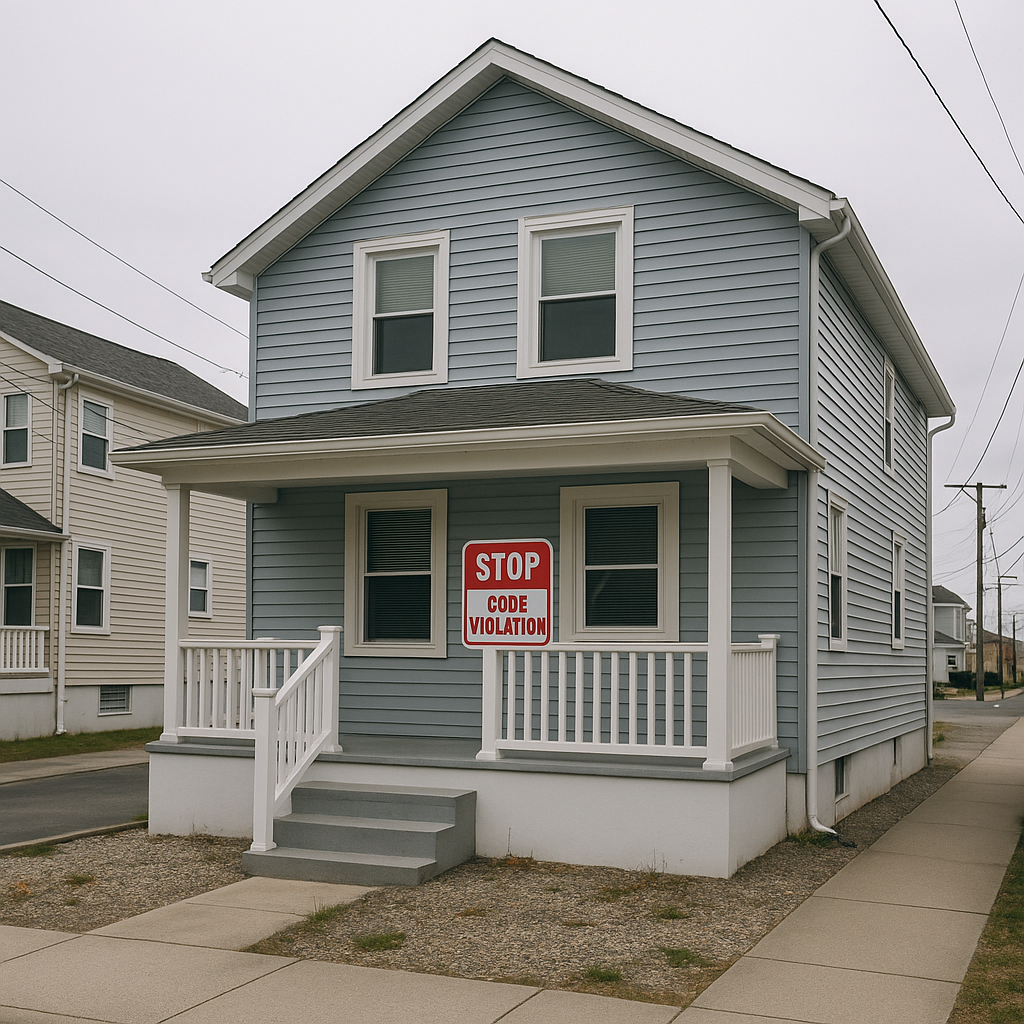
A North Wildwood house may have an open code, permit, use, or fire-safety question that needs City review before a sale. An “as-is” agreement does not replace municipal requirements that apply to the property. In many transfers, the owner must obtain a City Certificate of Zoning Use Compliance; one- and two-family homes may also require a fire-safety compliance certificate before sale or a residential change of occupancy.
Ultimate Land Deals focuses on purchasing vacant land in Florida and marketing cash offers for that type of property. Owners considering a sale of an improved North Wildwood property should ask a prospective buyer directly whether the buyer is interested in that particular house.
Start with the City requirement that applies
North Wildwood’s zoning ordinance generally requires an owner to obtain a Certificate of Zoning Use Compliance before selling or transferring a real-property interest. The certificate addresses the current use, the units or structures involved, and compliance with applicable land-development provisions. The City performs a physical inspection as part of the process. The ordinance also lists exceptions, including certain recent new construction and specified low-consideration family, court, or estate-planning transfers. See Article XIII: Zoning Use Compliance.
When the zoning-use certificate is required, the ordinance provides that a person may not accept or permit the transfer, or occupy or permit occupancy, without the certificate. The ordinance has its own exceptions and enforcement provisions, so confirm whether they apply to the specific transfer.
The type of issue matters. A smoke-alarm requirement, an open construction permit, an extra unit, and a use question can involve different City processes.
Sort the documents before marketing the house
Collect every notice, inspection report, permit record, municipal invoice, and City correspondence related to the property. Then identify the department and issue involved.
1. Zoning or use question
The zoning-use certificate process asks for the property's existing or prior use and continued or proposed use, along with information including the block and lot number, lot and structure square footage, occupants or tenants, and parking. Do not market the property as a legal duplex, rental property, commercial-use property, or compliant residence unless the applicable City review supports that description.
Ask the Zoning Officer whether a zoning-use certificate is required for the planned transfer, what documents are needed, and whether the current use or structure raises a question under the City’s land-development rules.
2. Construction or permit question
North Wildwood’s Construction Office states that permits are required for construction, enlargement, repair, alteration, renovation, demolition, reconstruction, changes of use, and equipment installation. The office enforces New Jersey-adopted construction codes in the City. Its page also states that building projects require a certificate of occupancy after completion and final inspection. See the North Wildwood Construction Office.
For work that may not have been permitted or closed out, ask the Construction Office which records, applications, plans, inspections, or certificates apply to the specific property. Do not assume that a buyer’s verbal willingness to take on work answers the City’s permit or occupancy questions.
3. Fire-safety sale certificate question
Before a one- or two-family or attached single-family structure is sold, leased, or otherwise subject to a residential change of occupancy, the owner must obtain a certificate of smoke alarm, carbon monoxide alarm, and portable fire extinguisher compliance (CSACMAPFEC), subject to the ordinance’s stated provisions. The certificate is issued upon compliance with the applicable state requirements. See Chapter 240: Fire Prevention.
Ask the responsible City office how to apply and whether another municipal inspection or approval process applies to the property.
4. Taxes, assessments, and City charges
Under the zoning-use ordinance, the City will not issue a zoning-use certificate until the Tax Collector confirms that taxes, assessments, and other City charges levied against the property have been paid in full. Obtain current payoff information from the City rather than relying on an older bill or estimate.
Use the City process to plan timing
The zoning-use ordinance states that, after receipt of a complete application and the required fee, the certificate will be issued or rejected within 10 business days. A certificate remains valid for 180 days. This is the stated certificate timeline, not a prediction about any separate construction, zoning, or fire-safety question.
A practical sequence is:
- Request the status of known notices. Ask which department issued each notice and what the City needs from the owner.
- Confirm the current use. This is especially important for multiple units, converted space, rentals, or additions.
- Ask whether the zoning-use certificate requirement applies. Confirm the application, inspection, fee, and timing requirements.
- Ask the Construction Office about permit records. Identify any permit, inspection, plan, or certificate questions related to past or proposed work.
- Arrange the fire-safety compliance process when applicable. Confirm the City’s application and inspection instructions.
- Obtain current City balance information. Verify taxes, assessments, and other City charges.
Keep City responses and documents in writing where possible so that a buyer and closing professionals can review the same information.
Decide how to present the property
Once the relevant City questions are identified, an owner may choose to address the issue before marketing or disclose the documented issue to prospective buyers. In either case, marketing should accurately describe what has been confirmed and should not promise a use, approval, certificate, or repair outcome that has not been verified.
If a buyer proposes to take responsibility for particular work, put the arrangement in writing. The contract can identify the known notice or issue, assign responsibility for specified tasks and fees, address inspection access, and set out timing if a City process is pending. A New Jersey real-estate attorney or closing professional can review the agreement for the specific property.
A short pre-offer packet
Before seeking offers, assemble:
- The property address and block and lot information;
- Every violation notice, permit, inspection result, and City correspondence available;
- Photos of cited conditions, dated when possible;
- A plain description of current occupancy and use;
- Information about renovations, additions, conversions, or prior permit work;
- Current tax, assessment, and City-charge information when available;
- The status of the zoning-use certificate and fire-safety certificate, if applicable.
This packet does not substitute for City review. It gives prospective buyers a documented starting point for evaluating the property.
FAQs
Can I sell a North Wildwood house “as is” if it has an open issue?
An as-is agreement does not eliminate a zoning-use certificate requirement when Article XIII applies. It also does not replace the fire-safety certificate requirement for covered one- and two-family or attached single-family properties.
Does every transfer require a zoning-use certificate?
No. Article XIII lists exceptions, including qualifying recent new construction and certain low-consideration family, court, and estate-planning transfers. Ask the Zoning Officer whether an exception applies to the specific transaction.
What should I ask about unpermitted work?
Ask the Construction Office what permit records it has and what applications, plans, inspections, or certificates apply to the work and property. The City’s Construction Office provides permit and inspection information for North Wildwood.
Sources
- City of North Wildwood, Article XIII: Zoning Use Compliance
- City of North Wildwood, Construction Office
- City of North Wildwood, Chapter 240: Fire Prevention
The useful first step is to identify the specific City certificate, permit, use, or charge question involved, obtain direction from the responsible office, and communicate that documented information accurately to prospective buyers.