
Sell a North Wildwood House: Verify Redevelopment Potential
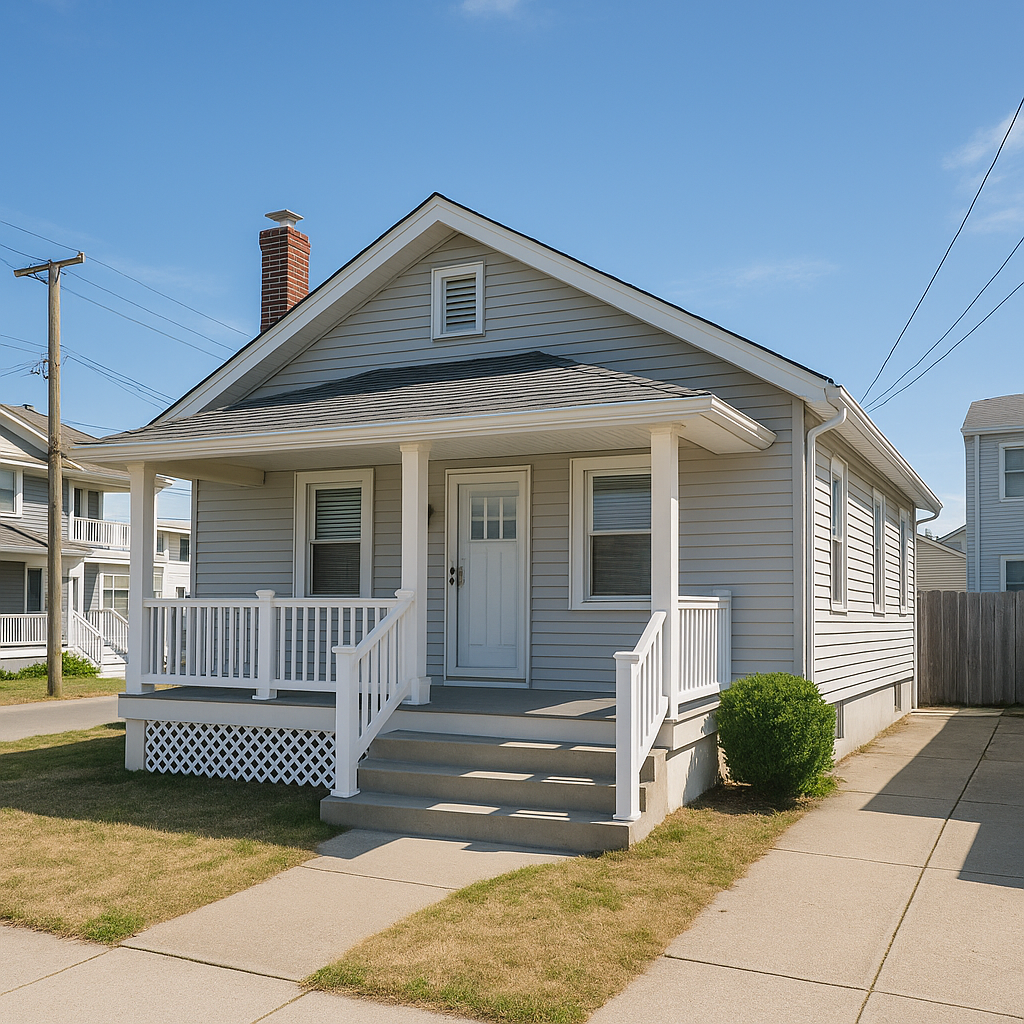
Ultimate Land Deals publishes this general guide for property owners considering a sale in North Wildwood. You can sell a house while it is still standing, but marketing it for redevelopment should not imply that a buyer is entitled to demolish the building or construct a particular replacement. Before you price or market the property, provide verified parcel information and avoid unsupported claims about what can be built.
Start with the selling decision: is the house an asset, a liability, or both?
A property can have redevelopment appeal without being worth only its land. Before adopting “teardown” language, consider the two value cases a buyer may see:
- Existing-use value: The house may have value to a buyer who will occupy it, rent it, renovate it, or hold it for a later project.
- Redevelopment value: A builder or investor may focus on the site’s dimensions, zoning, approvals, expected demolition work, and probable replacement use.
If the house needs substantial work, redevelopment buyers may dominate the conversation. But do not decide that the structure has no value merely because it is old or nearby homes have been replaced. A buyer’s site budget can be affected by demolition, utility work, approvals, carrying costs, or the building envelope available for a proposed project.
A practical way to frame the property is: “sold in its present condition; redevelopment potential to be independently verified by buyer.” That gives buyers a reason to investigate without turning a hoped-for project into a seller promise.
Build a seller packet that separates facts from marketing claims
The most useful preparation is a compact set of documents and answers that lets a buyer identify the parcel and begin its own review.
Put these verified facts in one place
- Street address, block, and lot. Ask for exact parcel identifiers from the deed, tax record, or title materials. An address alone is not a substitute for the legal parcel.
- Lot dimensions and survey information. Provide a current survey if you have one, but label its date. If you do not have one, say so rather than estimating width from an online map.
- Current zoning district. North Wildwood’s zoning map identifies zoning districts, and the ordinance states that applicable standards, controls, and designations apply to structures, lots, and uses within those districts. The ordinance also incorporates FEMA flood maps for local land-use administration. North Wildwood zoning districts and map
- Property-tax and municipal-charge status. Cape May County provides a link to North Wildwood’s property-tax search. New Jersey describes an assessed value as a property-tax valuation using its statutory true-value standard as of the October 1 pretax-year assessment date. Do not present an assessment by itself as a post-demolition valuation or as confirmation that a particular redevelopment project is feasible. Cape May County Property Tax Lookup New Jersey property-tax valuation guidance
- Known water, sewer, and utility information. State what you know from bills, correspondence, or prior work. Do not advertise “utilities available” unless the relevant provider or City has confirmed service for the proposed use.
- Existing reports and disclosures. Include prior surveys, flood information, inspection reports, notices, permits, or correspondence you possess. These records do not replace the buyer’s due diligence.
Keep a second list labeled “buyer must verify”
This list should include the intended replacement building, parking layout, height, setbacks, coverage, flood requirements, coastal permitting, title matters, and utility connections. The distinction helps you share useful information without representing that a particular plan is approved.
Ask redevelopment questions in the order a buyer will encounter them
A buyer considering removal of the house is not evaluating one simple question—“Can I build?” The answer can depend on several linked decisions.
1. What district and lot rules apply to this parcel?
North Wildwood’s ordinance includes provisions addressing certain existing nonconforming lots, structures, and uses. It also contains a provision concerning demolition and rebuilding or new construction on certain detached single-family or isolated vacant lots in the R-1, R-1.5, and R-2 districts, subject to stated coverage, yard, and parking conditions. North Wildwood general provisions and design standards
Do not advertise “variance-free new construction” unless the City has addressed the actual parcel and proposal in writing. A neighboring project is not proof that your site has the same district, lot status, dimensions, or approvals.
2. Can the existing house be demolished, and when?
North Wildwood requires a demolition permit from the Construction Official before demolition work begins. The City code also states that no demolition permit will be issued while delinquent property taxes or municipal charges, including water and sewer charges, remain against the property. North Wildwood demolition requirements
Except in emergencies, the City prohibits demolition between June 15 and September 8. North Wildwood construction-site restrictions
That seasonal restriction does not prevent a sale during that period. It may, however, affect a redevelopment buyer’s anticipated schedule, carrying costs, or desired closing date.
3. What approvals may be needed beyond local demolition permission?
A demolition permit is not a redevelopment approval. North Wildwood’s Construction Office identifies zoning, soil-conservation, water, sewer, and CAFRA approvals among approvals or certifications that may be required before some building permits. North Wildwood Construction Office
The approvals needed depend on the parcel and project. Do not convert a general statement such as “near the beach” into a conclusion that permits will be easy—or impossible.
Price the opportunity using scenarios, not a single assumption
When a house may be bought for redevelopment, buyers may model a residual price using anticipated finished-project value, construction, approvals, financing, demolition, holding costs, and profit requirements. Sellers do not need to reproduce that model perfectly, but they should recognize why two offers may differ.
Consider three scenarios when reviewing price guidance or offers:
| Scenario | What the buyer is assuming | Seller question |
|---|---|---|
| Existing house retained | The structure can be used, rented, or improved | Does the offer recognize the home’s current utility? |
| House demolished; replacement proposed | Demolition and a proposed project may be feasible | Which lot and zoning facts support that assumption? |
| Project needs relief or added approvals | A variance, board action, or outside approval may be necessary | Is the buyer pricing uncertainty into the offer or making closing contingent on it? |
An assessed value is a property-tax valuation tied to New Jersey’s statutory assessment standard and assessment date; it should not by itself be used to confirm a particular future project. New Jersey property-tax valuation guidance
Choose a sale route based on who can evaluate the uncertainty
Sell directly to a redevelopment buyer
A direct buyer may be useful when the house is unlikely to appeal to conventional occupants and you prefer a simpler negotiation. Ask for the written offer, inspection or due-diligence period, financing condition if any, closing date, deposit treatment, closing-cost allocation, and any right to assign the contract. A high stated price with broad cancellation rights may be less dependable than a lower price with limited, clearly defined contingencies.
Do not assume “cash” means the buyer has no diligence period or that demolition costs are included. Read the contract.
Use an agent with relevant redevelopment experience
An agent can expose the property to builders, investors, second-home buyers, and renovation buyers at the same time. This may be useful where the existing house still has meaningful appeal. Ask how the property will be described, which documents will be shared, and whether the marketing will distinguish verified facts from suggested potential. Confirm commission, showing expectations, pricing strategy, and listing-term details in the agreement.
Sell independently
An owner sale can work when you can organize records, respond to buyer questions, and use qualified title and legal professionals for the transaction. The tradeoff is that you must screen inquiries, avoid unsupported representations, coordinate access, and manage negotiations yourself. An independent sale is not a reason to skip title, contract, or municipal verification.
Put demolition responsibility in the contract, not in an assumption
You do not have to demolish before selling. In many transactions, the buyer purchases the property with the house in place and decides later whether to remove it. That can spare the seller from a demolition project and from clearing a site before a buyer is committed.
The contract should clearly allocate who is responsible for:
- demolition permits and scheduling;
- delinquent taxes, water, sewer, or other municipal charges that could affect demolition permitting;
- debris removal and site condition;
- access for inspections, surveys, and municipal inquiries;
- zoning, coastal, utility, or other approval investigations; and
- the consequences if the buyer cannot obtain an approval it considers necessary.
Have a New Jersey real-estate attorney or other appropriate professional review the agreement for your situation. This is especially important if the offer includes a feasibility contingency, an assignment provision, or an extended closing period.
A careful way to market the property
Use factual language such as: “Existing house offered in current condition; buyer to independently verify zoning, lot dimensions, demolition requirements, utilities, flood conditions, and redevelopment feasibility.”
Avoid phrases such as “guaranteed buildable,” “approved for units,” “no variance needed,” or “ready to demolish” unless you have current written support that applies to the exact parcel and proposed work. Clear, restrained marketing helps attract buyers who understand the work required.
FAQs
Can I call my North Wildwood house a teardown?
You can describe the property’s condition and note that some buyers may evaluate redevelopment potential. Avoid presenting “teardown” as proof that demolition or a particular replacement building is approved. Demolition requires a permit, and redevelopment feasibility is parcel- and project-specific.
Should I demolish the house before listing it?
Decide after comparing the likely buyer pool, demolition timing, and the risk of removing a structure before a sale is certain. Selling with the house standing lets a buyer choose the path, but the purchase contract should say who handles demolition after closing.
Does a cash offer establish the property’s land value?
No. An offer reflects one buyer’s assumptions, risk tolerance, and contract terms. Compare net proceeds and the conditions attached to each offer, including due diligence, assignment rights, closing date, and responsibilities for municipal or title issues.
Sources
- North Wildwood zoning districts and map
- North Wildwood general provisions and design standards
- North Wildwood demolition requirements
- North Wildwood construction-site restrictions
- North Wildwood Construction Office
- Cape May County Property Tax Lookup
- New Jersey property-tax valuation guidance
This article is general information published by Ultimate Land Deals, not a zoning, legal, title, tax, engineering, survey, environmental, or appraisal opinion. Verify current requirements with the City and qualified professionals before relying on a redevelopment plan or signing a sale contract.