
Inherited Fort Mohave House: Offer Comparison Guide
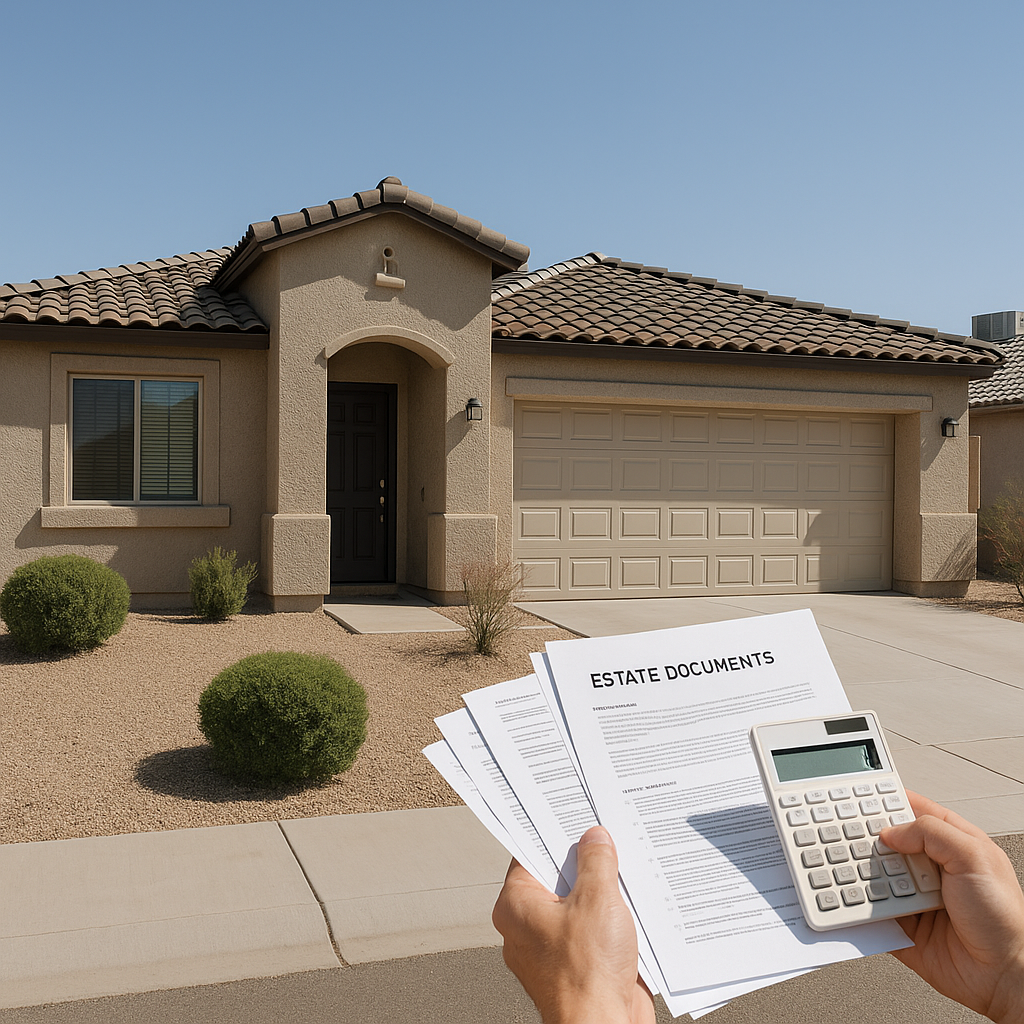
If you are considering offers for an inherited house in Fort Mohave, begin with the estate documents and the proposed signer—not with repair estimates or an “as-is” label. This guide is published by Ultimate Land Deals, but it is educational information rather than an offer to buy a house.
Start with the estate file
Before comparing prices, assemble the documents a closing professional or attorney will likely need to review:
- Recorded deed and legal description;
- Death certificate;
- Will, trust documents, and probate filings, if applicable;
- Letters showing appointment of a personal representative, if issued;
- Mortgage, tax, association, and lien-related notices; and
- The proposed purchase agreement and any addenda.
Ask the title company or an Arizona estate attorney a focused question: Who is proposed to sign, and what document supports that person’s role in this transaction?
Arizona law provides that, subject to restrictions in a will, a formal-proceeding order, and other stated conditions, a personal representative may dispose of estate assets, including land, and may sell, mortgage, or lease estate real property. The actual estate documents and any applicable restrictions should be reviewed for the particular transaction. See A.R.S. § 14-3715.
Ask whether the small-estate affidavit statute fits the facts
Arizona has an affidavit procedure concerning succession to real property. Under the statute, a real-property affidavit may not be filed sooner than six months after the decedent’s death. The statute also lists conditions involving estate administration, value calculations, debts and expenses, the successor’s entitlement, and other matters. Its stated real-property threshold is $300,000 in the circumstances described in the law. A.R.S. § 14-3971.
Rather than assuming that an affidavit applies, ask the closing professional or attorney to review the statute and the estate’s documents against the required conditions.
Compare written offers, not just prices
Once the estate documents are organized, compare each written offer using the same questions:
| Item to review | Question to ask |
|---|---|
| Buyer identity | Who is named as the buyer in the agreement? |
| Price | What is the offered price, and is it subject to any adjustment? |
| Closing date | What date or deadline does the agreement state? |
| Inspection and contingencies | What conditions must be met before the buyer must close? |
| Assignment | May the buyer assign the agreement, and what does the contract say happens after an assignment? |
| Closing costs and payoffs | Which costs, taxes, assessments, or payoff items does the agreement allocate? |
| Property condition | What does the agreement say about repairs, inspections, personal property, and condition? |
| Estate documents | What documents does the buyer or closing professional request before closing? |
An “as-is” label should not replace reading the actual condition, inspection, title, and closing provisions. Ask the buyer and closing professional to identify those provisions in writing.
Keep disclosure discussions factual
The Arizona Department of Real Estate Buyer Advisory states that a seller’s disclosure obligation remains when buyer and seller agree that no Seller’s Property Disclosure Statement will be provided. Review the Arizona Department of Real Estate Buyer Advisory.
For an inherited property, keep a simple written file separating:
- Documents and facts the estate has;
- Information reported to the estate that has not been verified; and
- Questions the estate has not answered.
Examples may include repair invoices, insurance correspondence, association notices, utility records, or prior inspection reports. Do not guess about a condition, improvement, or parcel feature when the estate has no supporting record.
A practical sequence
- Gather the deed, estate documents, and property notices.
- Ask who will sign and what documents support that role.
- Request written offers and compare all material terms.
- Ask the closing professional what estate and title documents are needed for the file.
- Put known records, reported information, and open questions in writing.
- Have an Arizona estate attorney or title professional review transaction-specific questions before signing.
Sources
- Arizona Revised Statutes § 14-3715: Transactions authorized for personal representatives
- Arizona Revised Statutes § 14-3971: Affidavit of succession to real property
- Arizona Department of Real Estate Buyer Advisory
This article provides general information, not legal, title, or tax advice.