
How to Sell a Florida Lot With an Impact Fee Balance
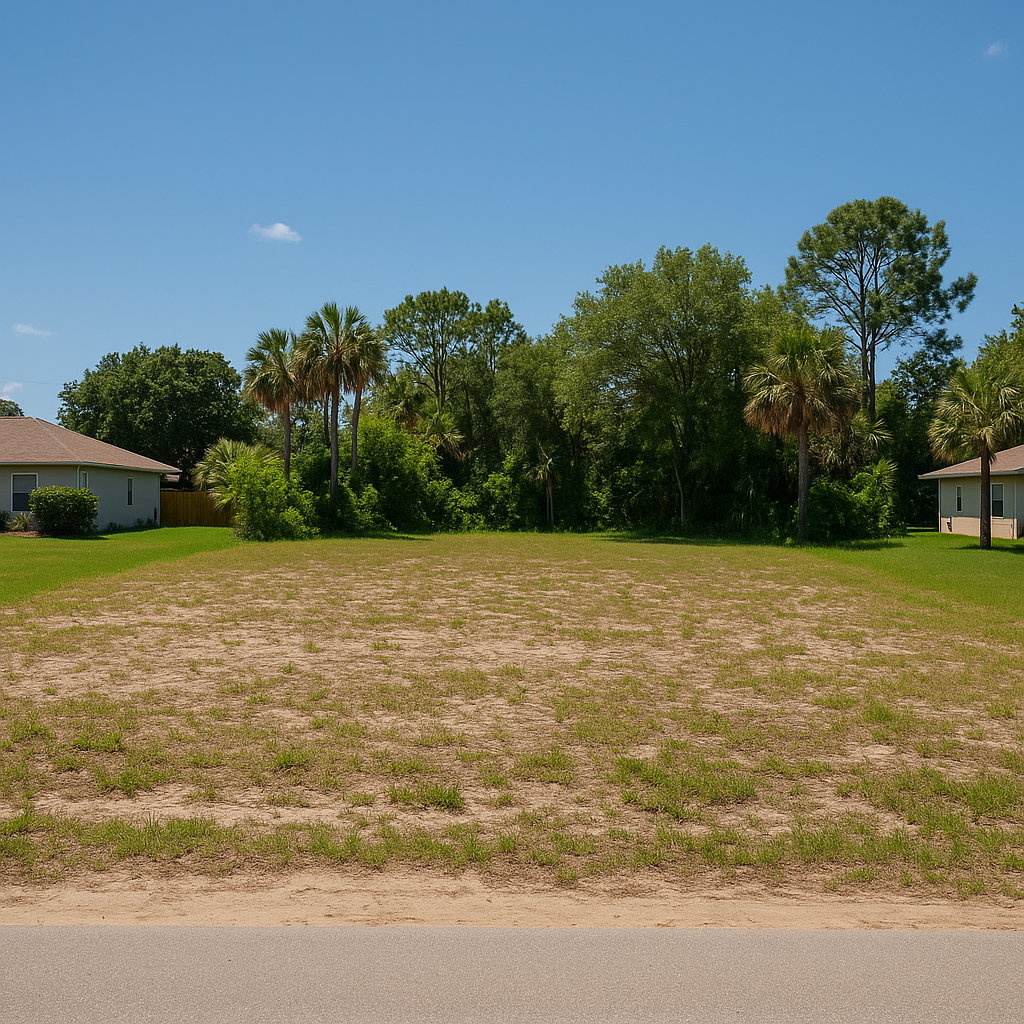
If you plan to sell a Florida lot with an impact fee balance, do not describe the fee as paid, transferable, or assumed by the buyer until the agency administering it confirms the parcel’s status in writing. The practical issue is not simply who writes a check at closing. It is whether a prior payment, credit, assessment, or outstanding amount is connected to the parcel, a particular permit, a proposed use, or another condition.
Ultimate Land Deals publishes this guide for absentee owners who need to present a Florida lot accurately while deciding whether to accept an offer, list the property, or sell it directly. Start by turning the phrase “impact fee balance” into a documented answer a buyer can evaluate.
First, separate the label from the obligation
Florida’s Impact Fee Act describes impact fees as a local-government revenue source for infrastructure necessitated by new growth. The statute addresses impact fees adopted and collected by local governments or special districts; it does not give a seller a parcel-specific answer about a particular lot’s payment history or a claimed credit. Florida Statutes § 163.31801
That distinction matters because sellers often use “impact fees” to describe several different things:
- an amount expected when a future building permit is issued;
- a payment made in connection with earlier development activity;
- a letter, receipt, credit, or account record the owner believes benefits the lot; or
- a separate charge described in county, municipal, utility, or closing records.
Do not resolve those categories by assumption. Ask the responsible office to identify the charge by its formal name and state whether it is tied to the parcel’s current legal description or parcel number. If the answer depends on a proposed house type, unit count, square footage, permit, or expiration date, get that condition stated as well.
This is especially important when a buyer says, “Are impact fees paid?” That question can mean either “Will I owe a fee when I build?” or “Does this parcel carry a documented payment or credit?” Those are not interchangeable questions.
The seller’s most useful deliverable: a parcel-specific written status
Before marketing the lot, assemble a short fee-status file. It does not need to prove a conclusion you cannot support. Its purpose is to show a buyer what has been verified and what remains open.
Request a written response from the authority that administers the charge. Provide the parcel number, site address if one exists, and legal description. Then ask these questions directly:
- What charge or fee category applies to this parcel?
- Is there an unpaid amount currently associated with the parcel? If so, what is the amount and reference number?
- Does the agency show any prior payment, credit, or balance for the parcel?
- If a payment or credit is shown, what document establishes it?
- Can a buyer rely on that payment or credit after a deed transfer? If yes, under what written conditions?
- Is the status dependent on a specific permit, development approval, use, or time period?
- What fee, if any, would be determined later through a permit or development process?
- Who can issue an official letter or record that a buyer can submit with its diligence materials?
Keep the questions narrow. “Are impact fees paid?” invites a broad answer that may not address the buyer’s intended use. “Please confirm whether record number ___ is associated with parcel ___ and whether it remains effective after a sale” is more useful.
Why builders ask for more than a receipt
A receipt can show that money was paid. It may not, by itself, tell a builder whether the payment relates to the exact lot, a current development plan, or a future permit application.
For example, Lee County states that impact fees are charged at building-permit issuance for new construction and mobile-home move-in, and that an Impact Letter is required as part of the permit application. The county also states that a 3% administrative fee is added to every impact-fee assessment. Those statements are specific to Lee County’s published process; they should not be treated as a statewide rule or applied to a lot elsewhere in Florida. Lee County Impact Fee Schedule
For a builder, investor, or direct buyer, the useful file therefore may include:
- the parcel number and legal description used in the agency inquiry;
- the agency’s written status response or impact letter, where available;
- copies of any receipt, agreement, notice, or prior agency correspondence supplied by the owner;
- the date of each document; and
- a clear statement of what has not been confirmed.
If you do not have one of these records, say so. A missing receipt is not a reason to claim a balance exists; nor is it a reason to claim there is no fee exposure. It is an item for the buyer and the responsible agency to resolve.
Put the fee issue into the offer—not into the listing headline
A fee question can affect what a buyer offers, but the effect depends on what the written agency response says. A confirmed unpaid amount may lead a buyer to request a price reduction, a closing adjustment, or a seller payment. A confirmed, usable payment or credit may matter to a buyer’s project economics. An unanswered question may lead to a diligence contingency or a lower offer reflecting uncertainty.
The cleanest approach is to address the point in the written offer or addendum. Ask for plain answers to these deal questions:
| Deal question | What should be stated in writing |
|---|---|
| Who is obtaining the agency confirmation? | The party responsible and the deadline for the request. |
| What happens if an unpaid amount is confirmed? | Whether the price, closing statement, or another term changes. |
| What happens if a claimed credit cannot be verified? | Whether the buyer may renegotiate, proceed, or end the agreement under its stated terms. |
| What documents are being relied on? | Document names, dates, agency reference numbers, and the parcel identifier. |
| Is a buyer relying on a future use? | The proposed use or permit assumption, if the parties choose to state one. |
Avoid informal language such as “fees should transfer” or “buyer to handle any fees” when a known balance or claimed payment is central to the price. Those phrases leave the key issue unresolved.
Choosing a selling route when fee status is uncertain
The right selling route depends less on the label “impact fee” than on how much documentation exists and how much buyer education the property needs.
A direct buyer. A direct buyer may be a practical route when you want one party to review the parcel file and make a written offer. Ask what fee assumption, if any, is built into the offer, whether the buyer has a diligence condition, and whether the buyer may assign its contract. Do not infer those terms from a verbal price; confirm them in the agreement.
An agent. An agent can market the lot to a wider pool of prospective buyers, but the listing should distinguish a verified agency record from an owner statement. Give the agent the actual documents and ask that unverified items be described as questions to be confirmed, not as lot features.
Selling independently. A seller handling the sale directly retains control of the buyer conversation but also needs to organize document delivery and written deal terms. This route can work when the parcel file is clear. When it is not, make agency verification an explicit step before treating competing offers as equivalent.
In every route, compare offers by the amount you expect to receive after any agreed treatment of the identified balance or uncertainty—not just by the headline purchase price.
Do not confuse an impact-fee inquiry with another city charge
A charge appearing in property records, a tax bill, a utility communication, or prior closing paperwork may not be an impact fee. For example, Cape Coral maintains a resource specifically titled “Special Assessment FAQ.” That is a useful reminder to ask the city or other responsible authority for the exact category of the charge rather than applying an impact-fee answer to a differently labeled item. Cape Coral Special Assessment FAQ
If the property is near a municipal boundary or has a mailing address that differs from its governing jurisdiction, verify which office administers the parcel before requesting a status letter.
A practical pre-offer checklist
Before accepting an offer on a Florida lot, have these items ready:
- Parcel number and full legal description.
- The name and contact information for the responsible local office.
- A written answer identifying the charge, balance, payment, or credit status.
- Copies of supporting records in your possession.
- A dated list of unresolved questions.
- An offer term explaining who bears the result if the balance or claimed credit is confirmed differently than expected.
The goal is not to guarantee a future permit result. It is to give the buyer a reliable starting record and to prevent an unverified fee statement from becoming a closing dispute.
FAQs
Do prepaid impact fees automatically transfer when I sell a Florida lot?
Do not assume so. Request written confirmation from the authority administering the fee that identifies the parcel, any payment or credit, and the effect of a deed transfer under the applicable conditions.
Can I advertise that impact fees are paid?
Advertise only what your records and the responsible agency’s written response support. If the payment’s relationship to the parcel or a future permit remains unconfirmed, describe it as an item for verification rather than a settled benefit.
Does a buyer need an impact letter?
Lee County says an Impact Letter is required as part of its permit application process. Lee County Impact Fee Schedule For a lot outside Lee County, ask the governing authority what written status document it provides and when it is needed.
Should the seller pay an unpaid balance before closing?
That is a deal term, not a conclusion to make from the phrase “impact fee balance.” First obtain the written parcel status. Then state in the purchase agreement whether the seller will pay, the buyer will accept the item, or the price changes if the amount is confirmed.