
Selling Florida Land With Wetland Questions
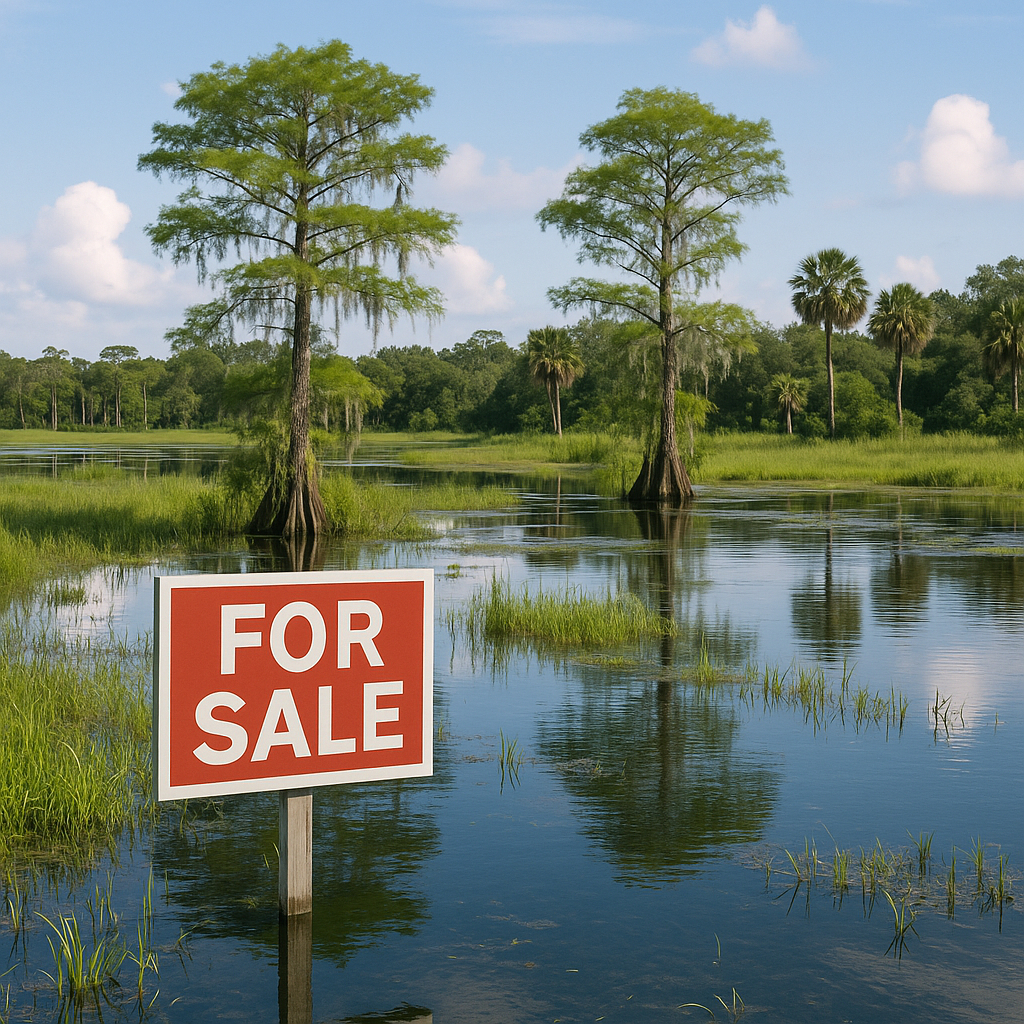
If your Florida parcel has wetland questions, keep the sale discussion focused on what the records establish and what a prospective buyer still needs to investigate. Ultimate Land Deals describes itself as a buyer of vacant land in Florida; as with any prospective buyer, review the written offer, inspection terms, and closing conditions for the specific parcel.
Start with records, not future-use promises
A useful seller file may include the legal description, parcel identification number, tax bill, deed documents in your possession, surveys, prior site plans, wetland reports, agency correspondence, recorded easements, and photographs of the property.
If you have a prior delineation, permit file, or agency letter, provide the document with its date and source rather than summarizing it as a current development conclusion. If you do not have those materials, say so plainly.
Florida DEP uses the statewide Florida Unified Wetland Delineation Methodology in Chapter 62-340, Florida Administrative Code. DEP describes wetlands using hydrology, soils, and vegetation characteristics and identifies formal wetland delineations as a distinct agency function. Florida DEP's Wetland Evaluation and Delineation page provides the agency's overview.
Describe uncertainty accurately
Avoid turning an unresolved question into a listing promise. For example:
- “Seller has a 2023 delineation report available for review.”
- “Seller understands that wetland conditions may be present; buyer should conduct its own review.”
- “Seller has not obtained a current determination of wetland acreage or a project-specific development analysis.”
- “Recorded documents and existing reports are available upon request.”
Avoid labels such as “buildable,” “permit-ready,” “can be filled,” or “enough uplands for a house” unless current, parcel-specific support justifies the statement.
Ask project-specific questions
Florida's Environmental Resource Permit program regulates activities involving alteration of surface-water flows. DEP identifies upland construction that generates stormwater runoff, along with dredging and filling in wetlands and other surface waters, as examples within the program. Applications are processed by DEP district offices or Florida water management districts under their operating agreements. DEP's Environmental Resource Permitting page explains that framework.
Rather than making assumptions about a future use, ask a prospective buyer:
- What use are you evaluating for the parcel?
- Which existing documents do you need before making a final decision?
- Do you intend to obtain a survey, delineation, engineering review, or agency guidance?
- What site access or consultant work do you want during the inspection period?
- Which statements, if any, do you want the seller to make in the contract?
For a proposed activity affecting wetlands or surface waters, the buyer should verify the applicable review path with the responsible agency or a qualified professional.
Compare sale routes by the terms offered
| Sale route | Questions to ask before accepting an offer |
|---|---|
| Direct buyer | What is the inspection period? Is the deposit refundable? May the buyer assign the contract? Which parcel documents does the buyer expect? |
| Land agent | How will existing reports be presented without promising future development? What buyer questions should be anticipated? |
| Independent sale | Which documents will be delivered, what inspection access is allowed, and what contract terms need professional review? |
A cash offer alone does not answer these questions. Read the purchase agreement for the price, deposit, inspection period, closing date, assignment provisions, document-delivery terms, and any seller representations.
Before signing
Keep the contract tied to the actual record:
- List important reports and correspondence by name and date.
- Address site entry and consultant access in writing.
- Read environmental, access, drainage, zoning, and permit-related statements closely.
- Seek Florida legal or qualified professional advice before agreeing to certify a disputed fact or a future-use conclusion.
The practical goal is not to solve every possible future project question. It is to provide the records you have, identify unknowns honestly, and compare buyers based on clear written terms.
FAQs
How does Florida DEP describe wetlands?
DEP describes Florida wetlands as areas inundated or saturated by surface water or groundwater at a frequency and duration sufficient to support vegetation adapted to saturated soils. DEP's wetland evaluation page also explains the role of soils, vegetation, and the Chapter 62-340 methodology. Read DEP's wetland guidance.
What wetland-related activities does the ERP program address?
DEP states that the ERP program regulates alteration of surface-water flows, including upland construction generating stormwater runoff and dredging or filling in wetlands and other surface waters. Project-specific questions should be verified with the appropriate agency or professional. Read DEP's ERP overview.
What should I ask a buyer with a long inspection period?
Ask what the buyer plans to review, what site access is needed, whether the deposit is refundable, whether assignment is allowed, and when the buyer must decide whether to proceed.