
Sell Florida Land With a Drainage Easement: Owner Guide
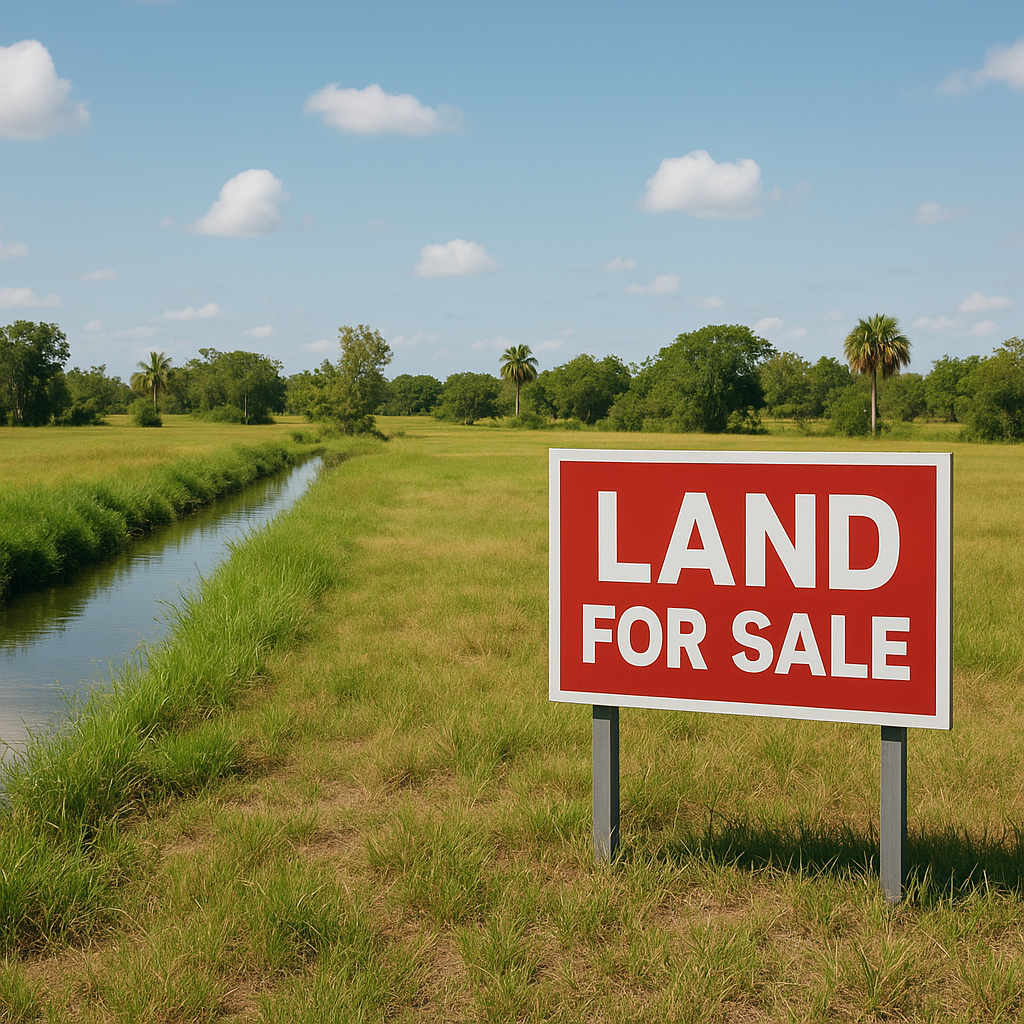
If you want to sell Florida land with a drainage easement, do not lead with a claim that the lot is fully buildable—or that the easement makes it unbuildable. The useful first step is to show a buyer exactly where the easement is, what recorded language governs it, and what remains unknown about a future site plan. For an absentee owner, that can turn a vague objection into a defined diligence question.
Ultimate Land Deals publishes this guide for Florida owners considering a direct sale. Its website describes a digital process for evaluating Florida land and presenting cash offers; the terms of any transaction, including diligence, closing timing, and who handles particular costs, should be confirmed in the written offer. Ultimate Land Deals
Start with the easement’s footprint, not its label
“Drainage easement” can describe a recorded strip, a drainage feature visible on the ground, or both. The label alone does not tell a prospective buyer where a home, driveway, pool, septic area, utility equipment, or stormwater feature could be placed.
Create a one-page parcel exhibit before you begin serious price discussions. It should identify:
- the county parcel identification number and legal description;
- the recorded easement instrument, if you have it;
- the recording reference shown in the county’s official records;
- the easement’s stated width, boundaries, or sketch, if the document provides them;
- any plat, survey, aerial image, or site sketch you possess; and
- visible swales, ditches, pipes, culverts, canals, or low areas that may be relevant.
Do not draw a confident boundary from an aerial image alone. If the recorded description is difficult to place on the parcel, say that plainly. A buyer may decide that a surveyor or other qualified professional should locate it before committing to a particular layout.
Florida’s recording statute states that a conveyance or interest in real property is not effective against certain later purchasers and creditors without notice unless it is recorded according to law. That is a practical reason to obtain the actual recorded easement rather than rely on a prior listing description or a neighbor’s recollection. Fla. Stat. § 695.01
Build a seller packet that answers the first builder questions
A builder or land investor does not need a polished marketing package as much as a clean starting record. Send documents as documents, not as conclusions about what they mean.
| Item to provide | Why it matters to a buyer | What not to state without confirmation |
|---|---|---|
| Recorded easement instrument | Shows the stated purpose, parties, and legal description or exhibit | That the easement has no effect outside a marked strip |
| Recorded plat | May show labeled easements or drainage areas in relation to lots | That plat labels settle every site-design question |
| Existing survey | Gives a buyer a basis to compare boundaries and depicted easements | That an older survey reflects current conditions or a proposed layout |
| Photos and dated aerial context | Identifies apparent ditches, inlets, water, or vegetation | That visible conditions prove the legal easement boundaries |
| Prior correspondence or approvals | Gives context for prior work or agency conversations | That a prior discussion approves a new owner’s project |
| Your disclosure note | Separates known records from unanswered questions | That the buyer may not need further diligence |
A concise disclosure note can be more credible than sales language: “Seller has provided the recorded drainage easement and the attached survey dated [date]. Seller has not obtained a current site plan or confirmation of the area available for a proposed home.” That is clearer than calling the lot “ready to build” when no site-specific layout has been confirmed.
Separate three questions that are often mistakenly combined
A drainage easement can raise three different issues. Keeping them separate helps you compare offers fairly.
1. What rights were recorded?
Read the recorded instrument and its exhibits. Ask: Who holds the easement rights? What purpose is stated? Does the document describe access, maintenance, construction limits, or other conditions? Is there an amendment or a later related document in the official records?
The answer belongs in the title and document review portion of the deal. It is not necessarily answered by the condition of the ditch or by the county property appraiser’s map.
2. What is physically on the ground?
Photos, an aerial image, and an existing survey can help a buyer understand the parcel’s apparent drainage pattern. But a visible feature and a legal boundary are different questions. Note any mismatch rather than trying to reconcile it yourself.
This distinction also matters in the tax-deed context. Florida law says certain drainage easements can survive a tax sale or tax deed. The statute addresses recorded written instruments and, in a specified circumstance, a drainage easement evidenced by a waterway, water bed, or other visible occupation. Fla. Stat. § 197.572 If your ownership history includes a tax deed, flag that history for the title company and buyer instead of assuming the easement disappeared.
3. Can a particular plan fit?
This is the buildable-area question, and it requires a proposed use. A narrow home, a wider home, a corner driveway, a pool, or a different stormwater design can produce different layout questions on the same parcel.
Ask the prospective buyer to identify the concept they are evaluating, then ask what confirmation they need: a preliminary site sketch, a survey, a title review, or an agency conversation. If no plan is proposed, describe the parcel as land subject to a drainage easement—not as a parcel with a verified building envelope.
Treat drainage permitting as a separate project question
Do not tell a buyer that an easement itself is a permit approval or permit exemption. Florida’s Environmental Resource Permit program regulates activities involving alteration of surface-water flows, including upland construction that generates stormwater runoff and dredging or filling in wetlands and other surface waters. Applications are processed by either Florida Department of Environmental Protection district offices or one of the state’s water management districts, depending on the activity and operating agreements. Florida DEP Environmental Resource Permitting
For a contemplated project, a buyer can direct focused questions to the appropriate reviewing agency or professionals handling the project:
- Does the proposed work alter surface-water flows?
- Is the buyer proposing work within or near the recorded drainage area?
- Which agency would process an application for the described activity, if one is needed?
- What information would the agency want to see before commenting on the concept?
As the seller, you do not need to solve a future buyer’s design. Your job is to avoid presenting an unanswered permitting or layout question as a settled fact.
Choose a selling route based on the buyer’s diligence appetite
The best route depends less on the word “easement” than on the quality of the parcel file and the buyer’s intended use.
A direct land buyer can be a practical route when you want one party to evaluate the easement, title materials, and development question as part of its own acquisition process. Ask whether the offer is contingent on title, survey, site feasibility, or assignment; whether the buyer may assign the contract; and what records it expects from you.
A land-focused agent may be useful when the parcel may appeal to multiple builders or buyers with different plans. An agent can market the documented facts, but should not replace the recorded instrument or make an unverified buildability claim. Ask how easement documents will be shared and how buyer questions will be handled.
Selling independently gives you control over communications, but it also means you will field repeated questions about the easement. This route works better when you can provide an organized packet and consistently disclose what you do not know.
Compare net proceeds only after reviewing the actual proposed terms. A higher headline price can carry broader contingencies or a longer diligence period; a simpler offer may ask for fewer seller tasks. Neither outcome is automatic.
Use precise language in the listing or offer discussion
Good wording preserves interest without creating a promise:
Recorded drainage easement documents and available parcel materials are available for review. Buyer should evaluate the easement’s location, title treatment, and suitability for the buyer’s intended site plan.
Avoid statements such as “easement does not affect building,” “drainage is grandfathered,” “no permit needed,” or “full lot is usable” unless the relevant conclusion has been confirmed for the specific proposal and you can provide the supporting record.
Before you accept an offer
Ask these questions in writing:
- Has the buyer received the recorded easement document and any plat or survey you have?
- Is the offer contingent on title review, a survey, agency feedback, or a site plan?
- Is the buyer evaluating a specific project, or buying without a defined plan?
- May the buyer assign the contract to another party?
- What must happen before the buyer can cancel, renegotiate, or close?
- Who is responsible for obtaining any additional reports, survey work, or project-specific confirmation?
A drainage easement does not require you to market the parcel defensively. It requires disciplined documentation. When the location, recorded language, and open site-plan questions are presented honestly, a serious buyer can evaluate the parcel on its actual constraints rather than on a vague warning.
Resources
- Florida recording statute, § 695.01
- Florida statute on certain easements surviving tax sales and deeds, § 197.572
- Florida DEP Environmental Resource Permitting information
FAQs
Can I sell a Florida lot before a buyer has a site plan?
Yes, a seller can present the recorded easement and available parcel records for a buyer’s review. Do not represent the size or location of a usable building area unless that conclusion has been established for a specific plan.
Does a tax deed automatically remove a drainage easement?
Do not assume so. Florida law provides that certain drainage easements survive tax sales and deeds, subject to the statute’s conditions. Have the title company or qualified reviewer examine the ownership history and easement records. Fla. Stat. § 197.572
Is a drainage easement the same as an Environmental Resource Permit?
No. An easement is a property-rights issue reflected in documents or conditions affecting the parcel. Florida DEP describes the ERP program as regulating specified activities involving alteration of surface-water flows, including certain upland construction runoff and dredging or filling. Ask the relevant agency about a particular proposed project. Florida DEP
What is the most useful document to send a cash buyer first?
Send the recorded easement instrument, followed by the plat and any available survey. Include a short note identifying what you have not verified, especially the fit of a future building plan.