
Sell a Damaged Manufactured Home in Kingman | Compare Options
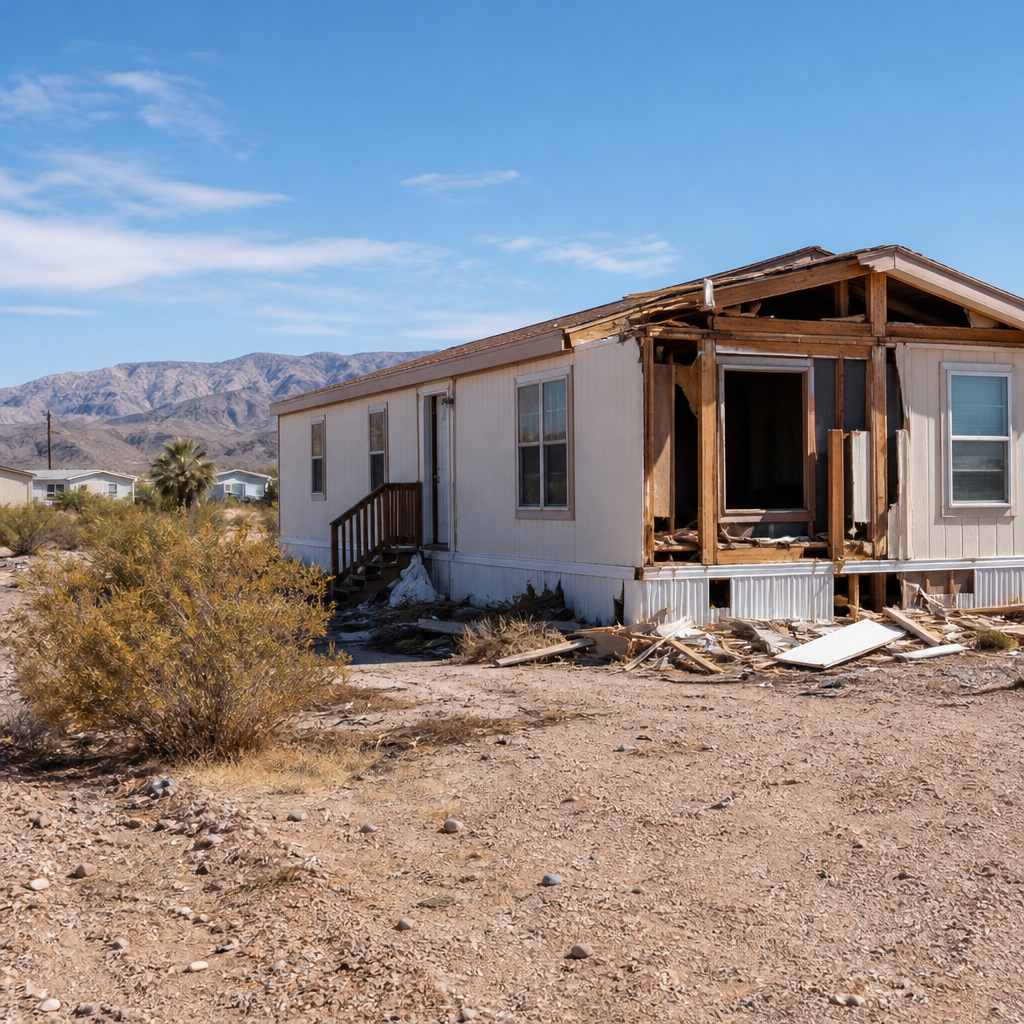
If you need to sell a damaged manufactured home in Kingman, the best route is not automatically the one that makes the home look better. The practical choice is the route that fits the home’s documented condition, the parcel’s potential, and the ownership records a buyer will need to review. For some owners, a limited repair makes the property easier to evaluate. For others, an as-is sale, removal discussion, or a land-focused marketing approach is the more honest comparison.
Ultimate Land Deals publishes this guide for Kingman owners weighing those choices. It is not a valuation or a statement that any particular property can be repaired, removed, financed, or redeveloped.
Start with one decision: what is the buyer being asked to value?
A damaged manufactured home can be central to the sale, a condition issue attached to an otherwise useful parcel, or an item a prospective buyer expects to address after acquisition. Before spending money or selecting a marketing route, write down the intended sale story in a single sentence:
- “The home is being sold as a residence in its present condition.”
- “The property may suit a buyer willing to repair the home.”
- “The buyer is primarily evaluating the parcel and will decide what to do with the home.”
- “The owner is considering removal before offering the land.”
That sentence is not marketing copy. It is a discipline that keeps you from comparing offers aimed at different assets. A buyer who wants a repair project, for example, is not evaluating the same opportunity as a buyer whose interest is chiefly in the land.
There is also an ownership-record question worth resolving early, without letting it consume the entire decision. Mohave County explains that a manufactured home acquired in the county can have a title issued by the Arizona Department of Transportation, while an owner can record an Affidavit of Affixture to add the home’s value to the land parcel. The county says that route requires surrender of the title to ADOT and that the landowner and manufactured-home owner must be the same. Manufactured Homes | Mohave County
Ask a title or closing professional what the records show for your property before representing the home and land as one transferable package.
A four-route comparison for a damaged home
| Route | What you are asking a buyer to accept | Useful when | Main question to answer before choosing it |
|---|---|---|---|
| Repair before marketing | A property presented with specified work completed | You can identify a narrow, documented scope of work that changes how buyers can assess the property | Will the repair produce records and a clearer property presentation, or merely add expense without changing the buyer pool? |
| Sell as-is with the home included | A home and parcel in their current observed condition | You can disclose what you know and permit interested parties to make their own inspection and offer decision | Can the buyer explain what they are pricing: the home, the land, or both? |
| Remove the home before sale | A parcel offered after a separate removal decision | Your objective is a land-only presentation and you are willing to investigate that option before marketing | What approvals, vendors, records, and site work would the responsible local offices require for this parcel? |
| Market primarily for land value | A parcel whose existing home is not the centerpiece of the buyer’s analysis | The location, lot configuration, and allowed uses are likely to matter more to a buyer than a rehabilitation plan | What does the applicable zoning and parcel information actually allow, and what would a prospective buyer still need to verify? |
None of these routes is automatically “better.” The mistake is assuming that repair is an investment, removal is simple, or land value eliminates the need to discuss the existing home.
1. Repair first: choose targeted clarity, not cosmetic optimism
Repairs can be sensible when they answer a buyer’s immediate questions. A written list of work completed, dated photographs, invoices, and any reports you received can be more useful than a general claim that the home has been “fixed up.”
But do not treat every visible defect as a reason to begin a large project. Before committing to work, ask:
- What condition is documented now?
- Which exact repair would change a serious buyer’s ability to evaluate the property?
- Who will perform the work, and what records will remain afterward?
- If the work uncovers additional issues, will you continue or return to an as-is sale?
A modest, well-documented scope and a complete renovation are different decisions. If you cannot define the endpoint, compare an as-is offer before turning the property into an open-ended project.
2. Sell as-is: make the condition file do the work
An as-is approach does not mean saying as little as possible. It means avoiding promises about a condition you have not established while giving serious buyers a usable factual file.
A practical file might include:
- the street address and parcel number;
- current photographs of exterior areas, interior rooms, and visibly affected locations;
- the approximate date of the photos;
- repair estimates or inspection material you already possess, clearly labeled as third-party material rather than a guarantee;
- utility, occupancy, and access information you can document; and
- the records you have concerning the home’s title or affixture status.
Separate facts from conclusions. “There is visible water staining in the ceiling of the rear room” is an observation. “The roof is structurally unsound” is a conclusion that should not be made casually. If you do not know the cause or extent of damage, say that it needs buyer investigation.
For a direct buyer, agent, or independent buyer, request the proposed purchase terms in writing. The headline price is only one comparison point. Ask what inspections or review periods are proposed, what the buyer is acquiring, whether the buyer may assign the agreement, who selects the closing provider, and what must occur before the buyer is obligated to close. The written agreement—not a verbal reassurance—controls those questions.
3. Remove the home: make it a separate decision, not a reflex
Some owners consider removal because they believe an empty parcel will be easier to sell. That may be worth investigating, but it should not be assumed from the home’s appearance alone.
Before choosing this route, obtain answers specific to the parcel: which office has jurisdiction, what records or approvals may be involved, how the title or affixture records affect the plan, and what condition the site would need to be in afterward. Also decide whether you are comparing a sale before removal against a sale after removal, rather than assuming only the latter has value.
The record status matters here. Mohave County distinguishes between a manufactured home with a personal-property title and a home affixed to real property. Its guidance states that affixture involves surrendering the title to ADOT and recording an Affidavit of Affixture. Mohave County’s Affidavit of Affixture instructions should be reviewed with the appropriate closing or government contact for questions about your own records.
4. Lead with the land: do not overstate what the lot can do
A land-focused sale may attract a different set of buyers, but “land value” is not a conclusion based solely on the fact that a home is damaged. The parcel’s zoning, size, location, access, site conditions, and buyer plans still require review.
Kingman’s published zoning-map legend includes several residential manufactured-home districts, identified by minimum lot sizes of 6,000, 20,000, and 40,000 square feet, among other district categories. The legend is a starting point for identifying a mapped designation; it is not proof of the zoning on a particular parcel or of what that parcel can support. Kingman zoning districts legend
If you market chiefly to a land buyer, provide the parcel identifier and invite the buyer to verify the applicable designation and their intended use with the responsible City of Kingman office. Do not describe a future use, replacement home, subdivision possibility, or utility outcome as settled unless you have support for that specific statement.
How to compare actual offers without getting pulled toward one number
Put each offer on the same one-page worksheet. Include the offer amount, property description, proposed closing date, inspection or due-diligence conditions, assignment language, requested documents, and any work the buyer expects before closing. Then note whether the buyer’s price appears to reflect a repair project, a removal project, or a land-centered plan.
A direct buyer may be appropriate when you want a straightforward discussion with a buyer evaluating the property in its present condition. An agent may be useful if you want broader exposure and help presenting the property to buyers. Selling independently gives you control over the listing and conversations, but also leaves you responsible for organizing information and evaluating proposed terms. None of those paths eliminates the need for clear records and a careful review of the agreement.
Questions to settle before you market
- Is the home titled separately, or do your records show it was affixed to the land?
- Are the landowner and manufactured-home owner the same in the relevant records?
- What damage can you document with photos, reports, or invoices?
- Are you prepared to sell the home as-is, or are you considering a defined repair scope?
- If marketing for land value, what parcel facts can you support without making assumptions about future use?
- Does each buyer’s written offer identify the same property and the same acquisition plan?
Resources
- Mohave County: Manufactured Homes
- Mohave County: Affidavit of Affixture instructions
- City of Kingman zoning districts legend
FAQs
Should I repair a damaged manufactured home before selling it in Kingman?
Repair only after comparing a defined scope of work with an as-is sale and a land-focused approach. Useful repairs are those that create clearer, documented information for the buyer you are trying to reach; an undefined project may not do that.
Can I sell the land and manufactured home together?
That depends on the ownership and affixture records for the particular property. Mohave County states that an Affidavit of Affixture adds the home’s value to the land parcel and requires the title to be surrendered to ADOT, with the landowner and home owner the same. Confirm your records with an appropriate closing or government contact. Manufactured Homes | Mohave County
Does a damaged home mean the parcel should be marketed only for land value?
No. Damage alone does not determine the appropriate sale story. Compare how a buyer would evaluate the present home, the cost and uncertainty of repair or removal, and the parcel information the buyer would need to verify.
What should I ask a buyer making an as-is offer?
Ask what is included in the acquisition, what due-diligence conditions apply, whether assignment is permitted, what documents the buyer needs, and what the buyer expects to happen before closing. Request answers in the written offer or agreement.