
Sell a Cape Coral Saltwater Lot With Mangroves
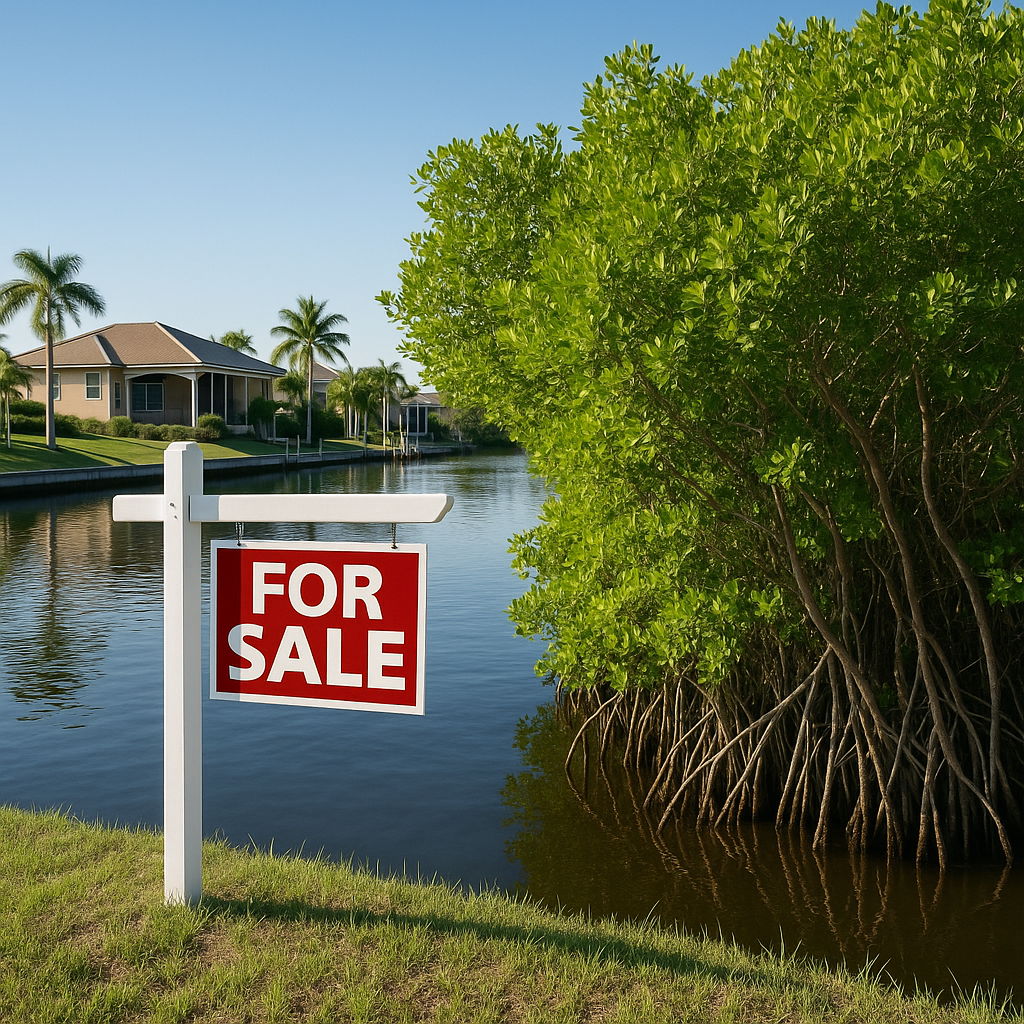
A Cape Coral saltwater lot with mangroves can still be sold, but it should not be marketed as though clearing, water access, views, or future improvements are already settled. The useful selling decision is to turn the mangroves from a surprise into a documented condition: identify the parcel accurately, preserve what you know, and ask the right agencies and buyers what they would need to evaluate.
Ultimate Land Deals publishes this guide for absentee owners preparing a Cape Coral land-sale conversation. Its published Florida selling process says owners can submit parcel details for review and receive a no-obligation cash offer; the written offer is the place to confirm the actual property condition, closing terms, and any buyer rights that matter to you. See its stated process here.
Start with the right representation: mangroves are not just brush
Florida DEP identifies three species covered by the 1996 Mangrove Trimming and Preservation Act: white mangrove (Laguncularia racemosa), red mangrove (Rhizophora mangle), and black mangrove (Avicennia germinans). DEP also states that the act does not distinguish between living and dead mangroves; the same trimming regulations apply to both. Florida DEP’s mangrove FAQ is the appropriate starting point for an owner who believes dead-looking vegetation can simply be removed.
That matters to a sale listing, an email to a direct buyer, or an owner-financed advertisement. Avoid statements such as:
- “Lot can be cleared.”
- “Guaranteed open water view after trimming.”
- “Mangroves are dead, so removal is not an issue.”
- “Buyer can create water access.”
Those statements answer questions that have not been verified. A more accurate description is: saltwater-access-area lot with existing mangrove vegetation; buyer should perform its own use, trimming, removal, and improvement review.
This is not a reason to hide the vegetation. It is a reason to describe it plainly and avoid attaching a development outcome to it.
Build a small seller file before deciding how to sell
An absentee owner does not need to solve every environmental or construction question before selling. But a compact file can make a buyer’s review more efficient and reduce misunderstandings.
1. Confirm the parcel, not just the street address
Begin with the Lee County Property Appraiser record for the exact parcel. The Property Appraiser cautions that its condensed property description is for internal use and should not be used to convey property or prepare a recorded document. It also notes that the tax-roll owner of record may not be the fee-simple title holder. Read the parcel inquiry notice.
For your sale file, retain:
- the folio or parcel number;
- the recorded deed you have available;
- the legal description from the deed or title materials, rather than copying the abbreviated appraiser description into a contract;
- recent photographs showing the roadside side, canal or waterfront side, and visible mangrove coverage;
- any prior survey, title material, correspondence, permit material, or contractor proposal.
Do not infer title status from the tax-roll name alone. If ownership, a trust, an estate, or multiple owners are involved, raise that issue with the title company or closing professional before accepting terms.
2. Separate what you can see from what you do not know
Use two headings in your notes.
| What you can provide | What a buyer or agency must evaluate |
|---|---|
| Current photographs of vegetation and shoreline conditions | Whether proposed trimming or removal is allowed |
| Parcel identifier and available deed materials | What approvals, reviews, or conditions could apply to a proposed activity |
| Existing survey or prior correspondence, if any | Whether a particular home, dock, seawall, access feature, or other improvement is feasible |
| Your knowledge of past work on the lot | The applicable zoning and development requirements |
This distinction is valuable because it does not make the lot sound worse than it is, and it does not convert an owner’s observations into an approval claim.
3. Ask a narrow set of questions before making a clearing claim
If vegetation is central to the lot’s appeal or price, contact the responsible environmental permitting office with the exact parcel location and ask questions tied to the proposed activity. For example:
- Are the visible plants identified as mangroves under the state definition?
- What review is needed for the specific trimming, removal, shoreline, or access work being considered?
- Is there a record of prior authorization associated with this parcel?
- Which office should review a question about a proposed improvement near the water?
DEP’s FAQ addresses mangrove identification, trimming, removal-related questions, shoreline questions, and professional mangrove trimmers. Use the FAQ as a question list, not as a substitute for parcel-specific review.
For land-use questions, use the City of Cape Coral’s zoning page to identify the City Planning Division contact and ask which records or review path apply to the parcel. Do not assume an answer based on nearby construction, a map label, or the fact that the lot is within a Cape Coral mailing area.
Price the uncertainty honestly rather than trying to erase it
Mangroves can change the buyer pool. A buyer who wants a parcel in its present condition may view them differently from a buyer whose purchase decision depends on a particular view, shoreline plan, or construction concept. The practical effect is not one universal discount. It is a need to give each buyer the same usable information.
When requesting offers or listing the lot, provide the parcel number, photos, your available documents, and a short disclosure of what is unknown. Then ask the buyer to state, in writing:
- Whether its price assumes any particular vegetation work or approval.
- Whether its investigation period includes environmental, title, zoning, or improvement questions.
- Whether it may assign the contract to another buyer.
- Which party selects the closing or title provider and what documents the seller must provide.
- What happens if its due diligence changes its decision.
The third question is especially important with a direct buyer. An assignment provision is a contract term, not a label to guess from the buyer’s business model. Read the proposed agreement and request clarification before signing if the clause is unclear.
Choose the sales route based on the buyer problem
A lot with mangroves does not require one particular selling method. The sensible route depends on how much explanation and buyer screening you want to handle.
Direct buyer
A direct buyer may be a practical option when you want one party to evaluate the parcel and present written terms. Send the same fact file to each buyer, and compare the proposed price with the inspection, assignment, closing, and condition language—not price alone. Ultimate Land Deals’ website says it reviews land information and market activity before making an offer, and describes a digital process in which the owner chooses a closing date. Confirm all deal-specific terms in the offer and contract. Its published process is here.
Agent-assisted sale
An agent may be useful if you want broader exposure and help presenting the lot to buyers. Ask how the listing will describe the mangroves without promising clearing, views, access, or a particular future use. Before engaging an agent, discuss the listing agreement, marketing plan, compensation, and who will handle buyer questions about vegetation and approvals.
Sell it yourself
An owner sale can work if you are prepared to respond consistently, provide documents, and avoid unsupported representations. The tradeoff is that you will need to manage inquiries and decide how to handle buyers whose offers depend on unverified site work. A simple written property summary and a disciplined “please verify with the responsible agency” response are better than improvising answers.
A disclosure note you can adapt
Use facts, not conclusions. For example:
The parcel has visible mangrove vegetation near the waterfront area. Seller has provided available parcel and photo information. Seller is not representing that vegetation may be trimmed or removed, that a view or water access may be created, or that a particular improvement is approved. Buyer should conduct its own review with the appropriate agencies and professionals.
This is a communication tool, not legal advice or a substitute for the disclosures and contract language appropriate to your transaction.
Before you sign
A mangrove issue should not be left to a casual verbal promise. Check that the contract identifies the correct parcel, states the buyer’s due-diligence rights clearly, and does not include claims about vegetation work that neither party has verified. Keep copies of the photos and records you supplied. If a buyer says its offer depends on a specific clearing or improvement outcome, ask that the assumption be stated clearly—or treat it as unresolved.
Resources
- Florida DEP: Mangrove Frequently Asked Questions
- City of Cape Coral: Zoning
- Lee County Property Appraiser: Online Parcel Inquiry
- Ultimate Land Deals: How Selling Your Land Works
FAQs
Do dead mangroves change the question?
Not automatically. Florida DEP says the Mangrove Trimming and Preservation Act does not distinguish between living and dead mangroves, and that the same trimming regulations apply to each. Ask the responsible agency about the specific vegetation and proposed work. DEP FAQ
Should I remove mangroves before I sell my Cape Coral lot?
Do not treat removal as a routine pre-sale cleanup step. First identify the vegetation and obtain parcel-specific guidance about the work you are considering. If you do not pursue that review, disclose the existing condition and let buyers evaluate it.
Can I use the Lee County Property Appraiser description in the contract?
The Property Appraiser says its condensed property description should not be used for conveying property or in a recorded document. Use appropriate deed, title, and closing documentation for the transaction. Parcel inquiry notice
Can an out-of-state owner request a cash offer?
Ultimate Land Deals’ published process asks owners to share property details for evaluation and describes a digital Florida land-selling process. Submit the parcel information, then review the written offer for the terms that apply to your lot. How it works