
Remote Burlington County Land Sale File Guide
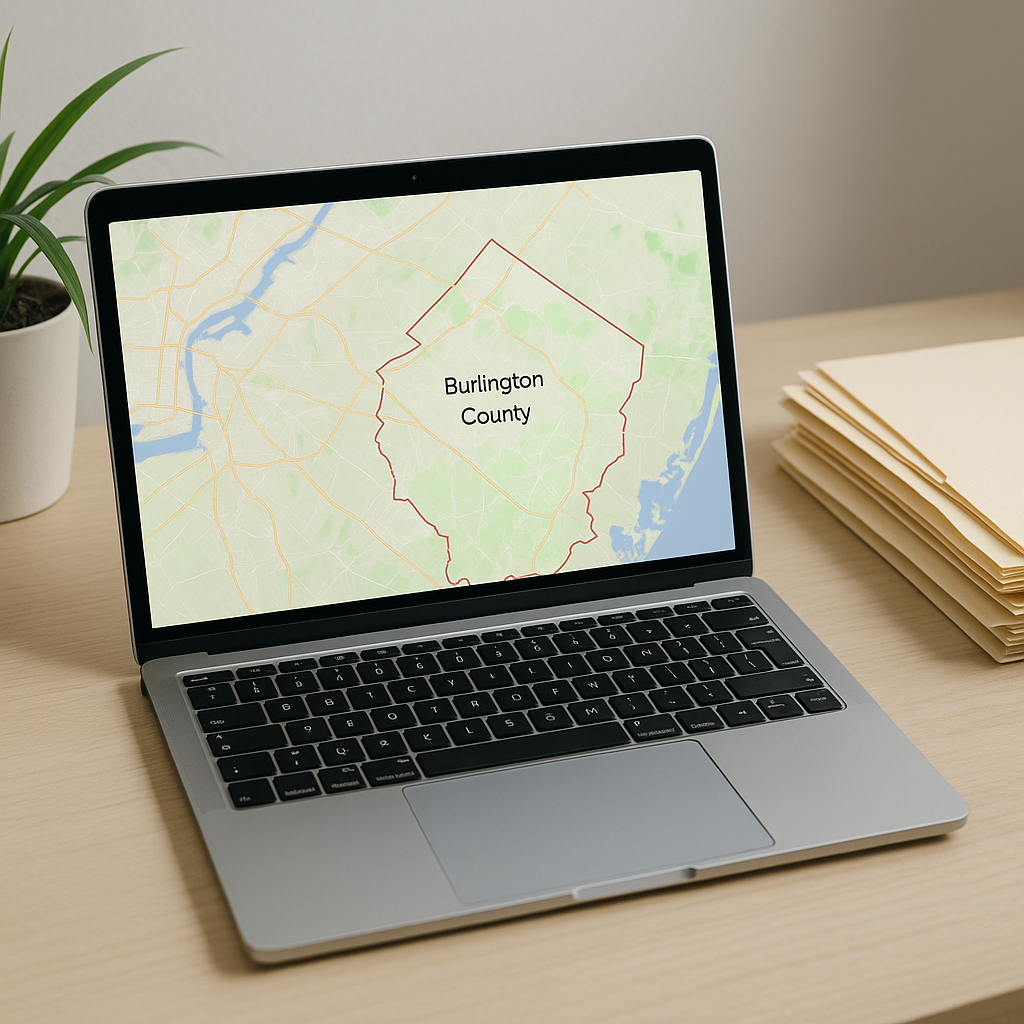
How to Organize a Remote Burlington County Land Sale File
Selling land while living elsewhere starts with a clear file and written questions. This guide is published by Ultimate Land Deals for Burlington County owners comparing a direct offer, an agent-assisted sale, or an owner-led sale.
Identify the parcel from available records
Keep the records you have in one place, including the municipality, block and lot if available, deed copy or deed reference, owner name, and correspondence about the property.
Burlington County’s Public Records Electronic Search System (PRESS) includes searches by instrument number, instrument, book number, page number, municipality and document type. It also provides block-and-lot and name-search fields. Compare an offer’s parcel description with the records available to you before signing.
Compare written offers
Whether you consider a direct buyer, an agent listing, or an owner-led sale, request written terms and compare them side by side. Useful questions include:
- Does the document identify the parcel you intend to sell?
- Is the buyer named?
- What purchase price, deposit, conditions, and closing date are stated?
- Does the agreement address assignment?
- Which expenses does the agreement allocate to the seller?
- Who will communicate closing instructions and document questions?
Keep offers, amendments, and written responses in the same transaction folder. If a term is unclear, ask for a written explanation before deciding.
Ask about recording documents early
The Burlington County Clerk’s Submitter’s Checklist addresses items for documents to be recorded, including original signatures, acknowledgments, reference information, fees, municipal tax block and lot, and seller-residency declarations. Ask the closing contact which documents will be prepared for your transaction, where they must be delivered, and what information or signatures they need from you.
Review the nonresident seller tax question
New Jersey’s Division of Taxation states that nonresident sellers, transferors, and grantors of New Jersey real property must pay estimated gross income tax equal to 2% of the consideration paid before or at closing and file the estimated-tax form, whether or not there is a gain. The Division also describes exemptions and possible waivers through Forms GIT/REP-3 and GIT/REP-4. Review the Division’s guidance with the closing contact and a qualified tax adviser for your situation.
Final questions before signing
Before authorizing a sale, make sure you can identify:
- The parcel described in the offer.
- The written terms that require action from you.
- The person handling document, recording, tax, and payment-delivery questions.
A remote sale is easier to evaluate when the parcel records, written offer, and closing communications are organized together.
FAQs
What should I send first to a prospective buyer?
Provide parcel information you can document and distinguish known records from questions that still need review.
How should I compare offers?
Compare the written parcel description, buyer identity, price, conditions, deposit language, assignment language, expenses, and closing date.
What should I ask about New Jersey nonresident seller tax?
Ask which form applies, whether an exemption or waiver may be relevant, and how the item will be handled in the closing process. See the New Jersey Division of Taxation guidance.