
Sell a Buildable Lot With HOA Fees: Seller Guide
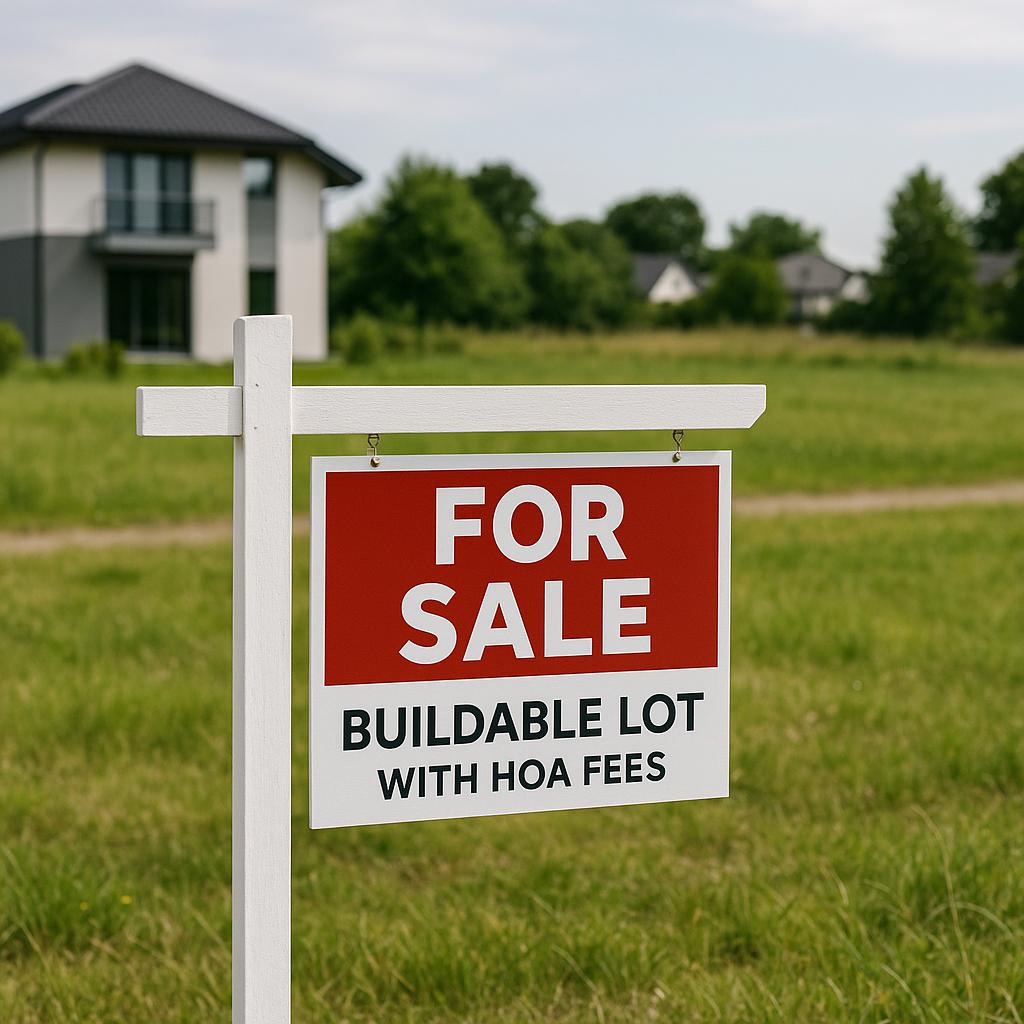
If you want to sell a buildable lot with HOA fees, do not treat the dues as a minor line item. The buyer needs to know three things: what they will pay after closing, what you owe before closing, and whether the HOA’s rules still allow the house or use they have in mind.
A vacant lot in a managed subdivision can be easier to understand than rural land, but it can also carry recurring costs with no immediate income or use. For an absentee owner, the goal is to make the HOA portion of the sale clear enough that it does not derail the offer during due diligence or at the closing table.
Does an HOA fee make a buildable lot harder to sell?
Not necessarily. In some communities, an HOA is part of what gives a lot value: maintained entrances, private roads, shared amenities, architectural standards, or a consistent neighborhood appearance. A buyer building a primary residence may see those features as a benefit.
The issue is not simply that dues exist. It is whether the carrying cost and restrictions match the likely buyer.
A $35 monthly assessment in an established neighborhood may be routine. A $1,200 quarterly assessment on a lot where construction must begin within a certain period is a different proposition. It may still sell, but the buyer will price in the cost of holding the lot, the possibility of special assessments, and any limits on building plans.
For a vacant parcel, disclose the dues early rather than waiting for a buyer to find them in the association documents. A straightforward listing or offer package should state:
- Current regular dues and payment frequency
- Whether vacant lots pay the same rate as improved homes
- Any known pending or recently approved special assessment
- Your current balance, including late fees or collection charges if applicable
- Whether there is a transfer, resale, working-capital, or initiation fee at closing
- The HOA contact information and management company, if there is one
That information does not eliminate a buyer’s need to verify the details. It does prevent the sale from beginning with an incomplete picture.
Who pays HOA dues while the lot is under contract?
Usually, the current owner remains responsible for assessments until title transfers. A purchase contract can allocate expenses differently, but the HOA generally looks to the owner of record for amounts due before closing.
That means continuing to monitor the account after signing a contract. Do not assume an accepted offer pauses dues, late fees, or collection activity. If closing is delayed, another assessment may come due.
At closing, the title or escrow company commonly requests an association estoppel, payoff statement, or resale information package. The exact name and process vary by state and association. That document should identify the amounts owed and may list transfer-related charges. The closing statement can then show which items are being paid from the seller’s proceeds and which, if negotiated, are assigned to the buyer.
If your expected net proceeds are modest, ask for this information early. A seller who thinks they are selling a low-value lot for $12,000 may be surprised by accumulated dues, attorney fees, lien-related charges, document fees, or a special assessment. Those costs can materially change whether a direct cash offer is workable.
What HOA records should a seller gather before asking for offers?
You do not need to solve every construction question for the buyer. You should, however, assemble the records that allow a serious buyer to understand the lot’s obligations.
A useful seller file includes:
- The recorded declaration, covenants, conditions, and restrictions. These are often called CC&Rs. They may address minimum home size, setbacks beyond local zoning, permitted exterior materials, fences, parking, rentals, and maintenance duties.
- Current rules and architectural guidelines. These can be separate from the recorded declaration and may contain practical requirements for plan review, construction deposits, landscaping, or approved builders.
- The latest dues notice or account statement. This helps establish the regular assessment and whether the account is current.
- Any notices of violations, fines, liens, or collection activity. A buyer or title company is likely to uncover these, so withholding them only creates a later problem.
- Information about special assessments and upcoming votes. Meeting notices, annual budgets, and reserve information can be relevant where available.
- The association or management company contact details. A buyer needs a path to request official confirmation.
For a property in Florida, Arizona, Nevada, or North Carolina, association disclosure and resale-document requirements can differ, and the governing documents may control important details. A title company, closing attorney, or qualified local real-estate professional can explain the closing requirements for the specific parcel. Do not rely on an old welcome packet or a neighbor’s recollection as confirmation of what is currently owed.
Can an HOA prevent a buyer from building on the lot?
An HOA typically does not replace county or city zoning, building permits, utility approvals, or environmental requirements. But it can impose a second layer of restrictions that matters just as much to the buyer’s plan.
For example, a lot may be zoned for a single-family home but still be subject to HOA rules requiring:
- A minimum heated square footage
- A particular roof pitch, exterior finish, or garage configuration
- Architectural review before construction begins
- A construction deposit or road-use deposit
- A deadline to begin or finish construction
- Limits on modular, manufactured, accessory, or short-term rental uses
- Specific driveway, landscaping, or fencing standards
This is especially important when marketing a lot as “buildable.” That word should mean more than “a house exists somewhere in the subdivision.” It should not imply that every buyer’s preferred home design will be approved.
A seller can accurately say that the parcel is in a residential HOA community and provide the documents for review. Avoid assuring a buyer that a particular plan, rental model, or construction method is allowed unless the HOA has approved it in writing.
Should you pay off overdue HOA fees before putting the lot on the market?
It depends on the account status and your selling route. Bringing the account current can make the property easier to present and may stop late charges from growing. But an owner should first obtain an official payoff or account statement rather than sending an estimated amount.
If there is already a recorded lien or the account is in collections, the sale can still be possible. The amount owed normally needs to be addressed before or through closing so title can transfer as required by the title company and buyer. A direct buyer may be willing to proceed if the numbers are clear, but uncertainty over the payoff often leads to a lower offer or no offer.
Do not confuse an unpaid balance with a negotiated closing credit. If a buyer agrees to cover a particular HOA charge, make sure the written contract and closing instructions say so. The association may still require payment from the seller’s side of the transaction before it recognizes the account as satisfied.
How do HOA fees affect the price of a vacant lot?
The impact is usually a holding-cost calculation, not a dollar-for-dollar subtraction from the asking price.
Consider two similar lots. Lot A has $300 annual dues, no known special assessment, and flexible architectural standards. Lot B has $2,400 annual dues, a $1,500 upcoming assessment, and a requirement to start building within two years. A buyer who plans to hold land for several years will value Lot B differently even if both have similar size and location.
The buyer may also consider the cost of obtaining approvals and complying with construction standards. That does not mean the HOA is bad for value. In a desirable, well-maintained community, the same standards may help support finished-home values. The question is whether the lot price leaves room for the buyer’s total project cost.
For an owner who wants a quick sale, it is often more productive to state the known costs plainly and seek a realistic offer than to advertise the lot as a bargain while omitting a large recurring obligation.
Is a cash sale a good option for an HOA lot?
It can be, particularly when the owner no longer wants to carry dues, taxes, and administrative tasks for an unused parcel. A direct buyer may be able to evaluate the lot without the long marketing period of a retail listing.
Still, compare more than the headline price. Ask whether the buyer has accounted for the HOA balance, who orders the association payoff, whether the contract allows assignment, how long due diligence lasts, and whether closing will occur through a title or escrow company. A legitimate transaction should make the handling of HOA documents and charges visible rather than vague.
Ultimate Land Deals reviews off-market vacant lots and can determine whether a direct purchase, an assignment to another buyer, or a resale path makes sense. For an HOA lot, the association’s costs and building rules are part of that review—not an afterthought.
Frequently asked questions
Do HOA dues transfer automatically to the buyer?
Future regular dues generally become the new owner’s responsibility after title transfers, but unpaid amounts from before closing must be handled according to the association’s requirements, the contract, and the closing process. Confirm the account status through an official estoppel or payoff request.
Can I sell a lot if I have an HOA violation?
Often, yes, but disclose it. Some violations can be cured before closing; others may involve fines, liens, or continuing obligations. A buyer needs the written notice and enough time to evaluate the remedy.
What if the HOA will not provide documents quickly?
Request them as soon as you decide to sell, not after accepting an offer. Associations and management companies may charge document fees and have their own processing timelines. Build that timing into your expected closing date.
Do I need HOA approval to sell the vacant lot?
Some declarations include transfer procedures, rights of first refusal, buyer registration, or required fees. Check the governing documents and ask the association or closing professional for the process applicable to your parcel.