
Sell a Buildable Lot With an Expired Permit
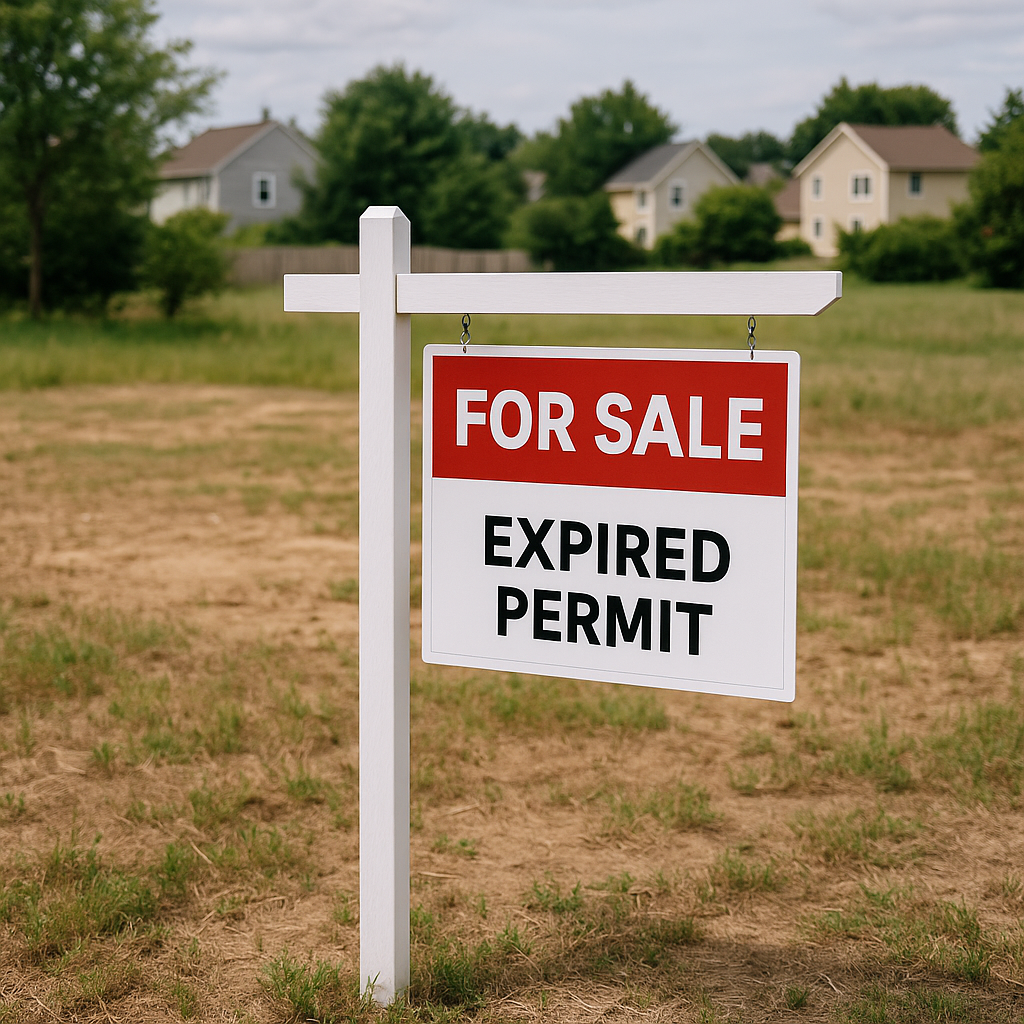
An expired permit does not automatically make a lot unbuildable, but it usually means you should not price or market the property as though a buyer can begin construction tomorrow. The central question is not simply whether a permit once existed. It is whether that prior approval gives the next owner a practical, affordable path back to an active permit under today’s rules.
For an absentee owner trying to sell a buildable lot with an expired permit, the most useful move is to preserve the permit history, identify exactly what expired, and let the buyer evaluate the remaining risk. In some cases, renewing an approval before sale is worthwhile. In others, the approval is too old, tied to a former owner’s plans, or dependent on conditions that no longer apply. Trying to present it as fully valid can create distrust and delay a sale.
What does an expired permit actually tell a buyer?
A prior permit can be valuable evidence that someone previously cleared an important hurdle. It may show that the parcel was reviewed for a house plan, septic system, driveway connection, grading work, well, or utility installation. That history can save a buyer research time.
It is not, by itself, proof that the same work can be approved now.
A buyer will want to know:
- Which agency issued the permit or approval
- What type of work it covered
- The permit number, issue date, expiration date, and status
- Whether it expired because work never started, work stopped, or an extension was not requested
- Whether the approval was issued to the land itself, a particular owner, a contractor, or a specific building plan
- Whether current zoning, floodplain, health-department, access, or building-code requirements have changed
- Whether any required inspections, fees, bonds, or conditions remain open
An old residential building permit is different from a septic authorization or a driveway permit. A permit for a specific 1,800-square-foot plan may be of limited use to a buyer intending to build a different home. Conversely, a recent septic permit or approved soil evaluation may remain highly relevant, even if the building permit itself expired. Each item needs to be described separately.
Is the lot still buildable after the permit expires?
Possibly, but that conclusion should come from current records and the appropriate local authority—not from the old permit alone.
A permit expiration usually means the holder lost authority to perform the permitted work without taking another step. It does not necessarily mean the parcel lost its zoning, legal lot status, access, or ability to support a home. Still, conditions may have changed since approval. For example:
- A zoning district may now require a larger setback or different minimum lot size.
- Building-code updates may require a revised plan review.
- A septic approval may have a limited life, or a new owner may need a new authorization.
- Flood maps, drainage rules, fire requirements, or coastal restrictions may have changed.
- A utility provider may no longer have the same connection capacity or fee schedule.
- A permit may have lapsed alongside an unresolved condition, such as a road-improvement requirement.
Do not tell buyers, “It is grandfathered,” unless the issuing authority has confirmed that in writing. That word has a specific legal meaning in many jurisdictions and is frequently used too casually in land sales.
A more accurate statement is: “A permit was issued in [year] for [specific work], expired on [date], and the county’s current status shows [status]. The buyer should confirm renewal or reapplication requirements for their intended project.”
Should you renew the permit before selling the lot?
Renewal is worth considering only when it meaningfully reduces a buyer’s uncertainty and can be completed without committing you to disproportionate cost or delay.
It can make sense to pursue an extension, reinstatement, or updated permit when:
- The permit expired recently.
- The original project still fits the likely buyer’s intended use.
- The issuing department confirms that renewal is available rather than a full reapplication.
- Required plans, tests, and supporting documents are still current.
- The lot is in a market where builders place real value on time saved.
- The permit can transfer or be reissued to a new owner without unusual complications.
It may not make sense when the prior permit is old, the plans are obsolete, the buyer pool is broad rather than project-specific, or reactivation requires costly engineering and studies. A seller who spends thousands of dollars to revive approval for one house design may not recover that expense if the ultimate buyer wants another design or use.
A practical middle course is often better: obtain a written status confirmation or a concise conversation summary from the issuing department, then sell with complete records. This gives prospective buyers something they can verify without representing that the approval is active.
What paperwork should you collect before asking for offers?
The goal is not to create a polished development package. It is to make the permit history legible enough that a serious buyer can assess it quickly.
Gather copies of:
- The permit card or issued permit. Include the permit number, scope of work, dates, and named parties.
- Any expiration, suspension, extension, or cancellation notice. The reason for expiration may matter.
- Approved plans or site plans. Label them as historical plans if they are no longer approved.
- Related agency approvals. These might include septic records, soil reports, driveway or right-of-way permits, survey plats, well documents, flood information, or environmental correspondence.
- Inspection records. If physical work began, show what was inspected and what remains incomplete.
- Fee receipts and correspondence. Do not assume paid fees transfer, but records can help explain the file.
- Current property-tax and ownership information. This helps ensure the permit records are being matched to the correct parcel.
If you have only partial files, provide what you have and say so. Do not fill gaps with assumptions. County online portals can be helpful, but older permits may be archived, indexed under a street address rather than a parcel number, or stored under the former owner’s name.
How should you describe the lot in an offer or listing?
Avoid the two weak extremes: hiding the expired permit entirely or advertising “permit-ready” based solely on a historical document.
A clear description might read:
Residential lot with a prior county-issued building permit for a single-family residence, issued in 2022 and expired in 2024. Seller has copies of the permit and associated site materials. No representation is made that the permit remains active, transferable, or renewable; buyer should verify current requirements with the applicable agencies.
That language is less flashy than “shovel-ready,” but it is more useful to a builder, investor, or direct land buyer. It identifies a potentially valuable fact without converting an expired approval into a promise.
If the permit related only to a portion of the work, name it precisely. “Prior septic authorization on file” is not the same as “approved to build.” “Expired driveway permit” is not evidence of an approved residence. Precision protects both the sale process and your credibility.
How will an expired permit affect the price?
The effect depends on what the old approval proves and how easily it can be revived.
A recent expired permit with complete plans, an unchanged regulatory environment, and a simple renewal path may support a stronger price than a comparable lot with no permit history. It can reduce the buyer’s time to verify feasibility.
An expired permit may have little price effect when the buyer would need to submit a new plan anyway. It may reduce value when it reveals a problem: failed inspections, expired septic testing, lapsed environmental clearance, missing access approval, or a project that could not meet conditions.
The right comparison is not “permitted lot versus unpermitted lot.” It is the buyer’s expected cost, time, and uncertainty to reach a buildable project. A direct cash buyer may still make sense when you do not want to fund new studies or wait through a renewal process. In that situation, Ultimate Land Deals can review the parcel and permit records, determine whether a direct purchase or assignment path fits, and coordinate due diligence and title closing. The offer should reflect the work and risk the buyer is taking on.
Should you let the buyer handle permit reapplication?
Often, yes. The buyer should usually control a new or renewed permit application when the result depends on their house plan, builder, financing, timeline, or intended use. That avoids the seller paying for approvals that do not match the eventual project.
However, give the buyer a reasonable chance to review the historical file during due diligence. If you know of a prior denial, failed inspection, unresolved violation, or material change to the site, disclose it rather than waiting for the buyer to discover it.
You can also negotiate around the uncertainty. A buyer may accept the lot as-is at a lower price, request a feasibility period to confirm permit requirements, or make closing conditional on a particular approval. These are different risk allocations, not interchangeable terms. Review the contract carefully, particularly any language about inspection periods, contingencies, assignments, deposits, and who pays for studies.
Frequently asked questions
Can I sell the lot while the permit is expired?
Yes. Land can be sold with an expired permit. The issue is accurate disclosure and realistic expectations, not whether a deed can transfer. The buyer will decide whether to renew, replace, or disregard the old approval.
Can a new owner use my old permit?
Sometimes, but not automatically. Rules vary by agency and permit type. The permit may be transferable, reissuable, or tied to the original applicant, contractor, plan set, or period of construction. Ask the issuing department for the current procedure.
Does an expired building permit make a septic permit invalid?
Not necessarily. They are often separate approvals with different expiration dates and requirements. Verify each record independently.
Is it better to remove old permit documents from the sale file?
No. Historical records can help a buyer understand the parcel. The better approach is to share them with clear dates and no claim that they remain valid. A missing or hidden record is more likely to create suspicion than an expired one explained plainly.
The strongest sale position is simple: present the expired permit as a documented part of the lot’s history, identify what is known, and leave current buildability to present-day verification. That lets buyers price the parcel based on real information instead of discovering the uncertainty after they are already under contract.