
How to Sell a Build-Ready Residential Lot in Nevada
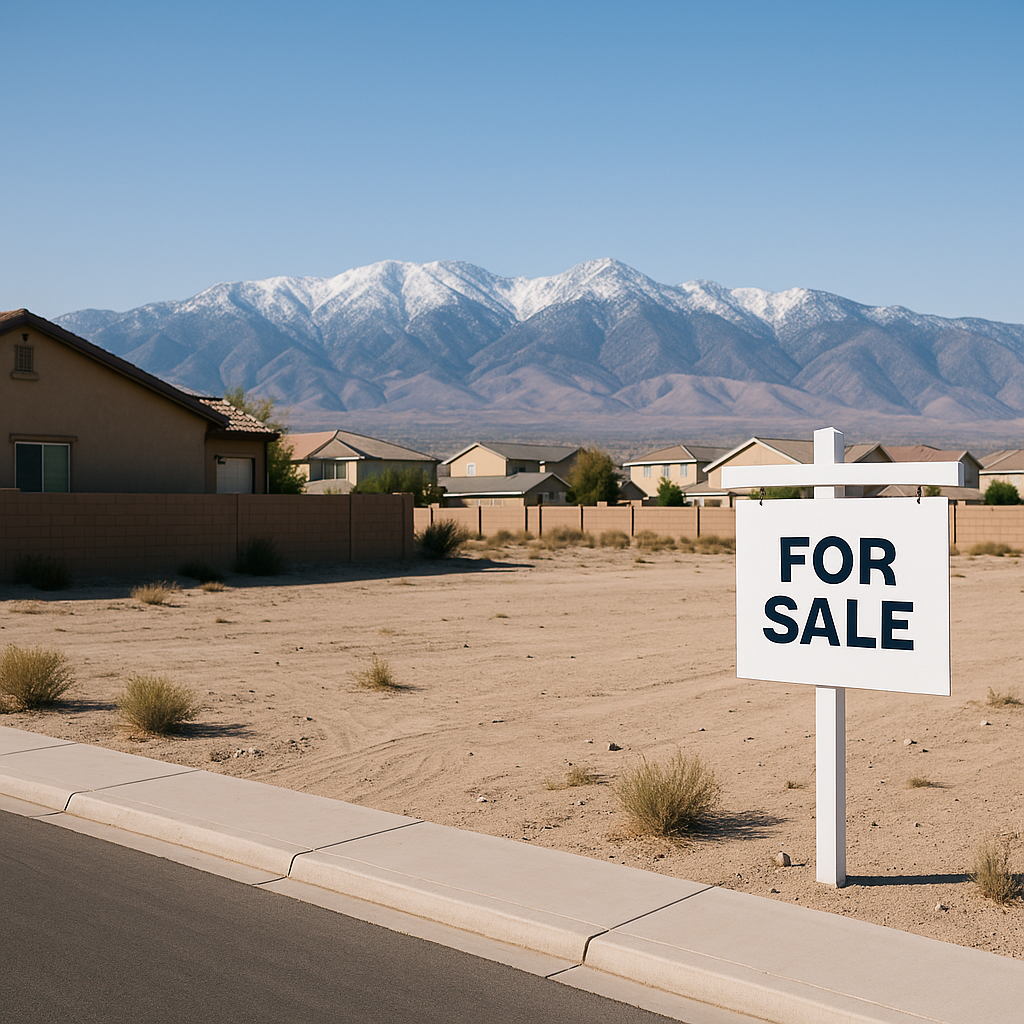
A Nevada residential lot is “ready to build” only if a particular buyer can see a credible path from closing to a construction start. That is a higher standard than having vacant land in a growing area, and it is the standard that separates a serious cash offer from an inquiry that goes nowhere.
If you want to sell a residential lot ready to build in Nevada, do not start by repeating that it is buildable. Start by documenting what the next owner can do in the first 90 days: confirm the intended house fits, obtain or transfer utility service, access the site safely, and move through the local permit process without discovering an expensive surprise.
For an absentee owner, this approach is especially useful. You do not need to solve every construction issue yourself. You need to give a builder, investor, or land buyer enough reliable information to decide what remains and price that work appropriately.
Define the building scenario before you call the lot construction-ready
“Ready to build” means different things in different Nevada markets. A platted lot in an established Las Vegas-area subdivision may be served by paved roads and nearby water and sewer, yet still face HOA design rules, drainage requirements, or utility connection costs. A lot outside a city may have more flexibility, but the buyer may need to evaluate road access, water supply, wastewater, power extension, and site development from scratch.
Begin with a short, factual statement that answers these questions:
- What type of home is realistically contemplated: a conventional single-family house, manufactured home, custom home, or another permitted residential use?
- What is the parcel’s zoning or land-use designation, and which city or county administers it?
- Is the parcel in a recorded subdivision, and does it have a recorded legal description and parcel number?
- What development items are visibly in place, nearby, or still required?
- Are there known restrictions from an HOA, deed restrictions, a planned community, or a recorded plat?
Avoid saying that a lot is ready for “any home” unless the applicable rules clearly support that claim. A 1,400-square-foot single-story home, a two-story custom house, and a manufactured home can trigger very different setbacks, design review, utility, driveway, grading, and financing considerations.
A more useful description might be: “Residential lot in a recorded subdivision; buyer should confirm current setback, house-size, utility-connection, and architectural requirements with the governing agencies and HOA.” That is less flashy, but it protects credibility and attracts buyers who know how to evaluate a lot.
Treat local jurisdiction as the first fork in the sale process
Nevada is not governed by one statewide residential building workflow. The relevant rules can depend on the county, incorporated city, utility provider, fire authority, and subdivision documents. Before seeking offers, identify the agencies a buyer will need to contact.
Your file should name, at minimum:
- The planning or zoning authority — usually the city or county that can confirm allowed residential use, setbacks, lot coverage, height, and any special overlays.
- The building department — the office that administers building permits and may identify current submittal requirements.
- The utility providers — water, sewer, electric, gas, and telecommunications providers where applicable.
- The road or access authority — particularly important if the driveway connects to a county road, private road, or an undeveloped right-of-way.
- The HOA or architectural review entity — if the lot is within a managed community.
This is not busywork. A buyer who cannot quickly identify these decision-makers is likely to discount the property heavily or walk away. A seller who has the correct contacts and parcel information makes due diligence faster without making promises on the agencies’ behalf.
Build a “first-90-days” lot file
The most effective sale package for a construction-ready lot is not a glossy brochure. It is a concise file that lets the buyer test the build path. Gather what you already have, distinguish it from what still needs verification, and do not alter old documents to make them look current.
Parcel identity and ownership records
Include the assessor parcel number, legal description, recorded plat if available, county tax record, and your most recent tax bill. If you have a prior title policy, deed, or survey, retain it for the title company and prospective buyer.
A prior survey can be useful, but it is not automatically current enough for construction. Boundary monuments can be missing, and an older survey may not show present utility features, easements, or site conditions. Describe it as a historical document unless a survey professional confirms otherwise.
Aerials, photographs, and an honest site snapshot
Provide recent photos from the road and, if feasible, from several points on the parcel. Show the street condition, neighboring development, terrain, visible utility infrastructure, drainage features, and any apparent encroachments or debris.
Nevada buyers often care about what an aerial image does not show well: a steep access point, a wash crossing, a utility pedestal on the opposite side of the street, or a lot that appears level from above but needs substantial grading. If you live out of state, a local photographer or field representative can help document conditions. Do not rely solely on old listing photos.
Utility evidence, not assumptions
A utility line visible near the property is not the same as an available, affordable connection. Ask the relevant providers what information they can provide for the parcel. Useful items may include service maps, a will-serve or availability letter, connection procedures, meter or capacity requirements, and estimates where the provider is willing to issue them.
If service is not immediately available, state that plainly. An investor may still buy the lot, but their offer will account for extension cost, timing, easements, and uncertainty. It is better to present “electricity appears to be nearby; buyer to confirm extension requirements” than to advertise “power available” without documentation.
Site constraints that affect the first build budget
A buyer should know early if the parcel may require drainage work, engineered grading, retaining walls, a culvert, floodplain review, geotechnical analysis, or a specialized driveway design. In Nevada, washes, slopes, caliche soils, desert drainage patterns, and wildfire or fire-access requirements can materially affect a small residential project.
You are not required to commission every study before selling. But if you possess a drainage study, geotechnical report, flood information, prior grading plan, or correspondence about an access issue, include it. Withholding known material records can delay closing and undermine trust.
Separate “nearby infrastructure” from “build-cost certainty”
This is where many vacant-lot sales lose momentum. Owners see houses nearby and assume their lot has the same economics. A builder sees a possible gap: perhaps the neighboring homes were built when fees were lower, on a different utility alignment, or with conditions that do not apply to the subject parcel.
Use this three-level framework when discussing readiness:
| Readiness level | What it means | How to market it |
|---|---|---|
| Development context | Homes, roads, or utilities are visible nearby | Describe the surrounding pattern; do not imply service is confirmed |
| Documented service path | Utility provider, jurisdiction, and access route are identified | Share written records and buyer contact information |
| Costed build path | A buyer or builder has current estimates and a feasible plan for the intended home | Support a stronger price, while noting that approvals and costs can change |
Most absentee sellers are working in the first or second category. That is completely workable. The mistake is pricing and describing a level-one lot as though it has a level-three build path.
Choose the buyer who can use the lot’s actual strengths
A fully retail-listed sale may fit when the parcel is in a familiar subdivision, the utilities are straightforward, and a local agent can reach owner-occupant or custom-home buyers. It may take longer, but broad exposure can be worthwhile where the lot is easy to understand.
A local builder may be a better fit when the lot fills a gap in an area where that builder already works. Builders value repeatable work: known permit offices, existing subcontractors, and a house model that fits the site. They may move quickly on a clean lot file, but they will usually be disciplined about site costs.
A land investor or off-market buyer can make sense when you want a simpler, remote sale or when the lot needs additional due diligence before a retail buyer will pay full market value. The tradeoff is direct: a cash buyer may accept uncertainty and handle the work, but their offer will reflect the cost and risk they are taking on.
Ultimate Land Deals evaluates vacant parcels for direct purchase, assignment to another buyer, or resale after closing. For an owner who does not want to coordinate multiple agents, builders, and site visits, an off-market review can be a practical way to learn whether a straightforward cash transaction is available. It is not a substitute for comparing offers or understanding the lot’s condition.
Price the remaining work instead of arguing with it
The price of a supposedly build-ready lot is not just the price of nearby land sales. It is the value of the finished home opportunity minus the buyer’s remaining acquisition, construction, carrying, and risk costs.
Before rejecting a lower offer, ask what uncertainty the buyer is pricing in:
- Is utility connection cost unknown?
- Does access need confirmation or improvement?
- Are there HOA design requirements or unpaid assessments?
- Is the usable building area smaller than the gross lot size because of setbacks, easements, slope, or drainage?
- Does the buyer need to spend months pursuing approvals before construction can begin?
If the concern is easily resolved with a document or agency confirmation, obtaining that information may increase marketability. If the issue requires expensive engineering or is inherently site-specific, selling as-is at a price that recognizes the work may be the more efficient choice.
Keep the contract aligned with the lot’s uncertainty
A credible buyer will usually need a due-diligence period to review title, zoning, utilities, access, and site conditions. That is normal for vacant land. The goal is not to eliminate diligence; it is to prevent vague, open-ended negotiations caused by missing information.
Make sure the purchase agreement identifies the correct parcel, deposit terms, closing date, title process, and each party’s responsibility for closing costs and existing obligations. Disclose known HOA balances, liens, assessments, access disputes, or material site information. A Nevada title company can help coordinate title review, payoff information, remote signing, and closing logistics.
For an absentee seller, the strongest position is not claiming that nothing can go wrong. It is showing that the buyer can quickly determine what remains. That is how a residential lot becomes marketable as a real construction opportunity rather than a speculative piece of dirt.
Questions sellers often ask
Do I need a current building permit before I sell?
Usually, no. A current permit may be valuable in some situations, but many buyers prefer to apply under their own name and final house plans. What matters is accurately describing what has been approved, what has expired, and what the next owner must submit.
Can I call my lot “buildable” if houses are next door?
Only use that description carefully. Nearby homes are helpful evidence of development context, but they do not confirm present zoning, utility capacity, access, setbacks, or construction feasibility for your parcel. Use records from the applicable jurisdiction and providers to support stronger claims.
Should I pay for engineering before selling?
It depends on the buyer pool. A report can be worthwhile if it resolves a specific issue that repeatedly blocks offers, such as drainage or grading feasibility. It may not be worthwhile if the eventual buyer will need plans tailored to a different house design. Obtain estimates for the work first and compare the likely added value with the cost and time.
Can I sell remotely if I do not live in Nevada?
Yes. A title company can commonly coordinate digital documents, notarization requirements, wire instructions, and remote closing steps. You should still verify the closing agent independently and protect yourself from wire fraud by confirming payment instructions through a trusted phone number.