
Sell 50 Acres in Mohave County: Verify Before Comparing Offers
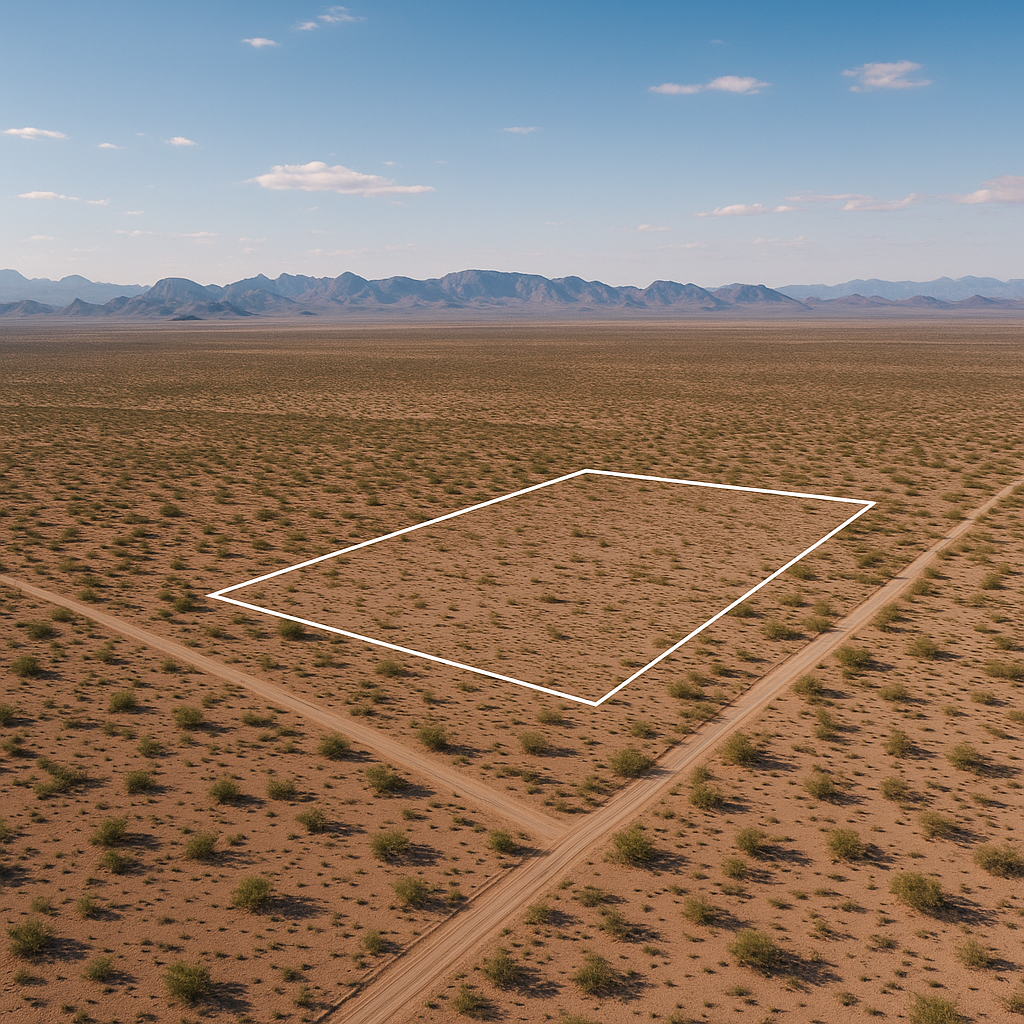
If you want to sell 50 acres in Mohave County, begin with the property that is documented—not an assumed future use. Confirm every APN, legal description, ownership signature requirement, known encumbrance, and current tax information before comparing offers.
Ultimate Land Deals publishes this guide. Its Mohave County information page describes the company as a direct vacant-land buyer that may purchase property, assign a contract, or close and resell. Review any proposed price, assignment right, due-diligence period, and closing terms in the written offer before deciding whether that route suits you. See its Mohave County information page.
For an absentee owner, the practical question is whether the convenience and defined terms of a direct transaction are worth more than broader marketing exposure or the ongoing obligations of owner financing. Build a document-backed net sheet before answering it.
Treat the 50 acres as a documented sale package
“50 acres” may mean one tract or several parcels with separate APNs and legal descriptions. Make sure the contract identifies exactly what is being conveyed.
Prepare the following before requesting offers or marketing the land:
- APN and legal description for every parcel;
- recorded deed and any survey, plat, or prior title policy you have;
- a map showing whether parcels adjoin;
- current tax statements and any known delinquency information;
- known easements, access agreements, leases, wells, roads, or boundary questions; and
- photographs, directions, and written land-use information already obtained.
Ask a title or escrow professional to explain the documents and payoff items that affect your proposed closing. For Arizona transfers, an Affidavit of Property Value generally accompanies a real-property transfer unless an exemption applies; the Arizona Department of Revenue directs owners to the county assessor for parcel-number information. Arizona Department of Revenue Property Tax FAQs
Compare terms, not only the headline price
Use the same questions for every sale route:
| Item | What to compare |
|---|---|
| Property conveyed | Every APN and legal description in the contract. |
| Price and net proceeds | Purchase price, known payoffs, and allocated closing charges. |
| Timing | Due-diligence deadline, closing date, and extension rights. |
| Title and document review | Who will review title matters and how objections are handled. |
| Assignment | Whether the buyer may assign and whether you accept that term. |
| Seller obligations | Required disclosures, documents, access, and any contingencies. |
Direct buyer
A direct buyer may be worth considering when you value a defined process and do not want to manage listing activity. Read the purchase agreement for earnest money, inspection or due-diligence rights, title objections, closing-cost allocation, assignment language, and remedies if closing does not occur.
Do not ask a buyer to price the land as a guaranteed future subdivision unless that outcome has been verified for the specific proposal.
Land agent or independent sale
An agent or independent sale may provide broader exposure, but the marketing should describe the existing parcel configuration accurately. Share documents you can support and avoid presenting access, utility availability, zoning, or division potential as established unless you have a parcel-specific agency response or other reliable documentation.
Owner financing
Owner financing is a different decision from a cash sale because the seller remains involved after closing. Before offering it, consider the down payment, payment schedule, security documents, servicing, taxes, default terms, and enforcement costs. Obtain advice from qualified Arizona real-estate and tax professionals for your circumstances.
Do not market a division outcome without verification
A general-plan designation is not a promise of a particular lot count, land division, or building outcome. Arizona law describes a county comprehensive plan as a long-term document containing recommendations whose primary purpose and effect is to aid the planning and zoning commission and board of supervisors. Separate zoning requirements may apply. A.R.S. § 11-804: Comprehensive plan; contents A.R.S. § 11-811: Zoning ordinance; zoning districts
For a proposed split, request a parcel-specific response from the governing authority using the APN and legal description. Ask which jurisdiction governs the tract, the current zoning designation, and what review process applies to the proposal.
Arizona’s land-division statute contains requirements that can apply to specified county reviews of divisions of five or fewer lots, parcels, or fractional interests. Within that statute’s scope, the listed requirements address minimum applicable zoning, legal access, evidence of physical access, and utility easements. A division that lacks one or more listed items may still be approved only with an acknowledgment that a county building or use permit will not issue until the requirements are met. The statute also allows identification of topographic, hydrologic, and other site constraints that must be addressed before a building or use permit. A.R.S. § 11-831: Review of land divisions
That means a land-division approval is not the same as a construction or building-permit approval. Do not imply that a 50-acre tract can be divided into a particular number of lots without confirmation for the actual configuration.
A larger subdivision proposal can involve plat and infrastructure requirements. Arizona law authorizes county subdivision regulations concerning streets, utilities, drainage, firefighting access, and related improvements as conditions of final-plat approval. A.R.S. § 11-821: Subdivision regulations
A practical offer-comparison sheet
For each option, write down:
- contract price;
- estimated payoff amounts and seller-paid charges;
- expected closing date;
- contingencies and deadlines;
- assignment rights;
- documents or approvals the buyer expects; and
- the amount and timing of money you expect to receive.
A direct offer may be preferable when its terms provide a path you accept. A listing or independent sale may be preferable when you are prepared to market the documented property package and manage a longer buyer search. Owner financing may fit only when ongoing payment collection is an intentional choice.
FAQs
Can I advertise the land as divisible while I investigate?
Describe the existing parcel configuration and state that you are seeking verification. Do not represent a specific lot count, approval, or building outcome unless it has been confirmed for the proposal by the governing authority.
Does a general-plan designation establish what I can build or divide?
No. A comprehensive plan is a long-term planning document with recommendations; zoning and land-division requirements remain separate questions to verify for the parcel and proposal. A.R.S. § 11-804 A.R.S. § 11-811
What should I provide when asking about a proposed split?
Provide the APN, legal description, current parcel configuration, and a clear description of the proposed division. Ask the governing authority which process, zoning standards, access requirements, and approvals apply.
Sources
- Ultimate Land Deals: Mohave County land with back taxes
- Arizona Department of Revenue: Property Tax FAQs
- Arizona Revised Statutes § 11-804: Comprehensive plan; contents
- Arizona Revised Statutes § 11-811: Zoning ordinance; zoning districts
- Arizona Revised Statutes § 11-831: Review of land divisions
- Arizona Revised Statutes § 11-821: Subdivision regulations
This article provides general seller information, not legal, tax, title, or land-use advice. The applicable documents and governing authority’s parcel-specific response control.