
Royal Highlands Land Buyers: Compare Contract Terms
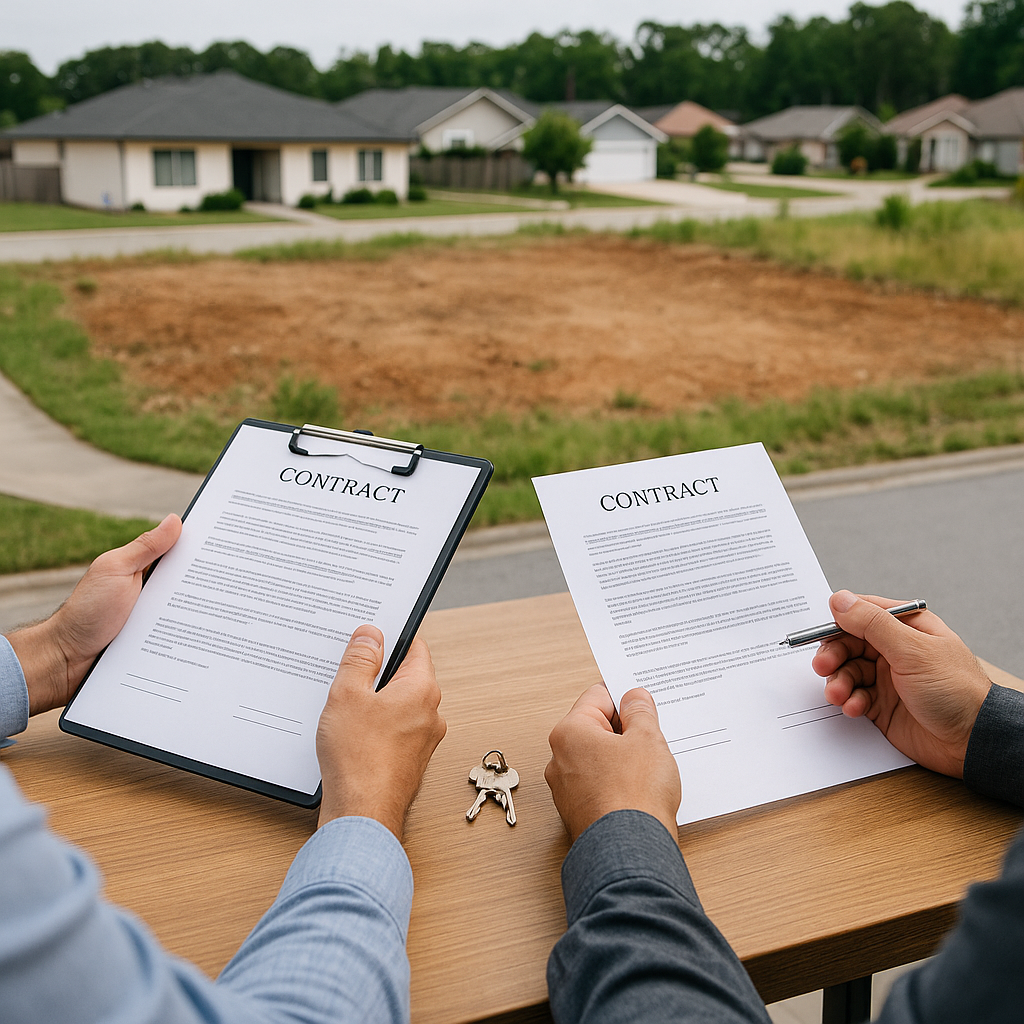
You may consider selling a vacant lot in Royal Highlands directly to a land buyer rather than listing it with a Realtor. Skipping a listing agent does not eliminate the decisions that protect a seller: confirming the buyer, understanding any assignment right, checking parcel-specific constraints, and comparing the net result—not just the headline offer.
This guide is published by Ultimate Land Deals. Confirm directly whether its services and any written offer fit your property and circumstances.
For an absentee owner, the central question is not simply, “Will a Royal Highlands land buyer purchase my lot?” It is: What is this buyer committing to, what can change, and what remains your responsibility after you sign?
Ultimate Land Deals describes a Florida land-selling process that begins with property information and an offer request. Review the particular written offer, contract, and closing instructions rather than relying on general marketing descriptions. Ultimate Land Deals’ homepage provides its current contact and offer-request information.
Start with the choice in front of you
A no-Realtor sale may take one of three routes. They can all be legitimate, but they distribute work, timing risk, and pricing uncertainty differently.
| Selling route | What the seller handles | Main advantage | Main tradeoff |
|---|---|---|---|
| Direct land buyer | Provides parcel and ownership information; reviews contract; works through closing | One negotiated buyer and potentially fewer marketing steps | Offer may reflect the buyer’s resale, development, holding, or due-diligence risk |
| Listing with a land-focused agent | Cooperates with pricing, marketing, showings, and buyer inquiries | Wider exposure may produce competing offers | Marketing time, brokerage-agreement terms, and buyer contingencies |
| Selling independently | Creates marketing, fields inquiries, negotiates, and coordinates professionals | Control over outreach and negotiations | Owner must screen buyers and manage more of the process |
Do not assume that “cash” means the highest net proceeds, or that a listed price will become the final net. Put each path on one page: proposed price, known deductions, who pays each closing charge, contingency dates, expected closing date, and what happens if the transaction does not close.
Treat the offer as a risk-allocation document
Before signing a direct contract, ask the buyer to identify the basics in writing. Verbal explanations are not a substitute for a signed agreement.
1. Who is actually buying?
Ask for the legal name of the buyer and the entity or individual expected to take title. That name should be consistent across the contract and closing communications. If the buyer uses an LLC, ask who is authorized to sign and where closing communications should go.
2. Is the buyer allowed to assign the contract?
An assignment clause can allow the original buyer to transfer contract rights to another purchaser before closing. Read for answers to these questions:
- Is assignment allowed without your consent?
- Must the buyer notify you if it assigns?
- Does the original buyer remain responsible if the assignee fails to close?
- Can assignment affect the closing date or other obligations?
- Will you be asked to sign a new contract with a different buyer?
What matters is whether the contract leaves the seller with a clear price, timeline, and remedy if the buyer or assignee does not perform.
3. What can cause cancellation?
Read the due-diligence language closely. Identify the exact deadline, earnest-money treatment, closing date, and whether the buyer may cancel during its review period. Compare that flexibility with the offer amount and the time the property will be tied up.
4. What will be deducted from the stated price?
Request a written allocation of closing costs, recording charges, unpaid taxes, lien payoffs, and title-related expenses. Broad wording such as “customary costs” may need clarification from the proposed closing agent.
Verify the parcel jurisdiction before relying on local resources
This guide does not assume that a parcel described as being in Royal Highlands is in a particular county or jurisdiction. Confirm the parcel identification number, legal description, and governing jurisdiction before treating any county zoning or recording resource as applicable.
If the parcel is in Hernando County, the County says zoning districts determine permitted uses, setbacks, and dimensional requirements. It also notes that platted lots may have easements or buffers beyond zoning setbacks. Hernando County’s zoning guidance recommends first identifying the property’s zoning district through its GIS map and zoning layer.
Before representing facts to a buyer, separate these categories:
- Known: parcel identification number, legal description, current tax bill, and documents already in your possession.
- To verify: governing jurisdiction, zoning district, setbacks, easements, access arrangements, utility options, site conditions, and any private restrictions or association obligations.
- Do not promise without support: that the lot is buildable, that a particular route provides access, that utilities can serve the site, or that a certain type of home is permitted.
Ask the applicable planning office, title or closing professional, and relevant utility provider for parcel-specific information where needed.
Use official records as part of preparation
If the parcel is in Hernando County, the Clerk states that its Recording Department records court judgments, liens, marriage licenses, mortgages, plats, and tax deeds in the county’s Official Records. The Clerk also states that Official Records and associated images from 1983 to the present are available through its Official Records search. Hernando County Clerk recording information
The same page lists recording requirements for instruments that transfer an interest in real estate, including grantor and grantee mailing addresses, a property description, signatures, witnesses for property transfers, and acknowledgment requirements. These requirements are not a complete sale checklist, but they illustrate why a properly coordinated closing matters even when no Realtor is involved.
A title or closing professional can review the transaction’s title requirements and coordinate documents needed for the proposed conveyance.
A practical acceptance test
Before accepting a direct buyer’s offer, you should be able to answer “yes” to these questions:
- Can I identify the buyer and intended title holder?
- Do I know the price I expect to receive after the costs assigned to me?
- Do I understand the due-diligence deadline, earnest-money treatment, closing date, and assignment language?
- Have I avoided unsupported statements about jurisdiction, zoning, access, utilities, or buildability?
- Will a title or closing professional coordinate the property documents needed for closing?
If an answer is no, request clarification, a cost sheet, a revised clause, or time to review the offer before signing.
FAQs
Can a buyer assign my land contract to someone else?
Potentially, if the contract permits it. Read the assignment clause before signing and determine whether notice or consent is required and whether the original buyer remains responsible for performance.
Does a cash buyer mean there will be no closing costs?
Not necessarily. Confirm in writing who pays title-related charges, recording fees, taxes, liens, and other settlement items.
Should I use Hernando County resources for my parcel?
Use them after verifying that the parcel is in Hernando County and subject to the relevant county authority. Start by confirming the parcel’s jurisdiction and identification details.