
Port St. Lucie Infill Lot Due-Diligence Checklist
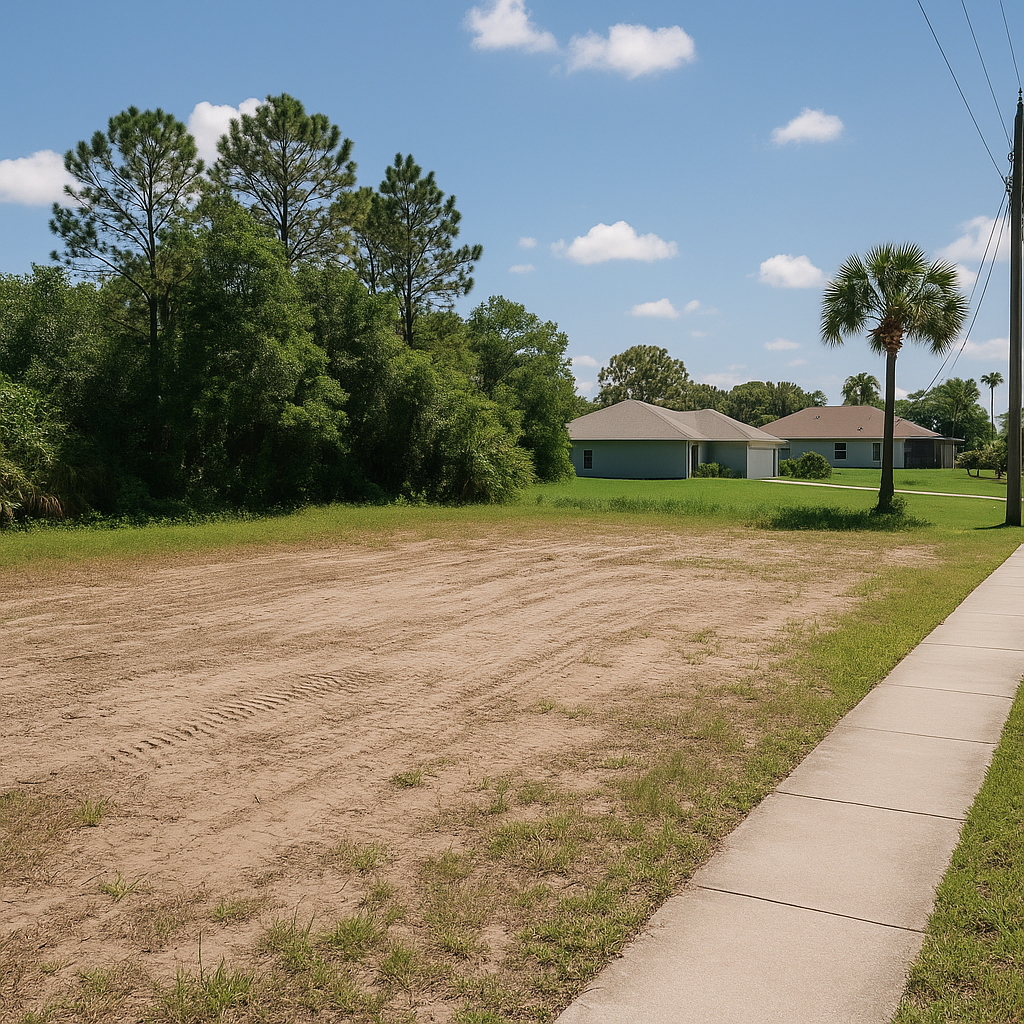
A Port St. Lucie infill lot deserves parcel-level review before a builder prices it as a permit-ready homesite. Confirm the governing jurisdiction, proposed use, site conditions, utility requirements, access, and transaction documentation rather than relying only on a plat, listing, or tax-record description. Ultimate Land Deals presents this guide as a diligence framework for builders reviewing off-market residential-lot opportunities.
Use a four-gate acquisition screen
Screen each lot in the order most likely to identify a material issue early. A parcel that needs further review is not necessarily a bad acquisition, but its contract timing, deposit structure, and price should reflect the unanswered questions.
Gate 1: Confirm the jurisdiction
Start with the parcel identification number, legal description, street address, and owner name. The City of Port St. Lucie directs property owners to the St. Lucie County Property Appraiser record card to identify a property's jurisdiction. Do not rely on a mailing address, ZIP code, or lead-list municipality field when deciding which government process may apply. City Planning & Zoning FAQ
Keep the source record used for this determination in the acquisition file. Jurisdiction should be confirmed before applying City zoning, utility, or permit assumptions to a parcel.
Gate 2: Compare the proposed product with land-use information
Review zoning and future land use separately. The City provides separate zoning and future-land-use layers through its Zoning Map and directs users to contact Planning & Zoning for additional assistance. City Planning & Zoning FAQ
For the acquisition file, identify:
- The proposed home type, footprint, garage configuration, and driveway concept.
- Lot width, depth, shape, and corner or irregular-lot conditions.
- The zoning and future-land-use information reviewed.
- Whether the purchase thesis depends on a second principal dwelling, a lot split, a duplex, or another higher-intensity concept.
The City quotes Code § 158.042 as generally allowing no more than one principal building, structure, or use on a lot unless the code specifically provides otherwise. A single-family description alone should not be used to assume that an additional residence or other concept will be allowed. City Planning & Zoning FAQ
Gate 3: Verify the site and utility path
Treat access, drainage, site conditions, and utilities as separate questions. Review the plat, legal description, and available easement information; inspect the parcel; and ask the applicable agencies or providers what the proposed plan requires.
The City's Planning & Zoning Department handles land-development review activities that include site plans, subdivisions, rezoning, variances, and future-land-use-map amendments, and it manages regulations related to natural resources and public-facility concurrency review. City Planning & Zoning
For a utility-served project, do not treat approval from another department as approval of detailed utility plans. Port St. Lucie Utility Systems states that approvals from Planning & Zoning, Public Works, the Building Department, or a County site or construction-plan process do not constitute PSLUSD approval of detailed utility plans. PSLUSD new-building guidance
Confirm current requirements and fees during the applicable review process. The City publishes Planning & Zoning applications, fee schedules, and materials for site plans, subdivisions, variances, rezonings, and related requests. Planning & Zoning applications, fees and guides
Gate 4: Research recorded documents and the seller's interest
An ownership lead is a starting point, not a closing conclusion. The St. Lucie County Clerk & Comptroller's public-search resources link to official-record and plat searches where users can view or download deeds, liens, mortgages, plats, and tax deeds. Use these materials as an early diligence screen. Clerk public search
The Clerk's simple official-records search also provides name-based options to obtain a deed, review documents associated with a name, investigate lien or judgment information, and look for a lien release. Clerk official-records simple search
Use the results to identify questions for a title company or qualified reviewer, such as the identity of the contracting owner, a deed, a lien-release question, a legal-description issue, or recorded matters relevant to the transaction. If a needed record is unavailable online, the Clerk's Research Department accepts public-records requests for court and official records, including deeds and mortgages. Clerk public-records request
Before closing, obtain the title, exception, survey, and legal review appropriate to the transaction. If the transaction depends on resolving a recorded matter or obtaining a release, address that condition in the written contract.
Price the lot after the key questions are visible
A useful acquisition model separates the purchase basis from project-specific uncertainty:
| Category | Items to evaluate |
|---|---|
| Land basis | Purchase price, closing costs, and negotiated contract terms |
| Site-specific work | Survey, clearing, drainage, utility requirements, access work, design changes, or additional review |
| Approval and timing risk | Verification requests, review periods, conditions, and potential changes to the planned product |
A conventional lot and house plan may justify a leaner initial screen than a parcel requiring a variance, a subdivision action, or detailed utility planning. Match the contract timeline and deposit risk to the questions that remain open.
What to request before making an offer
Ask the seller for the parcel number, deed or legal description if available, prior survey, and any records or correspondence the seller has concerning utilities, permits, access, or drainage. Treat those materials as information for follow-up, not as a current approval or guarantee.
If an offer is made through an intermediary, ask the party making the offer whether it expects to close or assign its contractual interest, then review the written terms for inspection, assignment, title, deposit, and closing provisions.
A practical go/no-go question
Before releasing a nonrefundable deposit, ask: What fact could prevent this planned home from being permitted or economically built, and has that question been directed to the appropriate source?
If the answer is not yet clear, consider more diligence time, an appropriate contingency, a lower basis, or a different product plan.
FAQs
Is a platted single-family lot automatically ready for a specific house plan?
Do not assume so. Confirm jurisdiction, zoning and future land use, site conditions, utility requirements, access, recorded documents, and the requirements applicable to the proposed plan.
Can a Port St. Lucie mailing address identify the permitting jurisdiction?
Use the St. Lucie County Property Appraiser record card to identify jurisdiction, as directed by the City. City Planning & Zoning FAQ
Should a builder review official records before making an offer?
Yes. The Clerk's public-search resources can be used to locate recorded deeds, liens, mortgages, plats, and tax deeds as an early screen. Obtain transaction-appropriate title and legal review before closing. Clerk public search
Sources
- City of Port St. Lucie Planning & Zoning
- City of Port St. Lucie Planning & Zoning applications, fees and guides
- Port St. Lucie Utility Systems new-building guidance
- St. Lucie County Clerk & Comptroller public search
- St. Lucie County Clerk & Comptroller official-records simple search
- St. Lucie County Clerk & Comptroller public-records request