
Palm Bay Lot Drainage Requirements: What to Verify
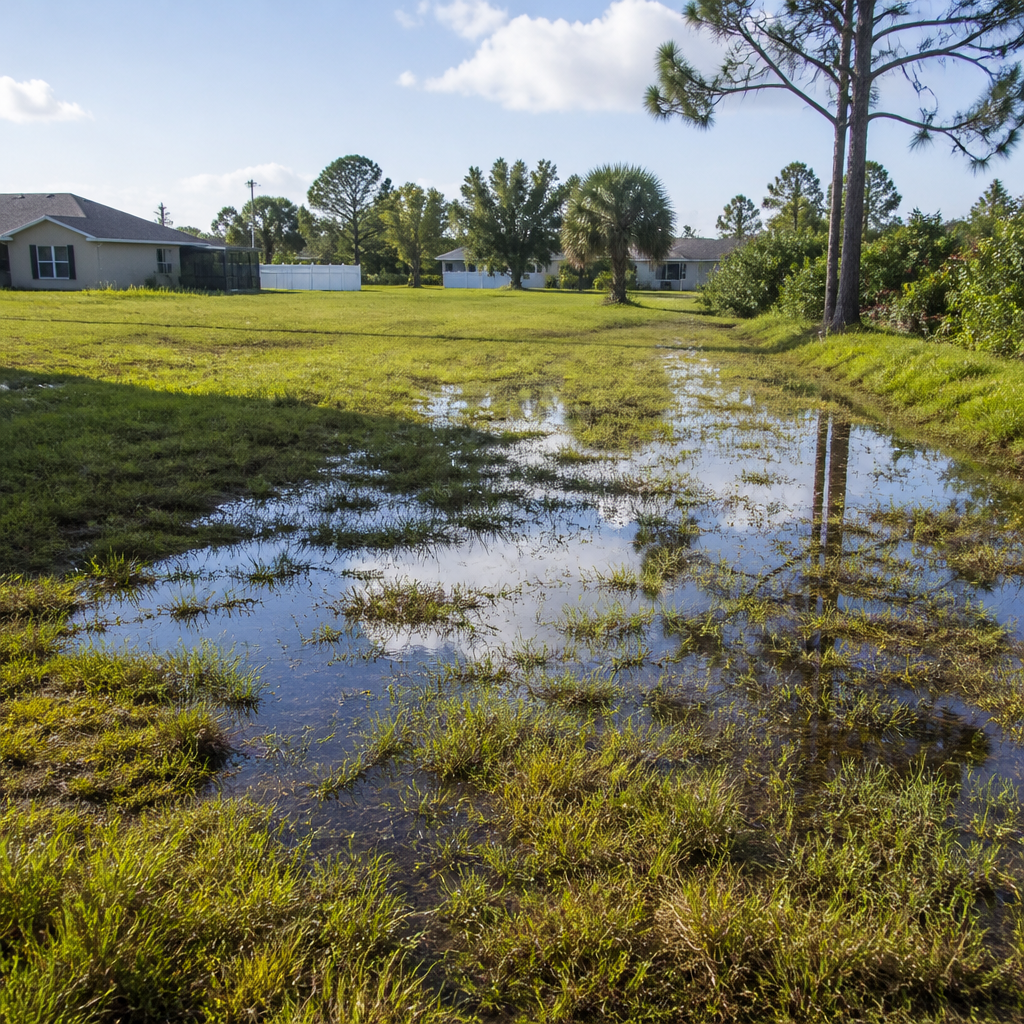
A Palm Bay lot does not have one universal drainage answer that can be read from a listing photo or a county map. The useful question is narrower: can a specific home, driveway, grading approach, and discharge concept be accepted for this specific parcel? Before pricing a lot as ready to build—or accepting an offer based on that assumption—ask for the records that show existing elevations and the proposed finished site.
Ultimate Land Deals publishes this guide for Palm Bay vacant-land owners who want to understand the drainage questions a buyer, builder, or reviewer is likely to raise. The City has published a drainage-related document that is a sensible starting point for a project-specific inquiry, but an owner should ask the City which current materials and review steps apply to the actual parcel and proposed work. City of Palm Bay document
The important distinction: existing water conditions versus a proposed plan
A property can have a visible low area, standing water after rain, a roadside swale, or a ditch nearby. Those observations matter, but they do not answer the building question by themselves. They describe what the owner can see—not where a home pad, driveway, roof runoff, and finished grades can be placed.
Keep these two files separate:
| Question | Record that helps answer it | Do not substitute |
|---|---|---|
| What is on the ground now? | Survey, elevation information, recent site photos, and notes on observed water conditions | Aerial imagery or a neighbor’s description |
| What would change with construction? | A proposed site or grading/drainage plan prepared for the intended project | An old listing sketch |
| Where does water appear to move today? | Field observations, visible swales or drainage features, and professional review where needed | A conclusion drawn from lot shape alone |
| What will the City ask to review? | A written, parcel-specific response from the City | A general statement that other nearby homes were built |
This distinction is especially important when a buyer says, “The lot just needs fill,” or “There is already a swale.” Those may be starting points for a conversation, not a completed feasibility finding. The effect of a grading change depends on the proposed layout and the information a reviewer requires for that location.
Build the drainage file around a proposed house location
Drainage becomes easier to discuss when the owner stops asking whether the lot is “good” and instead presents a simple development concept. It does not need to be a final construction package to be useful. It should, however, identify what is being contemplated.
A practical working file can include:
- Parcel number, legal description, and site address if one is assigned.
- A current map image showing the lot, adjoining streets, and visible drainage features.
- Any survey, prior site plan, permit correspondence, or engineering material already in the owner’s possession.
- Photos taken from each street frontage and from the apparent high and low portions of the lot.
- The approximate proposed house footprint, driveway entry, and any planned accessory improvements.
- A short note describing when and where water has been observed after rainfall, if the owner has personal knowledge.
For a seller, the value of this file is not that it proves approval. Its value is that it prevents the buyer from having to guess what was considered. A builder can react to a proposed footprint; a City reviewer can identify what additional information is needed; and a direct land buyer can better distinguish a routine due-diligence item from an unresolved site constraint.
Ask questions that produce a usable answer
A broad question such as “What are Palm Bay lot drainage requirements?” often produces a broad answer. A better inquiry describes the parcel and the contemplated work, then asks for the current process, required submittals, and the reviewer responsible for a final interpretation.
Consider sending questions like these:
- For this parcel and this proposed home location, what drainage or grading information should be submitted for review?
- Should the proposed driveway, finished floor concept, roof runoff, or lot grading be shown on the same plan?
- Are there recorded, mapped, or visible features that the applicant should address before preparing a site plan?
- Which City department should confirm the current review path, and is another agency’s review relevant to the proposed work?
- If an existing swale, ditch, or other feature is affected, what documentation should be provided before relying on a design?
- Can the City identify the current guidance or application materials that apply to this project?
Put the response in the property file, including the date, name of the office contacted, and the exact version of the concept you described. If the home location changes, ask again. A response tied to one layout may not answer for another.
Do not confuse a water-management resource with a project approval
Florida water-management materials can be relevant when a project involves a question within the responsible district’s permitting process. The St. Johns River Water Management District maintains a permitting-documents page that includes Environmental Resource Permit (ERP) materials and states that its listed forms can be completed online as part of e-permitting; its ePermit pages provide additional information. SJRWMD permitting documents
That page is a resource, not a parcel determination. Before treating it as applicable to a Palm Bay lot, ask the City or the appropriate agency whether the proposal falls within its review authority and what current documents are required. This avoids a common mistake: downloading forms first and deciding which approval path applies later.
What to flag before you market the lot as “buildable”
There is a meaningful difference between advertising a vacant lot and representing that a defined construction plan will work. If the drainage question has not been reviewed for the intended layout, use precise language.
These facts deserve disclosure to a prospective buyer or their representative when known:
- You have survey or elevation information, but no proposed grading plan.
- A drainage feature is visible on or near the lot, but its role has not been confirmed for the proposed project.
- The lot has experienced observed water conditions at a particular time, based on your own knowledge.
- A prior owner, contractor, or neighbor made a statement that has not been documented or verified.
- You received a City or agency response that was tied to a different plan, different owner, or earlier date.
The purpose is not to argue that the parcel cannot be built on. It is to keep an unverified design assumption from becoming part of the sale price or contract expectation.
Choosing a sale path when drainage is still unresolved
An unresolved drainage item does not automatically require an owner to commission a full design before selling. The right choice depends on the likely buyer and how much certainty the owner wants to create.
Selling independently can work when the owner has a well-organized record package and is comfortable answering document requests. The owner should avoid extending the evidence into promises about site approval.
Using an agent familiar with vacant land may help with exposure and presentation, particularly if the lot has records a builder can evaluate. Confirm how the listing will describe drainage, site feasibility, and buyer due diligence.
Considering a direct land buyer may suit an owner who prefers a simpler sale discussion and wants the buyer to conduct its own feasibility review. Read the written offer carefully. Confirm the due-diligence period, any contingency tied to drainage or site review, whether assignment is permitted, and who will coordinate closing. Terms vary by buyer and should not be assumed.
For every route, the cleanest negotiating position is: here are the records, here is what is known, and here is what still requires project-specific confirmation.
Resources
- City of Palm Bay drainage-related document
- St. Johns River Water Management District permitting documents
FAQs
Does a roadside swale tell me that my Palm Bay lot has an approved drainage solution?
No conclusion should be drawn from the feature alone. Document its location, include it in your parcel file, and ask the City how it should be addressed for the specific home and grading concept under consideration.
Is a survey enough to answer a drainage question?
A survey can be important evidence of existing conditions, but it is not the same as a proposed site, grading, or drainage plan. Ask the reviewing authority what additional information is needed for the intended project.
Should I wait for a buyer before gathering drainage information?
Not necessarily. Existing records, photos, and a clear concept of the likely home location can make a later buyer inquiry more productive. Final design work should be matched to the level of certainty and the sale route you choose.
Can a cash offer eliminate drainage due diligence?
A cash purchase does not make a drainage question disappear. It changes who is evaluating the risk and what the written offer says about inspections, contingencies, and closing conditions.