
Palm Bay Infill Lots: Parcel Screening Guide
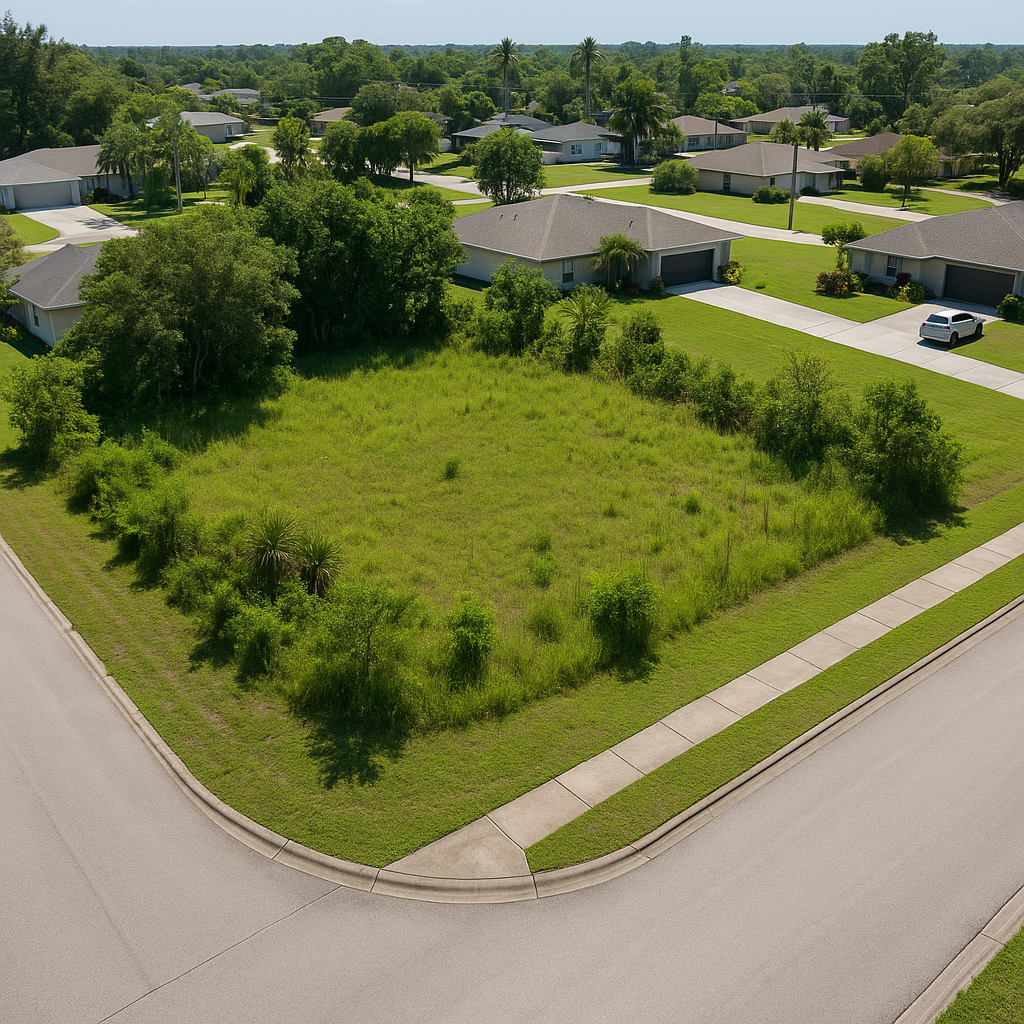
A Palm Bay infill lot deserves further review only when the parcel appears to fit the intended project and the remaining questions are identified before the price assumes an approved building site. A vacant lot between existing homes may look promising on a map, but parcel configuration, access, service arrangements, recorded documents, and applicable development review can change the economics.
Ultimate Land Deals publishes guidance for owners, builders, developers, and investors considering off-market land transactions. Its Florida developer-land guide describes direct purchases, contract assignments, and resales as possible transaction structures. Confirm the structure and written terms of any individual transaction.
For an investor evaluating a Palm Bay infill lot, the useful question is not simply, “Does this look residential?” It is: What information supports the intended project, and what must still be verified before closing?
A two-stage screen
Treat the first review as a screening exercise, not as complete diligence.
| Stage | Question | Information to gather | Questions still to verify |
|---|---|---|---|
| Mapped parcel screen | Can the candidate lot be identified and compared with the intended use? | Parcel ID, situs address, apparent shape, acreage, mapped zoning, and available parcel attributes | Development standards, legal access, service arrangements, title, and project requirements |
| Recorded-document and project review | What documents and local answers are needed for the deal? | Recorded-document searches, contract terms, and parcel-specific questions for the responsible authority | Whether the intended project can proceed on the buyer's proposed terms and budget |
The City of Palm Bay's parcel layer includes fields for parcel ID, site address, owner name, mailing address, acreage, and assessed and taxable values. It can help match a candidate lot to a parcel identifier and mailing information during screening. The City also states that its parcel data are not updated by the City, so use the layer as a starting point rather than as current ownership confirmation or title evidence. City of Palm Bay parcel layer and service notice.
Start with an acquisition hypothesis
Before contacting an owner or making an offer, write down the intended use. For example:
“Acquire a lot that may support one detached home, subject to verification of access, services, development requirements, and title.”
That statement gives the research a purpose. Different proposals create different questions:
- One-house infill: What lot dimensions, setbacks, frontage, driveway arrangement, and service plan apply?
- Two or more units: What zoning and development review applies to the proposed density?
- Hold for future development: Does the price work without assuming a future zoning change, utility extension, or policy change?
- Builder resale: Which parcel facts will a prospective builder ask to verify before treating the site as usable inventory?
If the underwriting depends on a zoning change, variance, utility extension, subdivision action, or another approval, identify that dependency in the offer analysis instead of treating it as complete.
Identify the parcel and use maps as a screen
Palm Bay's GIS directories list parcel, zoning, future-land-use, and water/sewer-availability services. These resources can help narrow a prospect list and frame questions for the applicable authority. City GIS service directories and Common Services directory.
For each candidate, record:
- The parcel identifier and situs address.
- The mapped zoning designation and any mapped future-land-use information.
- Apparent lot area, frontage, shape, and relationship to adjoining roads.
- Whether nearby development is actually comparable to the proposed use.
- The questions that require a parcel-specific answer from the responsible jurisdiction or provider.
Palm Bay's zoning layer is a mapped reference with zoning-code and description fields. Palm Bay's zoning code establishes zoning districts and ties them to the official zoning map, so the mapped designation can identify the district for preliminary screening. For a proposed project, however, the City separately applies development-review and building-permit requirements. City of Palm Bay zoning layer; Palm Bay Chapter 173, Zoning; Palm Bay Chapter 172, Development Review Procedures.
Ask project-specific land-use and service questions
For a serious candidate, ask the responsible authority or provider questions tied to the actual proposal:
- Is the intended use allowed under the applicable requirements?
- What lot, setback, frontage, access, or review requirements apply?
- Is any platting, variance, site-plan, or other review required before a building-permit application?
- What water, wastewater, drainage, or connection questions must be resolved for this parcel?
- What documentation should be obtained before closing?
A mapped zoning designation identifies a district, but it does not by itself establish that a proposed project has satisfied Palm Bay's development-order and building-permit requirements. Palm Bay's development-review code describes development-order review before building-permit issuance and requires a building permit for construction; application materials can address the lot, proposed building location, sewage disposal, and, where applicable, access, parking, grading, and drainage. Palm Bay Chapter 172, Development Review Procedures. Keep the offer price and diligence period aligned with the questions that remain unanswered.
Use recorded documents for recorded-document research
For Brevard County parcels, the Clerk's Official Records system provides searches by party name, document type, instrument number, record date, legal description, and other options, including prompts for locating a deed or liens. Use those search tools to begin recorded-document research for the correct parcel and names. Brevard County Clerk Official Records Search.
Before closing, obtain the title review and title commitment appropriate to the transaction. Recorded-document screening and GIS information do not replace the closing process or the review of the parties required to convey.
Keep tax-deed research separate from a voluntary purchase
An infill location does not establish tax status or title condition. The Brevard County Clerk explains that unpaid real-estate taxes may lead to tax-certificate sales and, later, tax-deed proceedings. It also advises that tax-deed properties are sold on a buyer-beware basis and notes that questions about liens and judgments that survive a tax-deed sale should be directed to an attorney. Brevard County Clerk: Tax Deeds & Auctions.
For a voluntary off-market purchase, review the contract, recorded documents, and title work rather than treating tax delinquency as a shortcut to a clear acquisition.
Match the offer to the remaining unknowns
A direct-to-owner offer may make sense when the buyer can investigate the identified issues during a defined diligence period. If access, services, land-use requirements, or title questions remain unresolved, avoid pricing the lot as though the project were already approved.
If an intermediary is involved, ask early:
- Is the buyer purchasing directly from the owner, taking an assignment, or buying after the intermediary closes?
- Who controls the contract during diligence?
- What inspection, title, earnest-money, and closing terms are in the agreement?
- Which facts are written into the contract, and which are preliminary marketing information?
A practical go/no-go checklist
Move a Palm Bay lot forward only after you can state the following:
- Parcel: We have matched the candidate site to the correct parcel identifier and have a title-review plan.
- Use: We have identified the intended project and the applicable questions for the responsible authority.
- Mapped information: We have recorded the mapped district and identified the development-review and permit questions for the proposal.
- Services and access: We have identified the questions that require parcel-specific confirmation.
- Price and terms: The offer accounts for the diligence still required.
If an answer is missing, the property may still merit investigation. It should be priced and contracted as a diligence-stage opportunity rather than represented as a finished building lot.
Sources
- City of Palm Bay Parcels layer
- City of Palm Bay Parcels service notice
- City of Palm Bay Zoning layer
- City of Palm Bay Chapter 172, Development Review Procedures
- City of Palm Bay Chapter 173, Zoning
- Brevard County Clerk Official Records Search
- Brevard County Clerk: Tax Deeds & Auctions
- Ultimate Land Deals: Off-Market Land Deals for Developers in Florida
FAQs
Does mapped residential zoning mean a Palm Bay lot is buildable?
Not by itself. The mapped designation can identify the zoning district for preliminary screening. For a proposed project, Palm Bay's code separately requires development-review and permit compliance; required application information can include the lot's dimensions and shape, proposed building location, sewage-disposal layout, and, where applicable, access, parking, grading, and drainage. Confirm parcel-specific requirements with the City before representing the lot as an approved building site. Palm Bay Chapter 172, Development Review Procedures
Can I use the City parcel layer to identify a potential owner or mailing address?
The layer includes owner-name and mailing-address fields and can help with preliminary parcel screening. The City says the data are not updated by the City, so verify the appropriate parties and title before closing.
Where can I begin searching for a recorded deed or liens in Brevard County?
The Clerk's Official Records Search includes party-name, document-type, instrument-number, legal-description, and simple-search options for official records. Use the search to begin document research, then obtain appropriate title review for the transaction.
Is a tax-delinquent parcel automatically a bargain?
No. Tax certificates and tax-deed proceedings have their own process. Review the Clerk's tax-deed information and obtain appropriate legal and title guidance before making acquisition assumptions.
What should I provide when requesting an off-market lot evaluation?
Provide the parcel identifier, address or legal description if available, intended use, preferred transaction structure, timing, and any known information about access, services, taxes, or title.