
Off-Market Lots for Developers in Arizona: Owner Guide
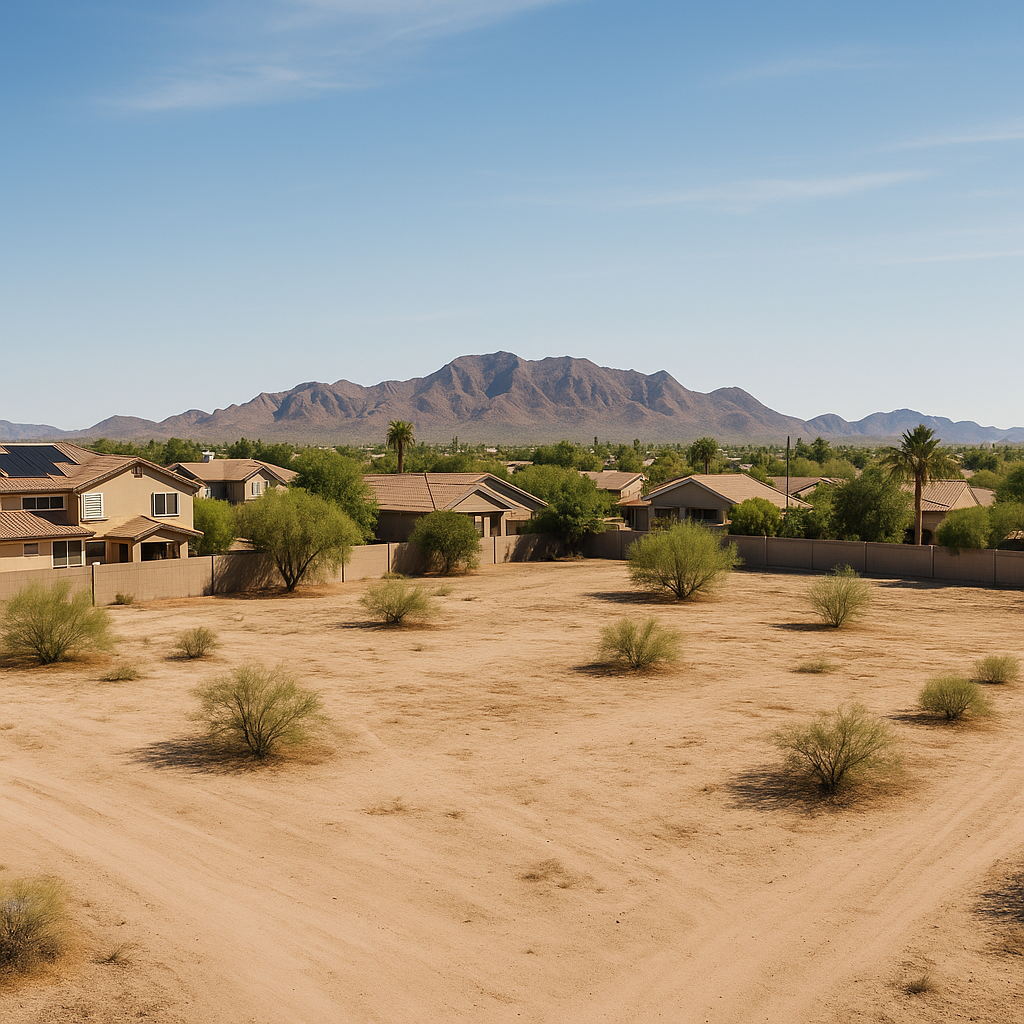
A developer will consider an off-market Arizona lot when it removes a real acquisition problem: a missing parcel in a subdivision, a buildable infill site in a market they already serve, frontage for a planned commercial use, or acreage that supports a defined housing plan. Simply being vacant, unlisted, or available for cash does not create that value.
For an absentee owner, the useful question is not, “How do I find any developer?” It is: what type of developer could use this parcel, and what information would let them decide quickly? That distinction prevents months of conversations with buyers who cannot use the site—or who make an offer before they have understood its constraints.
Start with the development pattern around the parcel
A developer buying off-market lots in Arizona normally has a product, geography, and approval path in mind before they contact an owner. Look beyond county lines and acreage totals. Study what is occurring immediately around the property.
A parcel is more likely to fit a developer’s active pipeline when it falls into one of these patterns:
- Finished-lot or near-finished-lot infill: The site sits among newer or established homes, has public-street access, and appears capable of supporting a home similar to nearby construction.
- Subdivision gap: The property is a remaining lot, a group of adjacent lots, or an ownership holdout within or beside an existing plat. It may help a builder complete a neighborhood phase or avoid an irregular boundary.
- Growth-corridor land: Acreage lies near extending roads, utilities, employment centers, or active residential development. This can interest a land developer, but it may require a much longer entitlement timeline than a single homesite.
- Assembly parcel: The tract becomes meaningful only when combined with neighboring land. In this situation, its value depends less on standalone acreage and more on who controls surrounding parcels.
- Commercial-support site: The parcel has access, visibility, zoning, and traffic characteristics that fit a pad, service use, storage, or neighborhood retail. Residential developers may have no interest at all.
This is why a vacant one-acre parcel outside a built-up area can receive very different attention from a quarter-acre lot surrounded by occupied houses. The first may be a speculative hold unless infrastructure and zoning support a project. The second may be immediately useful to a builder with a compatible house plan.
Arizona’s location labels are not enough
“Phoenix area,” “Tucson,” or “Mohave County” does not tell a buyer enough. Arizona development review is heavily shaped by the governing jurisdiction and service providers.
Before presenting a property as an opportunity, identify:
- The actual jurisdiction. Is the parcel inside a city or town, in unincorporated county territory, or in a special planning area? A mailing city can be misleading.
- Current zoning and overlay districts. Note the zoning designation, but do not assume it authorizes a particular density or use. Overlay rules, planned-area designations, hillside provisions, floodplain requirements, or design standards can materially change feasibility.
- Recorded subdivision status. Is it a platted lot? Is it legally described as acreage? Has a prior split, easement, or dedication affected how it may be developed?
- Legal and physical access. A road visible on aerial imagery is not automatically a recorded, usable access route. Developers will want to know the road type, frontage, easements, and potential dedication requirements.
- Water, sewer, and power context. The key question is not merely whether services are “nearby.” It is which provider serves the area, where service is located, whether capacity or extension is an issue, and what connection costs or off-site improvements may be required.
For many Arizona projects, water availability deserves early attention. A developer may need to evaluate provider capacity, well feasibility, water-haul realities, or subdivision-level water requirements depending on the location and proposed use. An owner does not need to solve those questions before seeking an offer, but should avoid representing the land as development-ready without documentation.
Sort the parcel into the right buyer lane
Owners often lose time by sending the same land pitch to homebuilders, master developers, land investors, and commercial buyers. Their purchase criteria are different.
A production homebuilder
A production builder typically wants lots that fit a repeatable home design and a predictable construction schedule. The best candidates are usually finished or close-to-finished residential lots with clear access, manageable site conditions, and compatible surrounding development.
A large raw tract may be too early-stage for this buyer. The builder may prefer to acquire completed lots from a developer rather than carry entitlement, infrastructure, and subdivision risk.
A land developer
A land developer may be interested in raw acreage or an unbuilt subdivision phase, but will examine the path from land to saleable lots. They will focus on density, utilities, drainage, roadway improvements, off-site costs, entitlement risk, and absorption in the local market.
This buyer can pay for upside, but only after discounting the time, capital, and uncertainty required to create it. A high asking price based on hypothetical future lot count can stop a conversation before it starts.
A small builder or infill operator
A smaller builder may value one to several lots in established neighborhoods, especially where they already have subcontractors, permits, and buyer demand. They may be more flexible than a national builder on unusual lot size or site work, but usually need a very clear path to build.
An adjacent owner or strategic buyer
Sometimes the most logical developer buyer is the company, investor, or builder controlling land next door. Your parcel may improve their site layout, create a second access point, provide frontage, or make an approved plan more efficient.
This is a strategic situation, not an automatic premium. If the adjacent project has alternatives, or your parcel is not actually needed for access or configuration, leverage may be limited. Still, identifying adjacent ownership is one of the highest-value steps an absentee owner can take.
Prepare an owner-side property brief—not a sales brochure
A concise, factual brief gives a prospective buyer enough to decide whether to investigate. It should not promise lot yield, approvals, or utility service that has not been confirmed.
Include the following:
- Assessor parcel number, legal description, county, and property address or map location
- Acreage and a parcel map or survey, if available
- Ownership entity or names as shown in the vesting deed
- Zoning, jurisdiction, and links or references to the relevant planning map
- Aerial image showing surrounding development, roads, and adjacent parcels
- Known access, easements, road frontage, and recorded plat information
- Known utility-provider information and documents related to service, wells, septic, or prior extensions
- Floodplain, wash, slope, environmental, or drainage information you possess
- Prior studies, surveys, concept plans, permits, correspondence, or subdivision documents
- Your preferred timing and whether you will consider a due-diligence period
Also state what you do not know. “Seller has not confirmed sewer capacity” is more credible and useful than calling a parcel “utility-ready” based only on nearby houses.
Price the transaction around the risk the buyer must take
Off-market does not mean underpriced. It means the property is being discussed directly rather than marketed broadly. The price should reflect the stage of the land.
A platted infill lot with routine development conditions can be compared more closely with recent lot sales and active builder demand. Raw acreage that needs rezoning, access work, water solutions, or a subdivision process should be valued with those future costs and delays in mind.
When reviewing an offer, separate the headline price from the deal structure:
- How long is the due-diligence or feasibility period?
- Is earnest money deposited with a neutral title or escrow company, and when does it become nonrefundable?
- Can the buyer assign the contract? If so, under what conditions?
- Are extensions available, and what does the buyer pay for them?
- Is the buyer asking the seller to fund surveys, studies, cleanup, title issues, or approvals?
- Which closing costs and title requirements are assigned to each party?
A buyer seeking zoning, subdivision approval, or utility commitments may reasonably need a longer feasibility period. That can be appropriate if the price, deposit structure, reporting expectations, and extension rights compensate you for tying up the land. It is not the same as a quick cash purchase of a buildable lot.
Use direct outreach when the fit is specific
If the property clearly matches an active development pattern, targeted outreach can be more productive than a broad listing. Look for builders working nearby, developers with recorded subdivisions in the area, companies submitting plans to the jurisdiction, and owners of adjoining development land.
Ultimate Land Deals can help owners evaluate whether an Arizona parcel is suited to a direct purchase, an assignment to a qualified buyer, or a conventional resale after closing. For developers and builders, the same property facts help determine whether an off-market opportunity fits an existing acquisition box before time is spent on a contract.
The objective is not to make every Arizona parcel sound like a development site. It is to present the right parcel to the right buyer with enough clarity that both sides can assess the real opportunity.
Questions owners commonly ask
Should I get land entitled before contacting developers?
Not always. Entitlement work can add value when there is a well-supported plan and the owner is willing to accept cost, time, and approval risk. In other cases, a developer prefers to control the plan because its product, financing, and infrastructure approach will shape the application. Obtain enough information to understand the current position before deciding whether to sell as-is or pursue approvals.
Can an unlisted parcel still attract serious developers?
Yes. Many developers prefer direct-owner opportunities because they can evaluate a site before it reaches broad market exposure. Serious interest still depends on fit, documentation, price, and a workable contract process.
What if my lot is not buildable on its own?
It may still have value to an adjacent owner if it improves access, setbacks, drainage, lot configuration, or future density. Identify nearby ownership and avoid assuming that adjacency alone creates a premium; the buyer must have a specific use for the parcel.
Do I need to accept an assignment clause?
No. An assignment provision is negotiable. It can be reasonable when a buyer is sourcing for a known developer or capital partner, but the contract should clearly state who may receive the assignment, whether the original buyer remains liable, and what deadlines and earnest-money obligations apply.