
Off-Market Cape Coral Freshwater Canal Lots: Buyer Screen
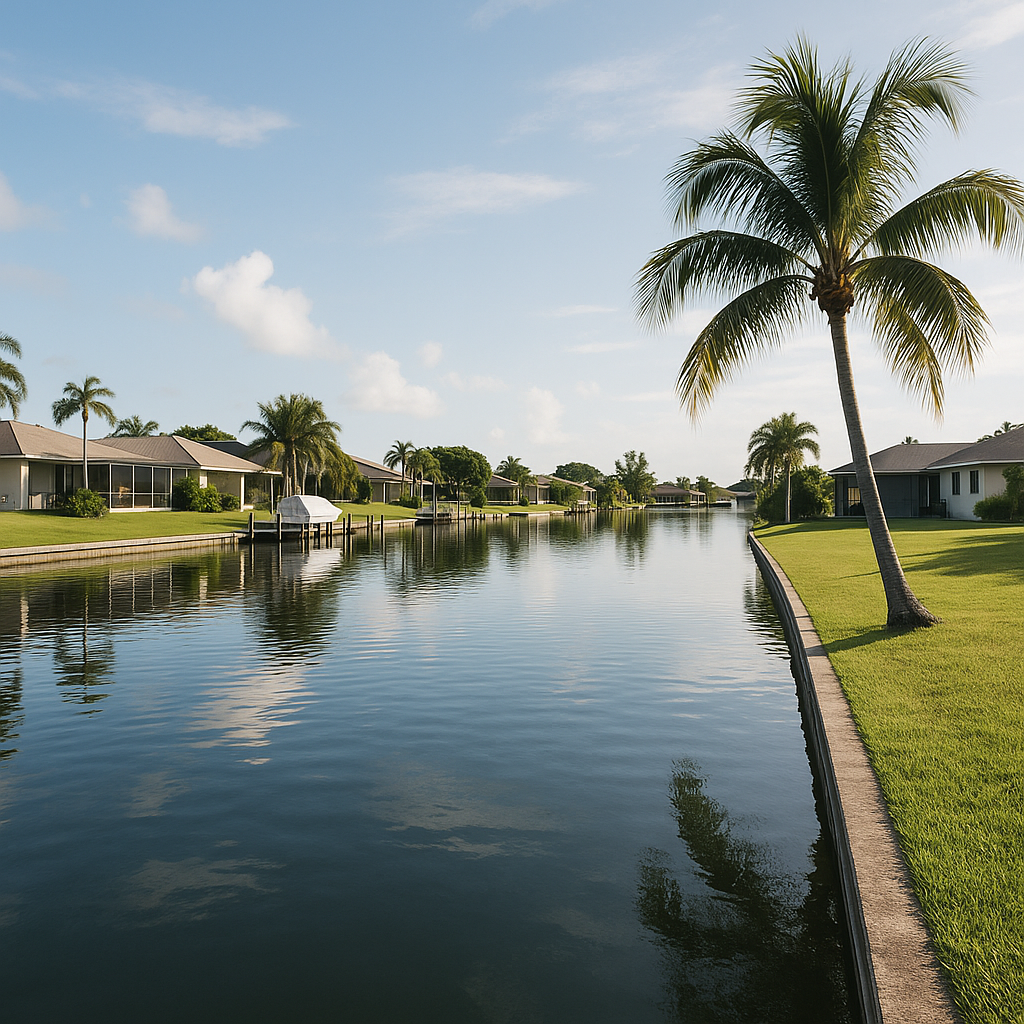
An off-market Cape Coral freshwater canal lot is not ready to price simply because it has canal frontage. The practical question for an absentee owner, builder, or investor is whether the parcel can be described accurately enough for a specific end buyer to decide: Would I build here, hold it, or pass? A short buyer brief—built around the exact parcel, the claimed canal relationship, site questions, and likely buyer fit—does more to move a serious conversation forward than a broad “waterfront lot” label.
Ultimate Land Deals publishes this guide for owners evaluating an off-market sale. Its website describes a Florida vacant-land buying process centered on cash offers and digital communication; the terms of any proposed purchase, closing arrangement, inspection period, or assignment right should still be confirmed in the written offer.
Start with the claim a buyer is actually being asked to buy
“Freshwater canal” can be a useful search phrase, but it is not a complete acquisition description. Do not ask a buyer to infer the essential facts from aerial imagery, an old listing, or a neighbor’s description.
Instead, write down each statement as one of three things:
| Statement in a sale conversation | Treat it as | What the buyer needs next |
|---|---|---|
| “The parcel is on a freshwater canal.” | A claim to verify | Parcel mapping, current municipal information, and a site-level review if needed |
| “A home can be built there.” | A buildability question, not a conclusion | Current zoning and development questions directed to the appropriate City office |
| “Utilities are nearby.” | An observation that needs specificity | Which service, where the relevant connection point is, and what the utility says about the parcel |
| “The lot drains well.” | A site question | A qualified review of existing conditions and any relevant development requirements |
| “Builders want this area.” | A market hypothesis | Feedback from builders who buy comparable lots under defined criteria |
This distinction protects both sides. An owner does not need to solve every development issue before requesting an offer. But a buyer who receives unsupported conclusions has to discount for uncertainty—or may stop engaging altogether.
Build the brief in the order a buyer can use it
A workable off-market brief is not a glossy brochure. It is a one- or two-page decision tool that lets a buyer identify the parcel, see what has been verified, and isolate the remaining questions.
1. Pin down the parcel before discussing its potential
Lead with the street address if one is assigned, the parcel identifier, the legal description available to the owner, and a map image marked with the parcel. Keep the source of each item with the file rather than retyping it from memory.
Cape Coral maintains a CapeIMS page within its GIS area. Use the City’s mapping resources as a starting point to orient the discussion to one parcel. Mapping is useful for screening; it should not be presented as proof of boundaries, access, service availability, canal classification, or site condition.
For an absentee owner, this is also the point to collect the documents already in hand: deed, prior survey if available, tax notices, correspondence concerning the lot, and photographs with dates. Label records by what they show. A survey may help frame a boundary question; it does not answer every current construction or utility question.
2. Turn “canal lot” into questions with answers
The canal relationship needs its own section because it is often the feature driving the buyer’s interest. Avoid broad descriptions such as “water access” unless the underlying facts have been confirmed.
A buyer brief can ask:
- What document or City resource identifies the waterbody adjacent to the parcel?
- Does the available information support describing the lot as a freshwater canal parcel, or is that still unverified?
- Is the apparent canal-side orientation consistent with the parcel information and any survey on hand?
- Are there visible site features, structures, or conditions that the buyer should inspect rather than assume?
- What questions should be directed to City staff before a buyer relies on a canal-related marketing statement?
Those questions are more useful than an unsupported promise. They also keep the conversation focused on the lot being sold rather than on generalized assumptions about canal properties elsewhere in Cape Coral.
3. Separate zoning from a build plan
A builder may care about zoning, lot configuration, drainage, utilities, and the design of the intended home. None of those is answered merely by calling a property vacant or residential-looking.
Cape Coral’s City Planning Division zoning page is the appropriate City starting point for zoning-related inquiry. Give the buyer the parcel identifier and ask them to confirm the questions that matter to their intended use. An owner should not convert a map color, a past conversation, or a nearby home into a statement that a particular plan is allowed.
The buyer brief should have a short “questions for City review” box, such as:
- What is the current zoning information associated with this parcel?
- What development, dimensional, drainage, or site-review questions should a proposed buyer raise before relying on a home plan?
- Which City department should address water and wastewater service questions for this location?
- Is there a current record or process the buyer should review before making a buildability decision?
Cape Coral’s Utilities department includes a Water Reclamation page. That makes Utilities a sensible starting point for a parcel-specific water or wastewater inquiry. It does not establish that a particular lot is connected, serviceable, or subject to any particular cost or requirement. Ask for a written, parcel-specific response where the answer affects price.
4. Make drainage and utilities visible uncertainties, not hidden assumptions
Drainage and utility questions often affect a builder’s acquisition decision, but they should be expressed with precision. “Near utilities” is not the same as a confirmed service arrangement. “Looks dry” is not a drainage conclusion.
For each topic, list what is known, what is only observed, and who must verify it:
- Utilities: available correspondence, account information, visible infrastructure, and the exact question submitted to Utilities.
- Drainage and grade: dated photos, any owner-held reports, visible conditions, and the buyer’s need for a qualified site review.
- Lot configuration: dimensions from available records or survey, plus any question about whether the buyer’s intended layout fits.
- Access and location: the public-facing street reference shown in available records, without representing that it proves legal access or construction feasibility.
A blank field is better than an invented answer. In an off-market transaction, the buyer may be willing to investigate an open question; the buyer is less likely to accept a claim that later proves unreliable.
Match the lot to an end buyer before choosing the sale route
Not every freshwater-canal-marketed parcel belongs in the same buyer pool. A builder looking for a near-term homesite may place the greatest weight on a usable plan, site questions, and utility confirmation. A land investor may first evaluate uncertainty, holding objectives, and resale audience. A developer may require a broader location and project review than a single-lot buyer.
That affects how an owner should sell:
- Direct buyer: Useful when the owner values a single point of contact and wants to evaluate a written offer against the buyer’s stated due diligence and closing terms. Ask whether the buyer intends to purchase, assign the contract, or decide after further review, and request that any relevant rights be written clearly.
- Agent-assisted sale: Useful when broader exposure and buyer competition are more important than a streamlined process. Ask the agent how canal-related statements, parcel questions, and buyer due diligence will be presented.
- Owner-led sale: Useful only if the owner is prepared to manage inquiries, share records consistently, and avoid making unsupported representations. A disciplined buyer brief is especially important here.
No route automatically produces a better net result. Compare the actual written price, anticipated transaction costs, requested contingencies, timing, who coordinates the closing, and the obligations that remain with the seller. If an offer uses terms the owner does not understand, pause and obtain appropriate legal, tax, or title guidance before signing.
A simple example of a stronger inquiry
Instead of sending: “Freshwater canal lot in Cape Coral—buildable, utilities nearby,” send a concise package:
Parcel: [identifier and address, if assigned].
Description: The owner is offering an off-market vacant parcel that appears adjacent to a canal; the freshwater-canal description requires buyer verification.
Available materials: [deed / survey / dated photos / map reference].
Open items: Current zoning information, parcel-specific utility questions, drainage and site review, and the buyer’s intended build fit.
Requested response: Purchase criteria, proposed due-diligence scope, price, closing timeline, and any assignment or inspection rights.
That message gives a serious buyer enough to decide whether the lot fits their box without overstating what has not been confirmed.
Resources
- CapeIMS, City of Cape Coral
- Zoning, City of Cape Coral
- Water Reclamation, City of Cape Coral
- About Ultimate Land Deals
Frequently asked questions
What should I send a buyer for an off-market Cape Coral freshwater canal lot?
Send the parcel identifier, address if assigned, legal description available to you, available deed or survey, dated photos, and a clear list of unverified items. Ask the buyer to state the criteria they need to confirm before making or finalizing an offer.
Can I describe the parcel as buildable because nearby lots have homes?
Do not treat nearby development as proof that your parcel supports a particular plan. Ask the buyer to verify current zoning and development questions with the appropriate City office and through their own site review.
Does a cash offer eliminate the need for due diligence?
No. A cash offer describes a proposed payment structure, not the scope of the buyer’s review. Read the written agreement to understand contingencies, timing, inspection rights, and whether assignment rights are included.
How can an out-of-state owner compare offers fairly?
Give each buyer the same parcel materials and request responses in the same format: price, due-diligence items, proposed closing timing, transaction costs assigned by the offer, and contract rights. Compare the documents, not only the headline price.