
Jersey Shore House Demolition Budget Guide
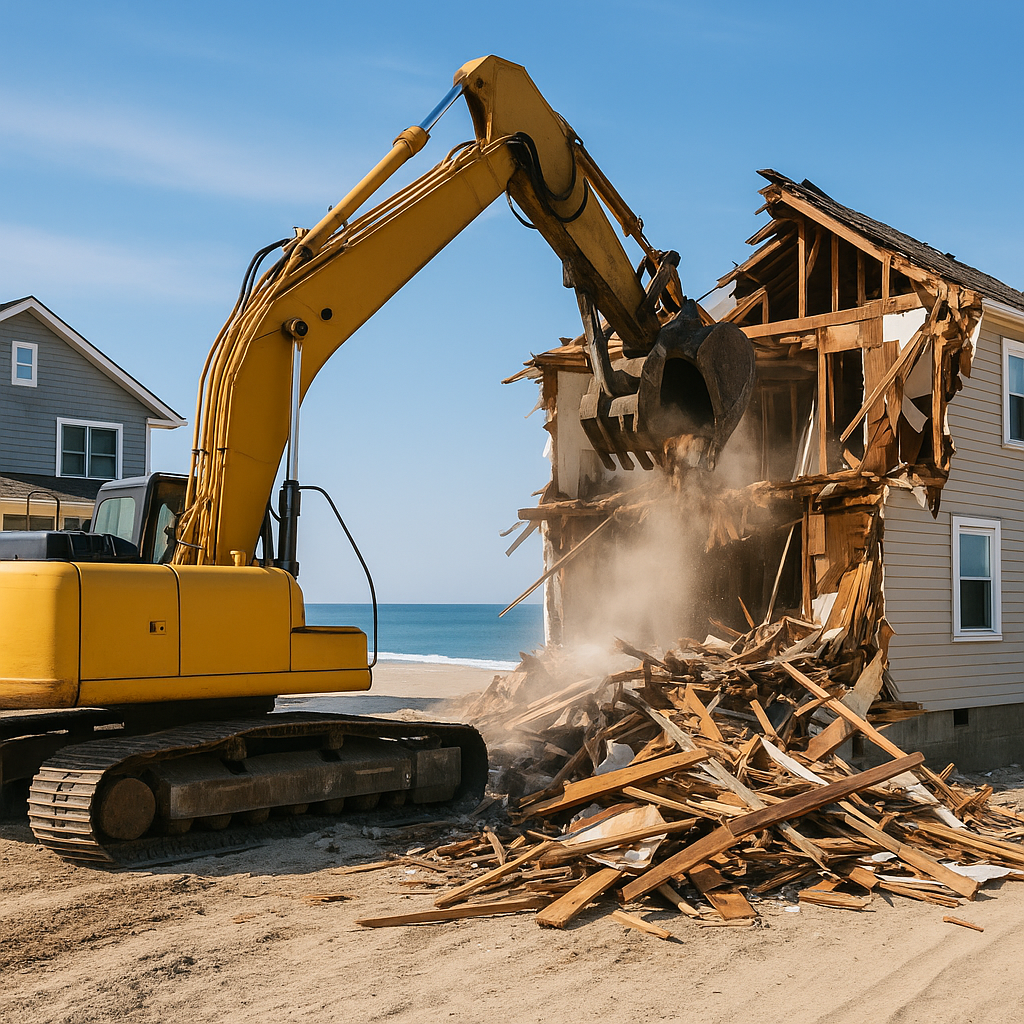
A house-demolition budget at the Jersey Shore should not be reduced to one price per square foot or one permit fee. A contractor’s quote is only one part of the decision. Utility coordination, hauling, foundation or piling removal, regulated-material handling, access, and the condition in which the site will be left can change the total.
This guide is published by Ultimate Land Deals. It is general information for property owners, not a demolition quote, permit opinion, or redevelopment approval.
Treat the contractor number as the start of the budget
Ask each bidder for an itemized scope rather than relying on a base demolition price. Confirm in writing whether the proposal includes:
- building demolition and loading;
- hauling and disposal;
- utility disconnects, caps, or coordination;
- removal of slabs, foundations, crawlspace elements, pilings, decks, sheds, and driveways;
- handling and disposal of regulated materials;
- grading, backfill, erosion control, and the condition in which the lot will be left;
- permit-application coordination; and
- exclusions for concealed conditions or difficult access.
Access for trucks, staging space, nearby structures, elevated buildings, and foundation-removal scope are property-specific. Do not assume they are covered because a property is described as a teardown or is near the beach.
A practical comparison sheet has three columns: included in contract price, owner allowance, and unknown pending review.
Municipal fees are real—but they are not the demolition cost
Municipal fee schedules can differ. Long Beach Township’s code lists a building-subcode fee of $100 for demolition of structures under 5,000 square feet and $151 for larger structures; it also states that no zoning fee is charged for a demolition permit. Those figures are municipal fees, not a contractor-price estimate. Long Beach Township fee schedule
Sea Isle City’s code lists a $500 fee for a demolition permit. Its code also states that the City will waive that fee when a building or structure has suffered a total loss from fire, storm, or other casualty. Sea Isle City building and housing code
These examples show why an owner should identify the exact municipality and property before budgeting. Confirm the current fee, application requirements, inspections, and utility requirements with the municipality serving the property.
Do not leave regulated-material handling as a vague contingency
For asbestos work covered by New Jersey’s Asbestos Control and Licensing Act, employers or contractors must hold the applicable state asbestos license, and workers performing covered asbestos work must hold the applicable state performance permit. The Act states exceptions to those license and permit requirements, including for certain private employers subject to federal OSHA that use their own employees for asbestos work in their own facility, as well as other exempted activities. New Jersey Asbestos Control and Licensing Act and regulations
Before accepting a demolition proposal, request clear written answers to these questions:
- Has the building been assessed for materials that could affect the scope?
- Who is responsible for testing, notification, abatement, transportation, and disposal?
- Is the proposed schedule conditional on test results or notice periods?
- What documentation will the owner receive after disposal?
Compare sale options before spending on removal
Demolition may be worth considering when an owner has an itemized scope and prospective buyers place value on a cleared site. It may be less appealing when the cost of removal or the intended future use remains uncertain.
Sell as-is. A buyer may account for anticipated demolition and site work in an offer. Compare written terms, including inspection contingencies, closing date, deposits, assignment rights, and costs that remain with the seller.
List with an agent. An agent familiar with the local teardown market may help expose the property to builders or other buyers. Marketing should distinguish between known property facts and questions that still need verification.
Sell independently. An owner can organize available property documents, photos, municipal notices, utility information, surveys, and title materials for prospective buyers. Avoid promising a replacement project or approval outcome without written confirmation from the appropriate authority.
The central comparison is:
Expected net proceeds after demolition and carrying time versus the as-is price a buyer will commit to under written terms.
A document-first sequence for absentee owners
Before authorizing work, assemble a small decision file:
- Property address and the municipality serving it.
- The current demolition checklist and fee schedule from that municipality.
- Photos showing the house, access, adjoining structures, decks, and visible site conditions.
- Two or more itemized demolition scopes using the same requested inclusions.
- Any inspection, code notice, storm-damage record, or insurance-related documentation available to the owner.
- Available survey, elevation, utility, and title information.
- Written questions for the municipality about the planned demolition and the intended condition of the property after removal.
This process does not replace contractor, municipal, legal, environmental, or engineering advice. It can help prevent a commitment based only on a low base quote.
FAQs
What should an all-in demolition budget include?
Build the budget from the itemized contractor scope, applicable municipal fees, utility work, disposal, regulated-material handling, site restoration, and any property-specific allowances. Ask bidders to identify what is included, excluded, and subject to later review.
Does a demolition permit answer every question about the property’s future use?
Ask the municipality serving the property what approvals or reviews apply to the demolition work and to any separate future project. Keep those questions separate when comparing costs and offers.
Should I demolish before putting the property on the market?
Compare the fully scoped cost and timing of demolition with written as-is offers or buyer feedback. A cleared site may appeal to some buyers, but an owner should understand the contract scope and remaining property questions before spending money on removal.