
Infill Lots for Builders in North Carolina: Owner Guide
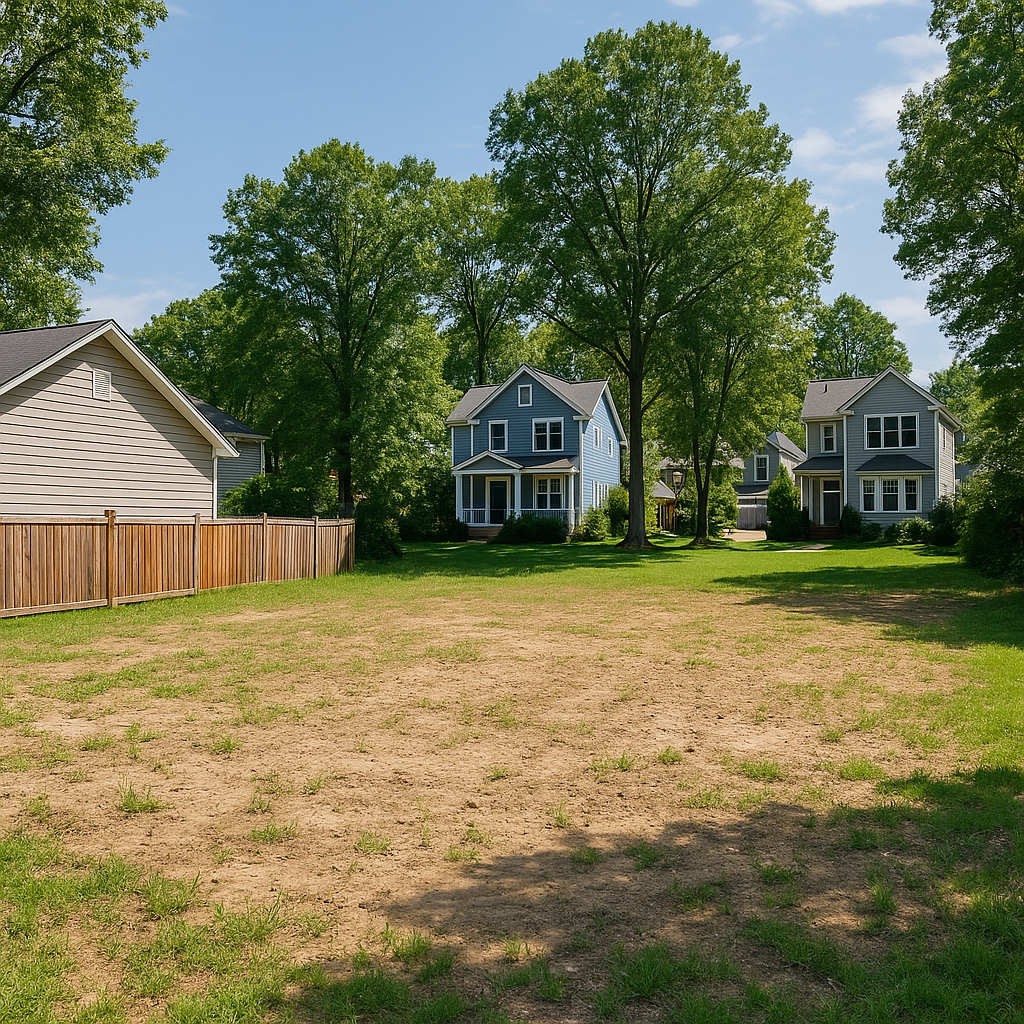
A builder looking for infill lots for builders in North Carolina is usually not looking for “vacant land” in the abstract. They are looking for a site where a specific house can be permitted, built, and sold without an unpleasant surprise in the land budget.
For an absentee owner, that distinction matters. A lot can sit in an established neighborhood, have homes on both sides, and still fall outside a builder’s acquisition criteria because of setbacks, sewer capacity, floodplain, driveway limitations, or a soil issue. The most productive way to approach a sale is to find out whether the parcel fits a builder’s repeatable buying box—and present the facts that let them make a decision quickly.
This is not about making a lot sound better than it is. It is about separating a buildable infill opportunity from a parcel that needs a different buyer, a longer timeline, or a lower-risk sale structure.
The builder’s question is: “Can I put my standard product here?”
Most small and midsize builders do not want to redesign every home around every lot. They often have a limited set of floor plans, target price points, and preferred neighborhoods. A parcel becomes attractive when it can accept one of those plans with ordinary site work.
That means a builder commonly screens for five practical fit points:
- A residential use allowed by the governing jurisdiction
- Enough width, depth, and usable area for a house, setbacks, driveway, and drainage
- A realistic water and wastewater solution
- Physical and legal access that supports construction and the finished home
- A resale location that supports the cost of the finished house
A positive answer to only one or two of these questions is not enough. For example, a corner lot in a desirable Charlotte-area suburb may have strong resale appeal but lose value if its side-yard setback, driveway sight-distance requirement, or utility easement leaves too little practical building envelope.
The same is true in smaller North Carolina markets. A lot near newer homes in a county subdivision may appear straightforward, yet require a septic evaluation, a long utility extension, or road improvements that change the economics for a spec builder.
Start with the jurisdiction, not the mailing address
North Carolina lots are often marketed by the nearest city name, while zoning, permits, utilities, and building requirements may be controlled by a county, a municipality, or both. An owner should identify the actual decision-maker before describing a lot as buildable.
Your initial file should show:
- County and parcel identification number
- Municipal limits or extraterritorial jurisdiction status, if applicable
- Current zoning district or applicable subdivision rules
- Whether public water and sewer are available, merely nearby, or not planned
- The road the lot fronts and whether it is public or private
This is especially important on the edges of growing markets. A parcel may be close to a city but remain under county rules. Another may be inside a town’s planning area without being served by town utilities. Builders need the actual answer, not a map-based assumption.
If the lot is subject to a recorded subdivision plat, restrictive covenants, architectural controls, or a homeowners association, include those documents early. A builder may be able to build on the lot but decline it because minimum house size, exterior requirements, or approval timing does not match its product.
A lot’s dimensions matter more than its acreage
Infill lots are commonly priced by their ability to hold a home, not by their raw square footage. A 0.22-acre lot with a usable rectangular envelope can be more valuable to a builder than a larger irregular parcel with narrow frontage.
Before seeking offers, pull the recorded plat or survey if you have one. Builders will want to see more than assessor-map lines. The useful details include:
- Frontage width and rear width
- Lot depth
- Side and front setback requirements
- Corner-lot setback rules
- Drainage, utility, access, or conservation easements
- Any visible encroachments or shared-drive arrangements
- Topography that could require retaining walls or extensive grading
A common owner mistake is to compare a narrow lot to a nearby sale simply because both lots have similar acreage. If the comparable could accommodate a two-car garage and a conventional driveway, while your lot requires a narrower plan, side-load garage, or variance, the builder’s land value will be different.
A quick example
Consider two vacant lots in the same established subdivision. Each is about one-quarter acre and has public utilities in the street.
- Lot A is 80 feet wide, relatively level, and has no apparent easements across the central building area.
- Lot B is 48 feet wide, on a corner, and has a drainage easement along one side.
Lot B may still be buildable, but its buyer may need a narrower house plan, a different driveway layout, and more engineering review. A builder buying several lots each year may prefer Lot A even if Lot B is offered at a lower price, because the simpler site uses a known plan and carries fewer unknowns.
Utilities are a cost model, not a checkbox
“Utilities available” is not a complete builder answer. The relevant question is what work, approvals, and expense are needed to serve a new home.
For public water and sewer, distinguish between service being present in the roadway and taps being installed or available for purchase. Confirm the provider, the side of the street where lines run, connection or capacity fees, and any extension requirement. A nearby line does not necessarily mean a simple connection.
Where public sewer is unavailable, septic feasibility can determine the entire transaction. If there is a prior septic permit, improvement permit, site evaluation, or soil report, provide it—but do not assume an old document remains valid for the builder’s intended house. Soil conditions, the proposed bedroom count, reserve area, lot layout, and local review can all matter.
For a well-and-septic lot, builders also consider where both systems can fit alongside the house, driveway, and required setbacks. A favorable soil finding is valuable, but it does not automatically make every floor plan workable.
Power deserves the same level of specificity. A line visible nearby may still require a service extension, transformer work, easements, or coordination with the utility. The right description is factual: identify the provider and what has been confirmed, rather than promising that service is “easy.”
Builders price the exception risk
A builder can estimate ordinary construction costs. What causes hesitation is the possibility that a lot contains an exception requiring time, redesign, discretionary approval, or an unbudgeted improvement.
These are the issues worth flagging before a builder discovers them during due diligence:
- Flood hazard areas or drainage features
- Steep slopes, fill, or signs of erosion
- Stream buffers, wetlands, or other environmental constraints
- Private-road maintenance obligations
- Unclear access or a landlocked configuration
- Unpaid assessments, liens, or title questions
- Historic fill, debris, or an old structure foundation
- A need for a variance, rezoning, or lot-line adjustment
Flagging an issue does not automatically destroy the deal. In some cases, a builder has the experience and margin to solve it. But the lot should be priced and offered as a site with that condition, not as an uncomplicated infill parcel. Surprises discovered after contract can lead to retrades, extended closing dates, or cancellation.
Give a builder a decision-ready property package
Absentee owners have an advantage when they organize information before conversations begin. A builder or land buyer can often decide whether to pursue a site much faster when the basic records are in one place.
A practical package may include:
- Parcel number, legal description, and property address or location
- Recorded plat, survey, or deed if available
- Recent tax bill and confirmation of property-tax status
- Zoning information and jurisdiction contact details
- Utility-provider information and any written availability responses
- Septic or soil records, if applicable
- Photos from the road and of the lot’s visible condition
- Known covenants, HOA materials, easements, or restrictions
- A concise list of what you know and what has not been verified
Do not spend money ordering every possible report before you know who the likely buyer is. A straightforward subdivision lot may only need a clean document package and basic utility confirmation. A more complicated site may justify a survey update or targeted due diligence if it will materially broaden the buyer pool. The key is to spend on information that resolves a real uncertainty, not on paperwork that does not affect a builder’s decision.
When a builder sale is the right route—and when it is not
A direct builder sale is often a strong fit when the lot is in an active housing area, has a reasonably clear construction path, and can support a finished home price that makes sense for the builder. It can be particularly useful for an owner who does not want to manage showings, field questions, or a long retail listing process.
It may be a weaker fit when the parcel is primarily recreational, too rural for a builder’s service area, dependent on major entitlement work, or better suited as an assemblage with neighboring land. An unusually shaped lot with limited building area may also be worth discussing with adjacent owners before assuming a builder is the best buyer.
For owners who want a simple sale but are unsure how a lot fits the market, Ultimate Land Deals reviews off-market residential parcels and matches viable opportunities with its own acquisition process or with builders and investors whose criteria fit the site. The relevant information is the same either way: location, jurisdiction, dimensions, access, utility path, and the conditions that affect a build.
The practical takeaway for absentee owners
The best way to attract interest in North Carolina infill lots is not to lead with acreage or a broad claim that the land is “ready to build.” Lead with the facts that show whether a builder can place a profitable, permitted home on the parcel.
If the lot has a clear building envelope, documented utility or septic path, dependable access, and a neighborhood that supports new construction, it is much easier to position as a builder opportunity. If one of those elements is unresolved, identify it plainly. The right buyer may still move forward—but the deal will be based on the site that exists, not the one everyone hopes it will become.