
How to Price Vacant Land in Florida: Owner’s Guide
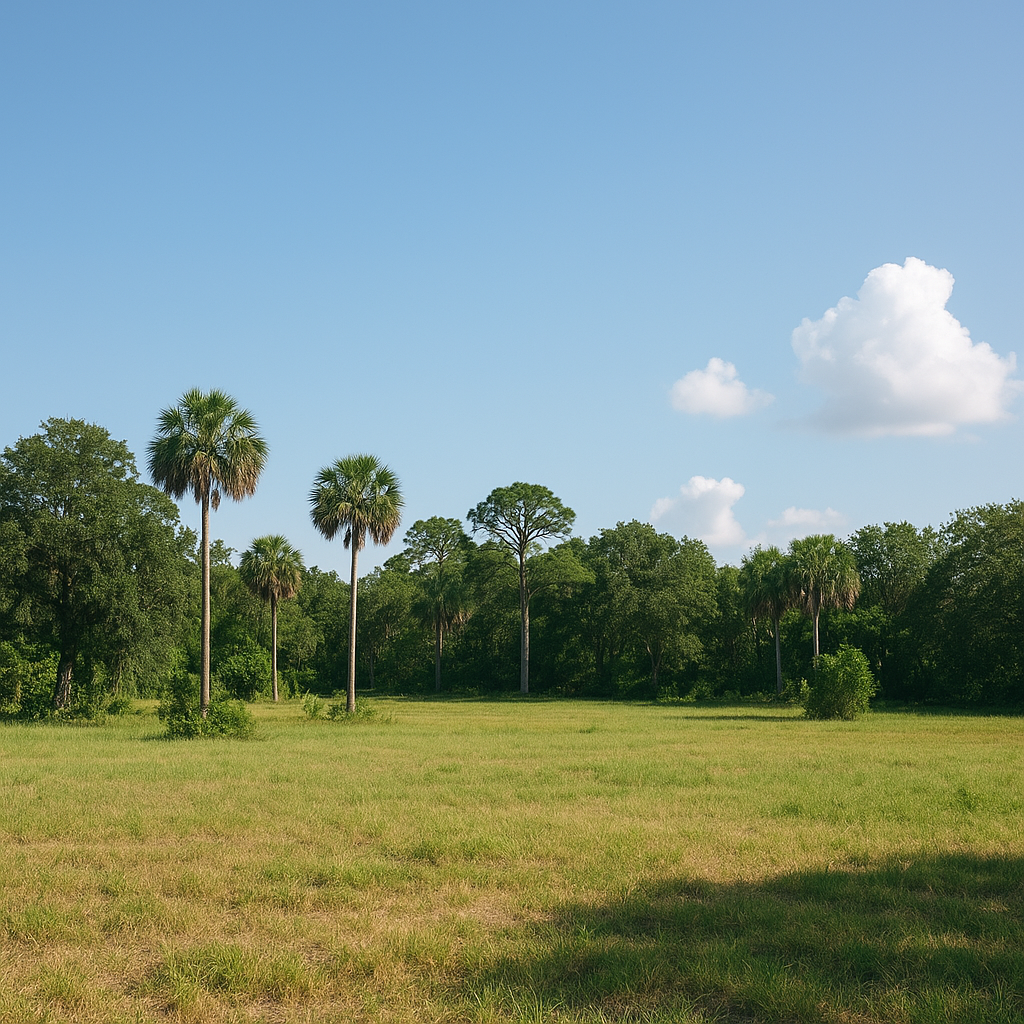
Introduction: Why Pricing Vacant Land in Florida Feels So Confusing
If you own a parcel of vacant land in Florida—especially as an absentee owner—you’ve probably asked yourself:
- What is my Florida land really worth?
- Why do online estimates seem all over the place?
- How do investors and builders decide what they’ll actually pay?
Unlike houses, vacant land doesn’t have kitchens, square footage, or recent remodels to compare. That makes learning how to price vacant land in Florida feel tricky. But investors, builders, and companies like Ultimate Land Deals use a clear, repeatable process—and you can use the same framework.
This guide breaks down step‑by‑step how to price vacant land in Florida so you can:
- Avoid underpricing and leaving money on the table
- Avoid overpricing and watching your land sit for months or years
- Understand how professional land buyers run their numbers
- Decide whether to list with an agent, sell by owner, or accept a direct cash offer
Step 1: Understand What Drives Florida Vacant Land Value
Before you can price vacant land in Florida accurately, you need to understand the core value drivers. Florida is unique: strong population growth, coastal demand, flood zones, hurricane risk, and zoning all play a role.
Key value factors include:
1. Location (Macro & Micro)
- Metro area & county – Land near growing metros (Orlando, Tampa, Jacksonville, Miami, Sarasota, etc.) usually commands higher prices.
- City vs. rural – Infill lots in growing neighborhoods are often more valuable per acre than rural acreage.
- Neighborhood demand – Even within a single city, some subdivisions have strong building activity while others are stagnant.
2. Zoning & Allowed Use
Zoning directly impacts what your land can be used for—and therefore what end-buyers will pay.
Common Florida zoning categories for vacant land include:
- Residential (R-1, R-2, etc.)
- Agricultural (AG)
- Commercial (C)
- Mixed-use or Planned Unit Development (PUD)
Why it matters: A buildable residential lot in a subdivision may attract owner-occupants and builders. Agricultural land may appeal more to investors, farmers, or recreational buyers—and usually values differently.
3. Utilities & Road Access
Land that’s easy to build on is worth more than land that needs heavy prep.
- Utilities: Public water, sewer, and electricity at or near the lot line significantly increase value.
- Road access: Paved road frontage is usually worth more than dirt or private roads. Landlocked parcels (no legal access) are heavily discounted.
- Topography & wetlands: Flood zones, low elevation, wetlands, and uneven terrain can reduce buildable area and value.
4. Market Activity & Demand
To price vacant land in Florida properly, check:
- How many similar lots have sold recently
- How quickly they sold
- Where demand is coming from (builders, investors, retail buyers)
If you see multiple new builds and few vacant lots available, demand is likely strong.
Step 2: Collect the Right Data on Your Parcel
Before you can compare prices or evaluate offers, gather the basic facts about your property. This is exactly what Ultimate Land Deals does first when evaluating off‑market land in Florida.
What to Gather
- Parcel number (APN) – Found on your tax bill or county appraiser website.
- Exact acreage / lot dimensions – Not just "about an acre"—get the precise size.
- Zoning classification – From county zoning or planning department.
- Access type – Paved, gravel, easement, or landlocked.
- Utilities – Water, sewer (or septic potential), power, gas, fiber/Internet availability.
- Flood zone & wetlands – FEMA flood maps and county GIS maps will show this.
- HOA or deed restrictions – Common in platted communities.
- Back taxes, liens, or code violations – These can affect offers and net proceeds.
Once you have this data, you can start comparing your parcel to real market activity.
Step 3: Use Comparable Sales to Price Vacant Land in Florida
The most reliable way to price vacant land in Florida is to look at what similar properties have recently sold for—just like appraisers and experienced investors do.
Where to Find Sold Land Comps
You can research recent sales using:
- County property appraiser websites (public records)
- County clerk of court / recorder for deed and sale records
- Real estate sites that show sold land data
- Local land‑focused real estate agents
- A professional land buyer like Ultimate Land Deals, who already tracks off-market and on-market land data statewide
How to Choose True “Comps”
To be a true comparable sale, the other parcels should match your land in key ways:
- Same county and preferably same subdivision or nearby area
- Similar zoning and land use (e.g., both single‑family residential)
- Similar size range (e.g., 0.25 acres vs. 0.23 acres is fine; 10 acres vs. 0.5 acres is not)
- Similar access and utilities
- Sold within the last 6–12 months, if possible
If land prices are rising or falling in your area, favor more recent sales.
Adjusting for Differences
No two parcels are exactly the same. When learning how to price vacant land in Florida, expect to adjust for:
- Size differences – Smaller infill lots often sell for more per acre than larger tracts.
- Access/road type – Paved road front vs. dirt road vs. easement.
- Utilities – If your land has power and others do not, your parcel typically commands a premium.
- Water/flood risk – Flood zones can reduce usable value and buyer pool.
Example:
- A 0.25‑acre buildable lot with paved road and utilities sold for $30,000.
- Your 0.25‑acre lot in the same subdivision also has paved access and utilities.
- It’s reasonable to start your market value estimate around that number, then adjust slightly up or down based on exact location and conditions.
Step 4: Understand Retail Value vs. Investor Value
When you price vacant land in Florida, you’ll see two very different numbers:
- Retail value – What a patient seller might get selling to an owner‑occupant or consumer buyer, likely by listing with an agent or on the MLS.
- Investor value – What a cash buyer, developer, or land investment company would pay to buy quickly, as‑is, often off‑market.
Retail Market Value
Retail value assumes:
- You’re willing to wait months (or longer) for the right buyer
- The buyer may use financing
- You’ll likely pay REALTOR® commissions
- The buyer might negotiate repairs, surveys, closing costs, etc.
This is the highest theoretical price, but it comes with time, uncertainty, and costs.
Investor / Cash Buyer Value
Companies like Ultimate Land Deals buy vacant land in Florida directly from owners using cash. They:
- Take on due diligence risk
- Cover many or all closing costs
- Often buy properties with title issues, back taxes, or problem conditions
- Aim to resell, assign, or hold the property for a profit
Because of that risk and speed, investor offers are intentionally below full retail. But they compensate with:
- Fast closings (sometimes in days or weeks)
- No agents, no showings, no listings
- Simple, digital, paperwork‑light process
As a seller, the right choice depends on whether you value:
- Top‑of‑market price (retail listing), or
- Speed and certainty (direct cash sale)
Step 5: Factor in Holding Costs, Taxes, and Your Timeline
Many absentee owners forget that time costs money when holding vacant land in Florida.
Ongoing Costs of Holding Land
- Property taxes (which can increase over time)
- HOA fees or special assessments
- Mowing / lot maintenance
- Insurance, if applicable
- Risk of code violations (overgrowth, debris, unpermitted use)
If your parcel isn’t producing income, these costs eat away at your long‑term return.
Your Personal Timeline
Ask yourself:
- Am I okay waiting 6–18 months to potentially get top dollar?
- Or do I prefer a sure thing now, even if the offer is lower?
If you’re tired of paying taxes on unused land, or if the property is more of a headache than an asset, a fair cash offer from an investor may be the better financial decision over time.
Step 6: Avoid Common Pricing Mistakes Florida Land Owners Make
When learning how to price vacant land in Florida, it’s just as important to know what not to do.
Mistake 1: Using Listing Prices Instead of Sold Prices
Active listings often show what sellers hope to get, not what buyers will actually pay.
Always base your pricing on closed sales, not just asking prices.
Mistake 2: Comparing to Houses Instead of Land
House values are driven by completely different factors. A home on a 0.25‑acre lot selling for $400,000 does not mean your vacant 0.25‑acre lot is worth half that.
Land value is usually a fraction of improved property value and varies widely by area.
Mistake 3: Ignoring Zoning or Buildability
A lot that looks great on a map may:
- Be unbuildable due to wetlands or floodplain
- Be too narrow for the required setbacks
- Have zoning that doesn’t allow the intended use
Builders and investors will price this risk in. Don’t assume all vacant land is equally valuable.
Mistake 4: Overpricing and “Testing the Market” for Too Long
If you overprice your land and let it sit, you may:
- Miss serious buyers in the first 30–60 days
- Signal to the market that “something is wrong”
- Eventually accept a lower offer than you could have gotten with realistic pricing from the start
Step 7: How Investors Like Ultimate Land Deals Price Vacant Land
It can help to know how professional land buyers look at your property. Ultimate Land Deals specializes in off‑market vacant land acquisition in Florida, Arizona, Nevada, North Carolina, and beyond, and uses a consistent approach.
Here’s a simplified version of the process:
1. Data Collection
- Pull public records, zoning, and GIS data
- Confirm size, access, utilities, flood zone, and any red flags
2. Comparable Sales Analysis
- Analyze sold comps (both on‑market and off‑market where available)
- Adjust for size, access, utilities, and timing
- Estimate realistic as‑is market value
3. Exit Strategy Assessment
Depending on the parcel, Ultimate Land Deals evaluates whether to:
- Purchase directly and hold or resell
- Assign the contract to a builder, developer, or other investor
- Close, improve, and resell
Each exit strategy has different risk, time, and cost—impacting the offer price.
4. Offer Calculation
From the estimated market value, an investor subtracts:
- Closing costs and transaction fees
- Marketing and resale costs
- Holding costs during ownership
- A reasonable profit margin for the risk
The result is a cash offer that works for both the investor and a seller who wants a:
- Fast, hassle‑free sale
- Simple, digital, no‑agent process
- Guaranteed closing (assuming clear title)
Step 8: Practical Ways to Get a Realistic Price Range
If you’re not a real estate professional, here are practical ways to price vacant land in Florida without getting overwhelmed.
Option A: DIY Research
- Pull recent land sales near your parcel from county records.
- Filter for similar size, zoning, and utilities.
- Calculate an average price per acre (or per lot) from those sales.
- Adjust up or down based on your parcel’s specific pros/cons.
This gives you a ballpark retail value.
Option B: Talk to a Local Land‑Savvy Agent
Some agents specialize in land (many do not). A land‑focused agent can:
- Run a Comparative Market Analysis (CMA)
- Advise on current demand from builders and residents
- Help you price at the top of the realistic range if you’re listing
Just remember to factor in commission and time.
Option C: Request a Cash Offer from a Land Buyer
Companies like Ultimate Land Deals work directly with absentee landowners every day and can:
- Review your parcel details
- Analyze recent comps and investor demand
- Present a no‑obligation cash offer
Even if you don’t accept it, this gives you a real investor benchmark for what the professional market would pay today for a fast, as‑is transaction.
How Ultimate Land Deals Helps Absentee Owners Price and Sell Florida Land
Ultimate Land Deals is no longer just a land wholesaling company. We focus on making land sales fast and simple for owners across Florida and other high‑growth states.
What We Do for Florida Landowners
Buy vacant land directly for cash
We specialise in off‑market vacant land acquisition, with a streamlined, digital, no‑agent process.Evaluate your land and choose the best path
After analyzing your parcel, we may:- Purchase it directly for cash
- Assign the contract to another buyer (often a builder or investor)
- Close on it and resell it ourselves
Work with serious end buyers
We source off‑market residential lots for builders, developers, and investors who are actively buying—helping your property move faster.Handle everything from offer to closing
We coordinate:- Title work and due diligence
- Closing documents
- Communication with all parties
You get a clear price, clear timeline, and clear process, especially helpful if you’re out of state or simply don’t want to manage a traditional listing.
Conclusion: Take the Guesswork Out of Pricing Your Florida Land
Learning how to price vacant land in Florida comes down to a few key steps:
- Understand the value drivers: location, zoning, access, utilities, and demand.
- Gather accurate data on your parcel—APN, zoning, flood zone, utilities.
- Base your estimate on recent sold comps, not just asking prices.
- Decide whether you want retail value with time and effort, or investor value with speed and certainty.
- Consider your holding costs, taxes, and how quickly you actually want to sell.
If you’d like a data‑driven, no‑pressure opinion of what your land could be worth to an active cash buyer, you can reach out to Ultimate Land Deals. We’ll review your Florida parcel, pull the comps, and give you a straightforward offer—so you can compare your options and choose the path that makes the most sense for you.
Pricing vacant land in Florida doesn’t have to be a guessing game. With the right information, you can move from uncertainty to a clear, confident decision about your property.