
Custom vs. Spec Luxury Home Builders in New Jersey
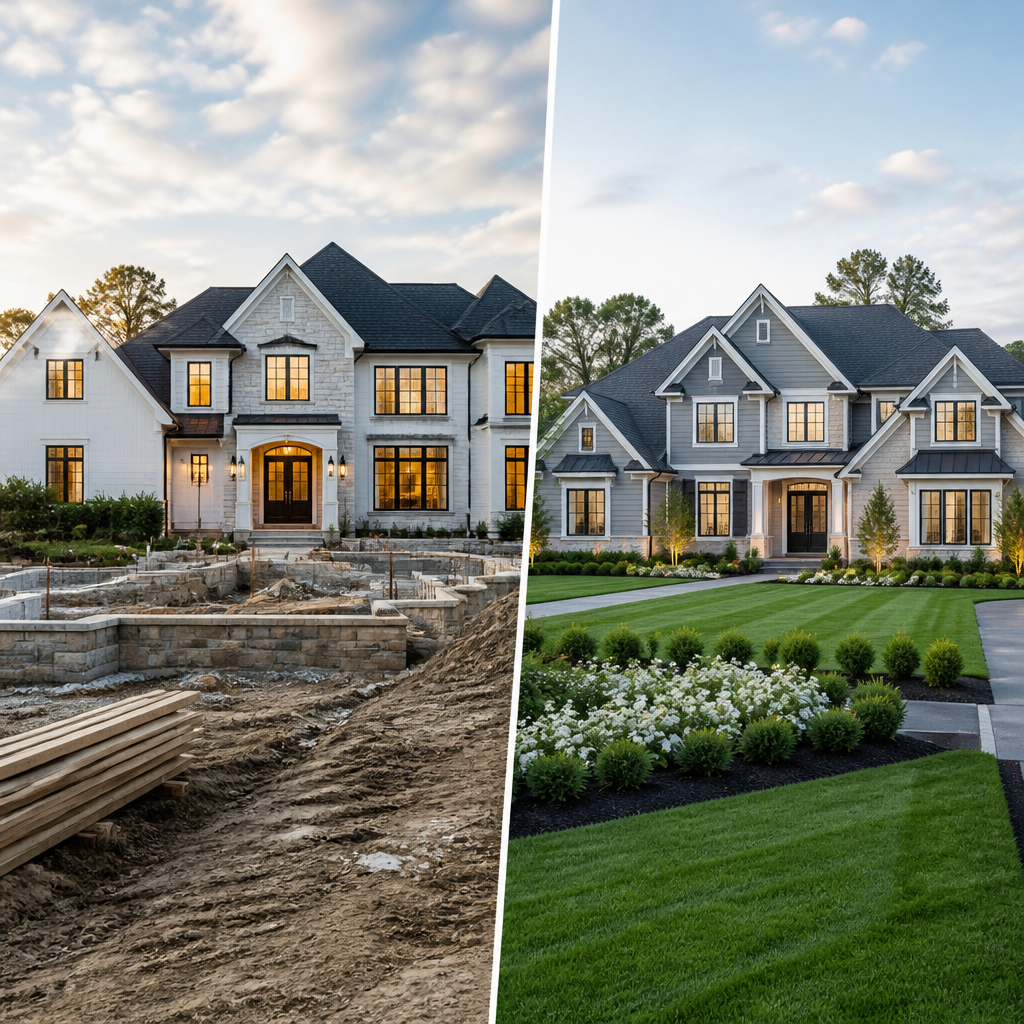
Custom vs. Spec Luxury Home Builders in New Jersey: Which Path Fits Your Lot?
For a New Jersey landowner, comparing custom vs. spec luxury home builders starts with the transaction structure—not just a builder’s marketing label. In U.S. Census construction classifications, a contractor-built home is built for owner occupancy on the owner’s land under a general contractor, while a built-for-sale home is built on the builder’s land for sale with the land and house in one transaction; the latter is often called speculative construction. Individual builders may use “custom” and “spec” differently and may consider more than one structure. U.S. Census Survey of Construction definitions
This guide is published by Ultimate Land Deals. It is general information for landowners comparing potential builder counterparties, not legal or construction advice.
The useful first question is: “Would you buy this lot, build on my lot, or consider either structure?” That question helps distinguish a possible land sale from an owner-held construction project before you spend time on plans, finishes, or proposals.
Start with the outcome you want from the land
A luxury home can be custom-built or built for sale. Those labels alone do not establish what a builder will pay for land, whether it will accept a particular site, or which party will carry preconstruction work.
| If your priority is… | Conversation to begin | What to ask |
|---|---|---|
| Selling the lot and stepping away from the project | A potential land-acquisition or built-for-sale discussion | “Do you purchase vacant homesites in this location? What parcel information do you need for an initial review?” |
| Keeping the land and directing the finished home | A custom or contractor-built discussion | “Do you build on owner-held lots, and what must be resolved before you will price the work?” |
| Preserving both options | Speak with builders about both structures | “Would you review this as a land acquisition, an owner-held construction opportunity, or neither?” |
A builder willing to construct on your land is not necessarily a buyer for the land. Likewise, a builder interested in acquiring a site may not offer an owner-directed build. Treat those as separate proposals until written documents state otherwise.
The control-and-risk test
Rather than relying only on the words “custom” or “spec,” ask who will control the parcel, design, preconstruction work, and eventual sale.
1. Who owns or controls the lot?
An owner-held construction path can involve retaining the land and engaging a general contractor. A built-for-sale path can involve a builder offering the completed house and lot together. These are Census classifications, not universal rules for every builder or transaction. U.S. Census Survey of Construction definitions
Ask for a plain-language explanation of the proposed sequence:
- Is the first document a purchase contract, construction contract, option, or something else?
- Who is the proposed purchaser or contracting entity?
- What must occur before either party is obligated to close or build?
- Can the builder transfer its rights to another entity or buyer?
2. Who makes the house decisions?
If you want to remain involved in design, ask the builder which decisions you control, which it controls, and when selections become binding. If your aim is to sell the site, ask what information the prospective buyer needs before deciding whether to proceed.
3. Who handles site questions?
A rendering is not a parcel review. Ask each prospective builder what it needs to evaluate the lot and which party will obtain or pay for information. Keep the answer in writing.
A focused parcel packet can include:
- the property address and block/lot or other parcel identifier;
- deed, title, or survey information you have;
- site and road-frontage photos;
- known easements, restrictions, or prior studies; and
- records you have concerning access, utilities, soils, environmental conditions, or approvals.
Do not represent an unknown condition as resolved. Ask the builder to identify what it still needs to verify and whether that affects its proposal.
4. Who will own the completed home?
If you expect to occupy the finished home, focus on the construction relationship, contract, and applicable warranty arrangement. If a builder intends to acquire the site and later sell a new home, focus on the land contract you are being asked to accept: price, conditions, timing, deposit, due-diligence access, and assignment rights.
New Jersey registration and warranty questions
New Jersey’s Department of Community Affairs (DCA) states that builders of owner-occupied new homes are generally required to register with the New Home Warranty Program. The DCA’s service-portal FAQ identifies an owner-lot exception: for a 100% new home on the homeowner’s land, registration and a new-home warranty are not required if the construction contract clearly and explicitly says the builder will not provide the warranty and the homeowner has signed the specified certification on the municipal construction-permit application. This is a registration and warranty exception, not a conclusion about other project requirements. DCA New Home Warranty FAQ
DCA describes a builder broadly, including organizations that construct new homes for sale, act as prime contractors, contract with a general contractor for construction, or transfer title to land and participate in construction. It also states that each new-home-building business must register separately and that the company transferring title to a new home is the entity that must register and warrant it. New Jersey DCA builder guidance
Before comparing price or design promises, ask the firm to identify the exact legal entity that would sign the agreement and explain its current New Jersey registration and warranty arrangement. DCA’s portal says a registrant may submit an amendment outside the normal two-year renewal cycle for registration updates and lists a $25 nonrefundable fee for amendments related to a name or company-formation change. DCA New Home Warranty FAQ
A short screening script for builders
Send the same note to several firms and compare their answers:
I own a vacant lot in New Jersey and am deciding between selling it and retaining it for a custom home. Please let me know whether you (1) purchase lots directly, (2) build on owner-held lots, or (3) consider both. If interested, what documents and parcel information do you need for an initial review? Please also identify the entity that would contract and provide your current New Jersey builder-registration and warranty information.
A useful response should identify which path the firm is discussing. A general statement that a company builds luxury homes does not answer whether it will buy your site or build for you.
Compare proposals separately
Do not treat a land-purchase offer and an owner-held construction proposal as interchangeable bids.
For a land-sale proposal, compare the proposed purchaser, price, deposit, closing date, conditions, inspection or approval rights, assignment language, access requests, and contract cost allocations.
For an owner-build proposal, compare the contracting entity, scope of work, design responsibility, allowances and change orders, schedule assumptions, payment structure, stated exclusions, warranty documents, and unresolved parcel questions.
If a builder discusses both possibilities, request separate written alternatives. That makes it easier to see what is proposed in a sale path and what you would take on in a construction path.
FAQs
Can a luxury builder be both a custom and spec builder?
Possibly. Census classifications distinguish contractor-built homes on an owner’s land from homes built for sale with the house and land offered together, but a particular builder may consider one or both transaction structures. Ask about your specific lot. U.S. Census Survey of Construction definitions
If a builder wants to buy my lot, do I need to choose a house plan first?
Ask what information the builder needs for an initial site review. Do not commission design work solely on the assumption that a prospective buyer will need it.
What New Jersey information should I request from a builder?
Ask for the legal entity that would sign the agreement and for its current builder-registration and warranty information. Also ask how the firm views the project’s registration and warranty requirements, particularly if the home would be built on land you retain. DCA builder guidance
Does a builder’s interest in my lot mean it will close?
No. Review any proposed agreement for the purchaser, conditions, timing, deposit, and assignment rights before treating an inquiry as a committed purchase.