
Cash Land Buyer Asking for Upfront Fees: Seller Questions
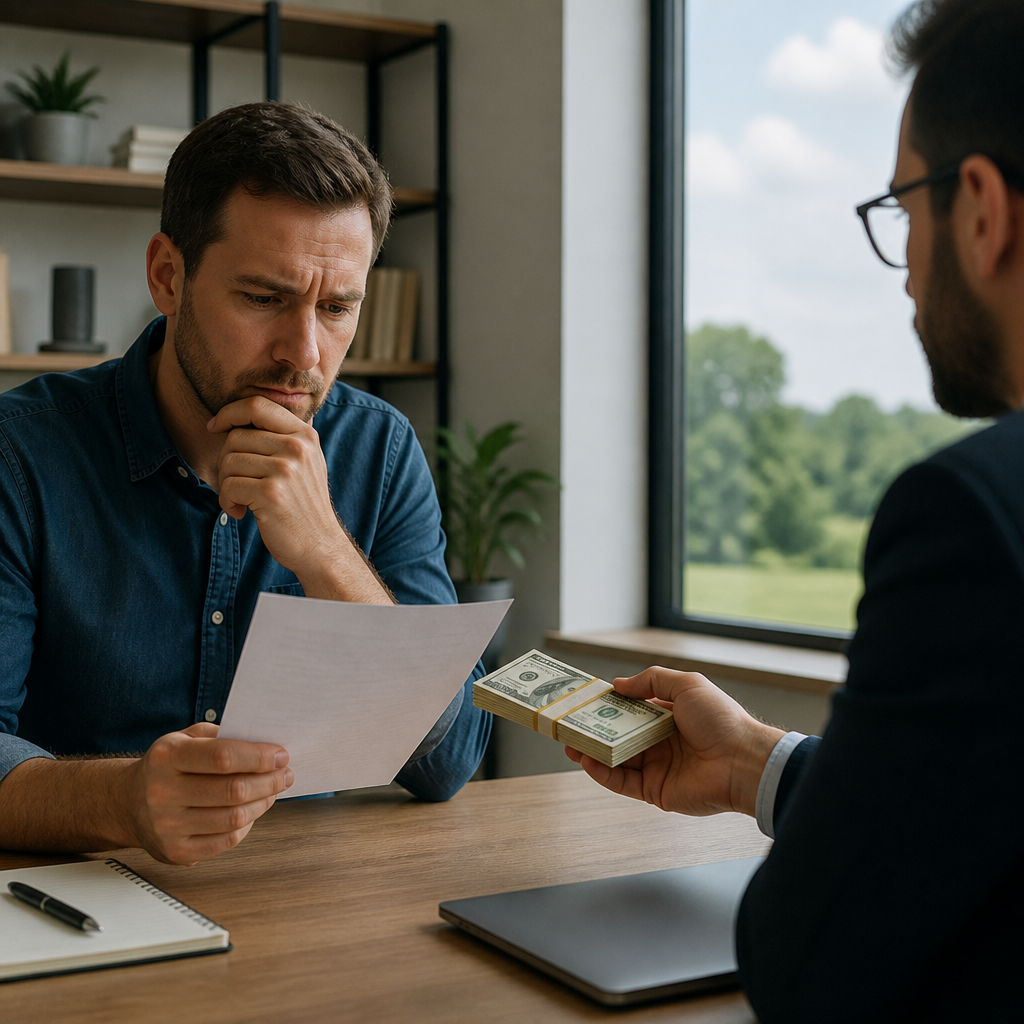
A Cash Land Buyer Asked for an Upfront Fee: What Should You Do?
If a cash land buyer asks you to send money before you have a complete written offer and a closing path you can verify, pause. Ask what the payment is for, who receives it, when it is due, whether it is refundable, and what written term addresses it.
Published by Ultimate Land Deals.
Start with the recipient and purpose
Ask for these details in writing:
- Payee: Is the money going to the buyer, a title or escrow company, a public office, or another business?
- Purpose: Is it described as a deposit, document charge, tax, recording cost, title-related cost, or something else?
- Timing: Is it requested before an offer, after a contract is signed, or at closing?
- Refundability: If the sale does not close, what do the written terms say about the money?
If the response is vague, request an itemized explanation and the relevant written terms before authorizing payment. You can also decide not to proceed.
Compare the request with the documents
| Request | Questions to ask | Documents to request |
|---|---|---|
| Money requested to receive, reserve, or change an offer | Why is payment requested before a written offer exists? Is it credited or refundable? | Written offer and written payment terms |
| Payment requested directly by the buyer | What is the stated purpose? What written term addresses it? | The applicable contract language and recipient details |
| Amount described as a tax or recording cost | Which public office or closing contact is identified? When is payment due? | Written figures or an invoice identifying the charge |
| New deduction close to closing | Was it previously disclosed? What written term supports it? | Updated transaction figures and an explanation |
The point is not to label every requested charge improper. It is to make the recipient, purpose, amount, timing, and written treatment visible before you agree to pay.
Florida example: documentary stamp tax
For Florida real property, deeds and other documents that transfer an interest in Florida real property are subject to documentary stamp tax. The Florida Department of Revenue says that, when a taxable document is recorded, the tax is paid to the county clerk of court or a recording official. It also says that all parties to the document are liable for the tax regardless of which party agrees to pay it. Florida Department of Revenue: Documentary Stamp Tax
That example does not determine how parties to a particular sale will handle a charge. Review the purchase agreement and ask the identified closing contact how a claimed tax or recording amount will appear in the transaction figures.
A safer sequence before sending money
Get the full offer
Request the purchase price, parcel identification, buyer name or entity, proposed closing date, contingencies, and every stated cost assigned to you. Review the terms that affect what you expect to receive at closing.
Verify a closing contact independently
If someone says a title or escrow company needs money or documents, locate contact information independently rather than relying only on an unexpected message. Ask that contact to confirm the payment instructions, transaction reference, and whether payment is required from the seller.
Review changes before closing
Request written figures showing the sale price and deductions affecting your proceeds. If a new charge appears, ask what it is and where it appears in the written transaction terms.
The Consumer Financial Protection Bureau says lenders are required to provide a Closing Disclosure three business days before scheduled closing and advises consumers to ask why if information differs from what they expected. That is a useful review habit: identify differences and resolve questions before closing. CFPB: Closing Disclosure Explainer
When to slow down
Ask more questions if:
- You are asked to pay before receiving a complete written offer.
- The recipient is not clearly identified.
- The request uses a broad label without an explanation.
- You are discouraged from contacting the named closing business independently.
- Payment instructions change suddenly.
- The written terms do not address refundability or crediting of the payment.
- A charge appears after you believed the financial terms were settled.
These points are reasons to seek documentation and confirmation; they do not by themselves determine the outcome of a transaction.
Bottom line
When a cash land buyer asks for an upfront fee, do not rely on the label alone. Obtain a written explanation of the payment's recipient, purpose, timing, refund terms, and place in the transaction documents. For Florida land, documentary stamp tax is one example of a documented transfer-related charge, but it should not be confused with an unexplained request to send money.
FAQs
Should I send money before receiving an offer?
Before authorizing payment, request a written explanation of the charge, recipient, timing, refund terms, and written basis. A complete offer gives you information to review the proposed price and stated expenses.
Can a Florida land sale involve a documented tax charge?
Yes. Florida documentary stamp tax applies to deeds and other documents transferring an interest in Florida real property. The Florida Department of Revenue states that all parties to the document are liable regardless of which party agrees to pay. Florida Department of Revenue
What if the buyer says the fee must be paid today?
Ask for the request in writing, verify the named recipient independently, and review the applicable written terms before authorizing payment. A deadline does not identify the charge's purpose or refund terms.