
Cape Coral Saltwater vs Freshwater Canal Lot Guide
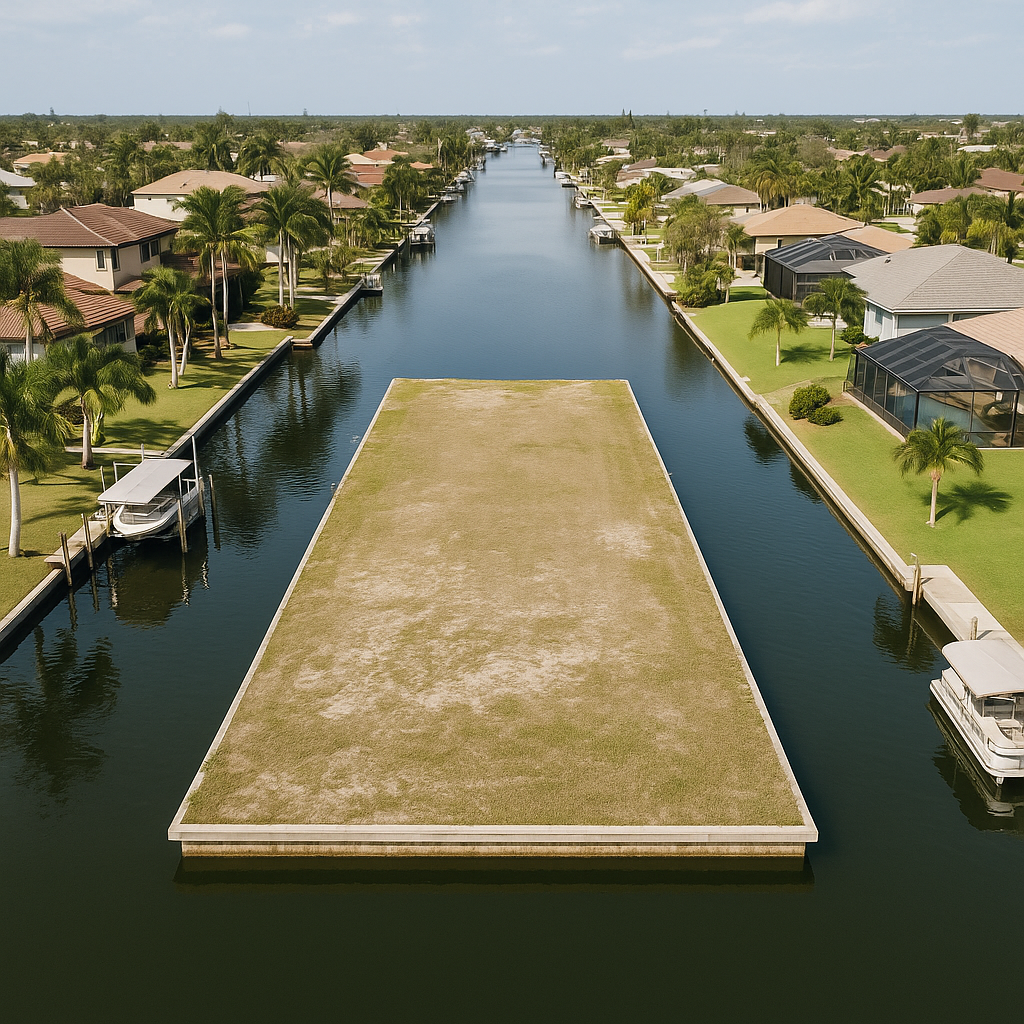
A Cape Coral saltwater vs freshwater canal lot decision comes down to the recreation you want and the waterfront work you may inherit—not simply which label sounds more valuable. Choose a saltwater lot when verified boating access toward the river, Matlacha Pass, or the Gulf is central to your plans. Choose a freshwater lot when kayaking, inland fishing, lake-and-canal scenery, or a quieter waterfront setting matters more than open-water boating.
For an absentee owner considering a purchase, sale, or future build, Ultimate Land Deals recommends treating canal type as the beginning of due diligence. The parcel’s actual water route, shoreline condition, permitting path, and buildability determine whether a waterfront lot fits the intended use.
The practical difference at a glance
| Question | Saltwater canal lot | Freshwater canal lot |
|---|---|---|
| Can it offer access toward open saltwater? | Potentially, but only if the specific route is navigable | No assumption of Gulf, bay, or river access |
| Best fit for | Buyers prioritizing power boating, river or Gulf-oriented recreation | Buyers prioritizing paddling, inland fishing, lakes, and waterfront living |
| What must be checked first? | Continuous route, bridge clearance, water conditions, and marine improvements | Connection to the usable freshwater network and shoreline condition |
| Seawall permitting consideration | City guidance says DEP approval is required for a seawall application if the site is not on fresh water | The City’s waterfront guidance states seawalls are not required on freshwater canals; current requirements still need confirmation |
| Build-later decision | Depends on the same zoning, flood, utility, survey, and permit questions as any other lot | Same |
Neither classification settles the question of what can be built, what a dock or seawall will require, or what a future buyer will pay. It only tells you which water system borders the parcel.
First, verify the canal that touches the lot
Do not rely on a listing headline, an old marketing map, or a neighbor’s description. Cape Coral maintains a canal GIS layer that identifies canals as SALT or FRESH. Start by locating the parcel and confirming the water body immediately behind it in the City’s Canals GIS layer.
This matters because a waterfront address does not necessarily communicate the practical experience a buyer expects. A saltwater designation is not a promise of easy Gulf access. Likewise, a freshwater lot may be connected to a useful inland canal and lake network, but that does not make it a saltwater boating property.
If the parcel is near—but not within—the City of Cape Coral, stop before applying this guidance. City mapping, permits, and canal classifications should not be assumed to govern land in unincorporated Lee County or another canal community.
The saltwater test: trace the boat trip from the backyard
A saltwater canal lot deserves a route review before it deserves a premium. The question is not, “Does this lot say Gulf access?” It is, “Can the intended boat make a continuous, usable trip from this particular canal to the desired destination?”
Cape Coral’s descriptions of public saltwater launch routes illustrate why route-specific verification matters. For example, the City says the Burnt Store Boat Ramp reaches the North West Spreader system, Matlacha Pass, and the Gulf. That describes a named route from that launch; it does not establish the route, dimensions, or restrictions for every saltwater-front parcel.
For a saltwater lot, verify these points:
- The continuous water route. Map the canal from the parcel to the Caloosahatchee River, Matlacha Pass, or the intended open-water destination. Identify turns, connecting canals, and possible control structures.
- Bridge clearance and boat fit. A route that works for a kayak, skiff, or low-profile center-console may not work for a vessel with a fixed tower, cabin, or tall windshield.
- Actual navigability. Ask about canal depth, tidal conditions, shoaling, obstructions, and seasonal practicality. A mapped connection is not the same as a route appropriate for a particular boat.
- Shoreline improvements. Confirm whether a seawall exists, its apparent condition, and whether there are dock, lift, or other marine-improvement permits associated with the property.
- The intended recreation. Someone who wants occasional kayaking may not benefit enough from a saltwater route to justify extra waterfront complexity. Someone planning frequent bay or Gulf trips may regard route limitations as decisive.
A saltwater parcel can be the better choice for boating demand, but only after this route audit. “Saltwater” should be treated as a classification, not a shorthand for unrestricted access.
The freshwater test: decide whether inland water is the destination
Freshwater canal lots are often a better fit when the waterfront experience itself matters more than getting to open saltwater. Cape Coral identifies freshwater launch access into connected freshwater canals and lakes, and describes freshwater canals as serving irrigation storage within the broader system. The City’s kayaking information is a useful starting point for understanding the inland recreation context.
A freshwater buyer should still ask specific questions:
- Does this canal connect to lakes or a broader usable freshwater network, or is it comparatively isolated?
- Is the bank stable and accessible for the type of use envisioned?
- Is the buyer expecting paddling, fishing, views, or irrigation-related utility—and are those expectations realistic for this location?
- Are there visible shoreline features, easements, drainage conditions, or vegetation issues that affect a future home layout?
Freshwater does not mean maintenance-free, and it does not automatically mean less desirable. It means the buyer pool is different. A waterfront homeowner who values a canal view and paddle access may prefer it; a buyer whose must-have feature is boating to the Gulf will not see it as a substitute.
Building later: canal type changes some work, not the core land review
A vacant waterfront lot should be screened as both a water parcel and a future homesite. Before pricing, buying, or accepting an offer, separate what the canal label answers from what it does not.
What the label may affect
Marine permitting is one meaningful distinction. Cape Coral’s current residential seawall guideline says a seawall application requires Florida Department of Environmental Protection approval “if not on fresh water,” along with City review and required supporting materials. The same City material discusses freshwater shoreline alternatives and notes that seawalls are not required on freshwater canals.
That is not a reason to assume a freshwater lot needs no permits or that a saltwater lot cannot be improved. It is a reason to ask the City and qualified project professionals about the current requirements for the specific shoreline and proposed work before treating a wall, dock, or lift as a simple add-on.
What the label does not answer
For either canal type, verify:
- Current zoning and future land use
- Official flood mapping and site elevation considerations
- Utility availability, extension status, and any assessments or balances
- Parcel dimensions, easements, and buildable layout through a current survey
- Title exceptions and legal access
- Permit history for existing seawalls, docks, lifts, fills, or prior improvements
- Environmental or drainage constraints that could affect the homesite
Cape Coral’s planning resources and mapping can provide a starting point for zoning, future land use, and flood-related research, but the City cautions that map information is informational and may not reflect every FEMA revision. Review the official flood information and consult the City Planning Division for a site-specific question through the City’s zoning resource page.
A useful choice for a buyer who may build later
Choose a saltwater canal lot when open-water boating is a non-negotiable lifestyle feature and you are prepared to verify the full route and marine-improvement path. The strongest version of this choice is not merely a parcel marked saltwater; it is a parcel whose route works for the actual boat and destination the buyer has in mind.
Choose a freshwater canal lot when the desired use is paddling, inland fishing, waterfront views, or a homesite with canal adjacency rather than Gulf-oriented travel. This can be a more coherent purchase than stretching for a saltwater label that has a constrained route or a shoreline issue the buyer does not want to manage.
Choose neither yet if the seller or listing cannot identify the canal classification, provide a parcel number, clarify seawall status, or support basic buildability research. Waterfront appeal does not cure title, flood, survey, utility, or permitting problems.
If you own one of these lots from out of town
Before deciding how to sell, assemble the information a serious waterfront buyer will ask for: parcel ID, current tax bill, survey if available, seawall or dock documentation, prior permits, utility-assessment information, and a clear statement of whether the lot borders a saltwater or freshwater canal. If the lot is saltwater, avoid advertising “Gulf access” unless the route has been verified.
A waterfront-focused agent may be useful when the property’s boating characteristics justify detailed market exposure and buyer education. Selling independently can work when the owner can answer the parcel questions and manage inquiries. A direct land buyer can simplify a remote transaction, but the owner should still compare the written price, inspection or feasibility contingencies, closing costs, closing timeline, and any assignment rights. Ultimate Land Deals evaluates vacant land directly and can coordinate a digital, title-managed closing; terms should always be confirmed in the written offer.
FAQs
Does a saltwater canal lot always have Gulf access?
No. It may have a connection toward the river, Matlacha Pass, or the Gulf, but the particular route can be affected by bridge clearances, canal conditions, and other navigational limits. Trace the route from the parcel rather than relying on the saltwater label.
Are freshwater canal lots less valuable than saltwater lots?
Not automatically. They serve a different buyer preference. A freshwater setting may be attractive for inland recreation, views, and a future homesite, while saltwater lots may draw buyers seeking boating access. Value depends on the actual parcel, location, shoreline condition, buildability, and current buyer demand.
Can I build on either type of waterfront lot?
Possibly, but canal classification does not establish buildability. Confirm City jurisdiction, zoning, flood considerations, utilities, survey conditions, easements, and any shoreline permitting requirements before making a purchase or value decision.