
Cape Coral Canal Dredging Responsibility: Questions to Ask
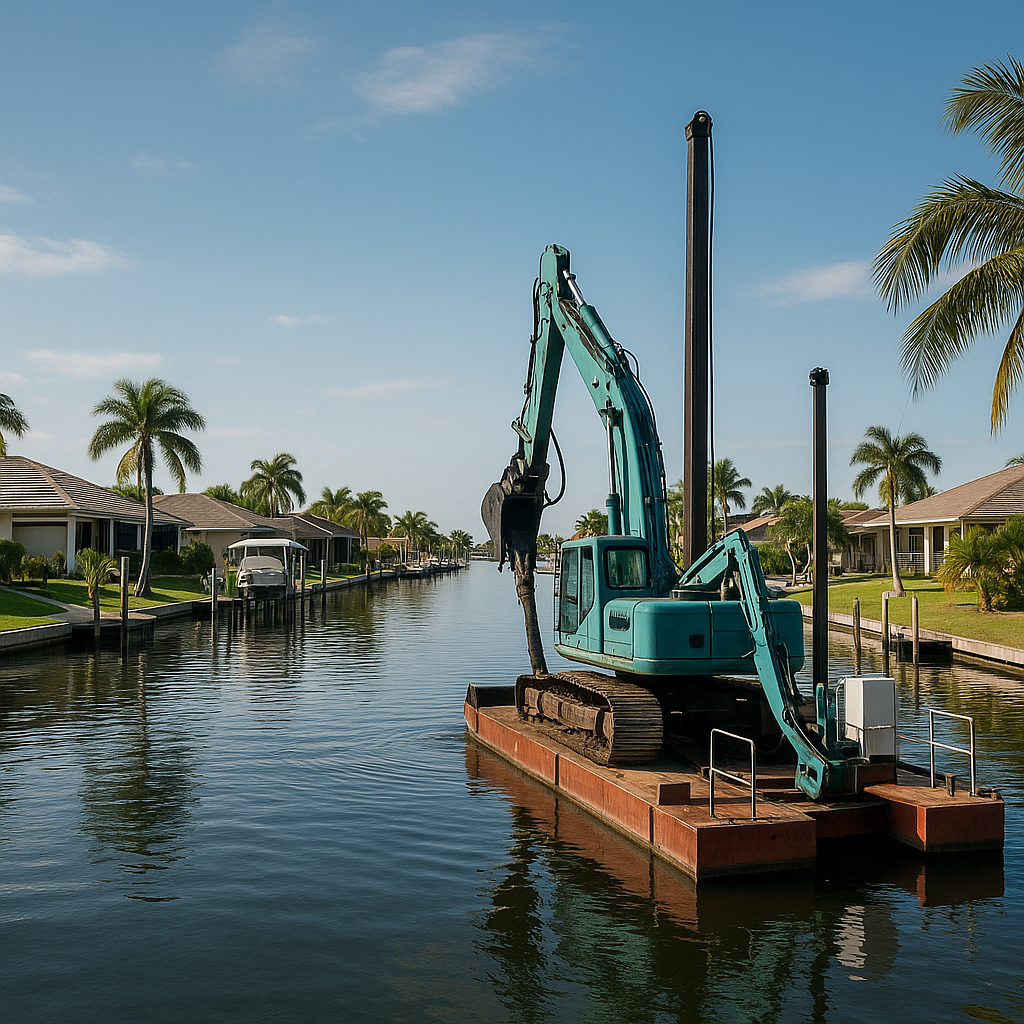
A Cape Coral waterfront owner should not assume that canal dredging is either the City’s job or the adjoining owner’s job simply because a listing calls the lot “saltwater canal” or “gulf access.” The practical answer is parcel- and work-specific: identify the exact canal reach, describe the proposed work, and ask the responsible public agency which party—if any—has responsibility for that scope of work.
That distinction matters before setting a price, accepting an offer, or telling a buyer that boating depth can be restored. Ultimate Land Deals publishes this guide for absentee owners evaluating vacant Florida land. Its published description says it purchases vacant land in Florida and provides a digital selling process, but the terms and assumptions for any individual purchase should be confirmed in the written offer.
First, separate three questions that are often blended together
The phrase Cape Coral saltwater canal dredging responsibility can hide three very different questions:
| The question | What it actually asks | What not to assume |
|---|---|---|
| Who maintains a canal? | Whether a public program, association, owner, or another party has a stated role for a particular canal reach. | That a public waterway label answers responsibility for every condition or project. |
| Who can authorize work? | Which agencies need to review a described excavation, placement of material, or related shoreline work. | That ownership responsibility and regulatory approval are the same issue. |
| Who pays for work? | Whether there is an identified project, assessment, agreement, or private scope with a known cost allocation. | That the party with authority to act will pay, or that an adjacent owner must pay. |
Keep those questions separate in conversations with buyers. “The canal needs dredging” is an observation or concern. It is not, by itself, a statement about cause, authority, permits, timing, or cost.
What counts as dredging matters
Florida DEP defines dredging as excavation in wetlands or other surface waters, or excavation in uplands that creates wetlands or other surface waters. It defines filling as depositing material—examples include sand, dock pilings, or seawalls—in wetlands or other surface waters. DEP also states that the surface waters addressed by its dredge-and-fill program include natural and artificial waters and wetlands. Florida DEP’s ERP Dredging and Filling page
For an owner, the useful takeaway is narrow: do not describe proposed canal-bottom excavation, spoil placement, seawall-related work, or dock work as a simple maintenance task without asking how the agency classifies the actual scope.
A good inquiry describes facts rather than conclusions:
“I own parcel [parcel number] adjoining [canal name or location]. I am trying to understand responsibility for a possible canal-bottom excavation or sediment-removal issue. Is there an existing public project, a stated maintenance responsibility, or a project record for this canal reach? Which office can confirm the responsible party and the review path for the work being considered?”
That wording does not presume that a project will be approved or that anyone owes the work.
Build a responsibility file before discussing value
An absentee owner does not need to solve a potential dredging issue before seeking an offer. But assembling a concise file prevents a buyer from treating an uncertain statement as a settled parcel defect—or treating a possible improvement as a guaranteed benefit.
1. Identify the location precisely
Start with the parcel number, lot and block description if available, street address, and a map image showing the water edge. Then identify the canal reach in plain language: the segment behind the parcel, the nearest intersection or crossing, and the direction of connection.
Do not rely only on a neighborhood name or a seller’s memory. Responsibility questions can turn on where a stated project boundary begins and ends.
2. Check whether there is a named City record or project
Cape Coral maintains official pages titled Canal Dredging and Canal Dredging Project. Use those City resources as starting points for a parcel-specific inquiry, not as a substitute for a confirmation tied to your canal segment.
Ask the City contact or records office for:
- the name and location of any relevant dredging project;
- a map, exhibit, or written boundary description showing whether the parcel’s canal reach is included;
- the current status of that project or record;
- the entity or department identified as responsible for the described work; and
- any written record addressing owner obligations, if applicable.
If the response is verbal, write down the date, the person or department contacted, the canal location you gave, and what records were referenced. Then ask whether the conclusion can be provided or confirmed in writing.
3. Describe the condition without diagnosing it
Photographs, dates, and observations are helpful. For example: “shallow water visible near the seawall at low tide,” “boat operator reports difficulty,” or “sediment appears to have accumulated.” Avoid turning those observations into technical conclusions such as “the canal is impassable” or “the City must dredge.”
If a buyer, contractor, or neighbor makes a stronger statement, ask what document, survey, project record, or agency response supports it.
4. Keep private work separate from public-project questions
A public inquiry about a canal reach does not answer whether a private owner can undertake work adjoining a lot. Conversely, a contractor’s opinion about a possible private scope does not establish a City maintenance duty.
Before marketing a lot with any statement about a proposed private project, ask the appropriate agency:
- Is the proposed activity considered dredging, filling, or another type of work?
- Is the described location within the agency’s review area?
- What application, review, or documentation questions should an owner address?
- Does the agency have an existing record that changes how this reach should be evaluated?
DEP explains that dredging and filling are regulated because alterations of wetlands and other surface waters can affect environmental conditions beyond the work site. Florida DEP’s dredging and filling guidance is a useful starting point for understanding why the exact work description matters. It does not answer who is responsible for a particular Cape Coral canal segment.
How this changes a sale conversation
For a waterfront lot, the responsible way to frame the issue is often: “Canal condition and any dredging responsibility have not been independently resolved; buyer should review the identified public records and agency responses.” That is more useful than advertising “dredging needed” or “dredging covered” without documentation.
If you are considering sale routes, compare how each party handles unknowns:
- Direct buyer: Ask whether the offer assumes any canal work, whether the buyer has an inspection or due-diligence period, and whether it may assign the contract. Ask what records could change the offer or closing decision.
- Real-estate agent: Ask how the listing will describe the canal condition, what documents will be shared with prospective buyers, and whether the agent recommends obtaining a written agency response before making a marketing claim.
- Independent sale: Prepare the responsibility file, state only what the records support, and give interested buyers the same material. Do not represent that a future project, access depth, approval, or cost allocation is settled when it is not.
The comparison is not about choosing a universally better route. It is about deciding who will investigate the uncertainty, how long that review may take, and whether the proposed price is conditioned on its outcome.
A short checklist for an out-of-state owner
Before pricing the property or accepting an offer, keep these items together:
- Parcel number and legal description.
- A map or aerial image marking the adjoining canal reach.
- Dated photos and a short description of what you observed.
- Links or copies of the relevant City canal-dredging page and any project material provided for your reach.
- Written agency responses, including the question asked.
- Any buyer’s written assumptions about canal condition, dredging, due diligence, assignment, and closing.
The goal is not to make an engineering or legal determination yourself. It is to avoid transferring a vague statement about dredging from one owner to the next as though it were a verified obligation.
FAQs
Is Cape Coral responsible for dredging every saltwater canal?
Do not make that assumption from the fact that a property adjoins a saltwater canal. Ask the City for the record, project boundary, and responsible party associated with the specific canal reach and proposed scope of work.
Does a shallow canal behind my lot mean I have to pay for dredging?
A shallow condition alone does not answer who is responsible or who pays. Request a parcel- and reach-specific response from the relevant public agency, and distinguish any public project question from a possible private work proposal.
Can I tell a buyer that dredging is permitted or planned?
Only if you have current written material supporting that precise statement for the relevant location and work. Otherwise, describe the issue as unverified and provide the records or contacts the buyer can use to investigate.
Does a seawall issue answer the dredging question?
No. DEP lists seawalls among examples of material that can be involved in filling, while dredging concerns excavation in the locations DEP describes. DEP’s dredging and filling guidance supports treating the proposed work scope carefully rather than assuming all waterfront work is one question.