
Cape Coral Land Assemblage Opportunities for Lot Owners
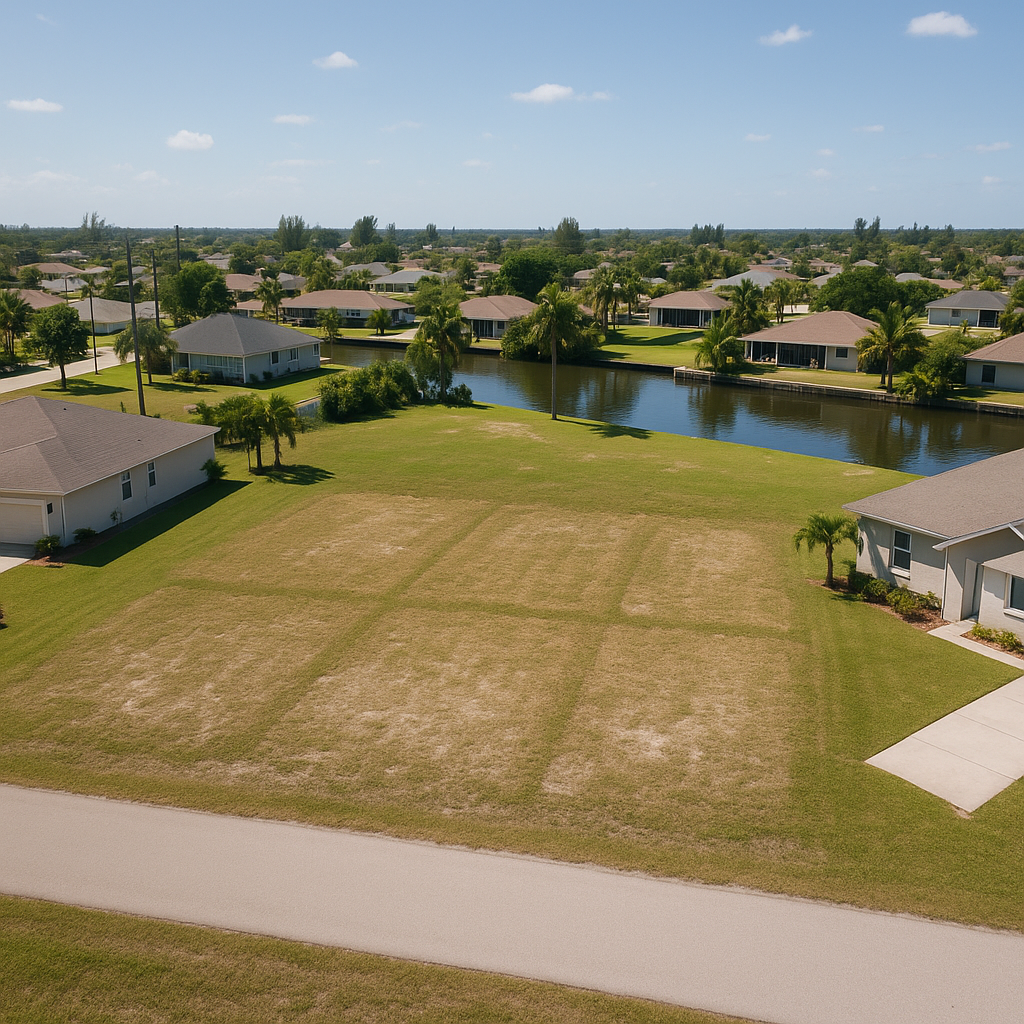
A Cape Coral land assemblage opportunity is worth exploring when neighboring owners can present a clearly connected group of parcels without assuming that a larger footprint is automatically buildable, rezoning-ready, or worth more. For an absentee owner, the practical decision is whether coordinating with a neighbor will create a more coherent buyer conversation than selling one lot alone—and whether the added coordination is justified.
Ultimate Land Deals publishes this guide for owners considering an off-market sale conversation involving one or more adjacent Cape Coral parcels. The useful starting point is not a promised development concept. It is a disciplined comparison between selling separately, approaching buyers together while retaining separate ownership, and placing the parcels under a coordinated agreement.
Start with the physical relationship, not the sales pitch
Not every nearby lot creates an assemblage. A developer or land buyer will need to understand whether the parcels actually function together.
Create a simple sketch or map image that answers these questions:
- Do the lots share a boundary, or are they separated by another parcel, a canal, a right-of-way, or another feature?
- Are they side-by-side, back-to-back, or connected only at a corner?
- Does each parcel appear to have its own street relationship?
- Is one lot materially irregular, narrow, or constrained in a way that the neighboring parcel could potentially offset?
- Are there separately owned lots between the properties that would still interrupt a larger site?
This exercise does not establish access, lot dimensions, boundary lines, or a development outcome. Its purpose is to prevent a vague claim—“these lots could be combined”—from reaching a buyer before the owners can identify exactly which parcels are being discussed.
Cape Coral’s public-facing CapeIMS page is a sensible place to begin locating the city’s GIS resource. Save the parcel identifiers and the date of any map review, then give a prospective buyer the actual parcel list rather than only a neighborhood description.
Use an assemblage worksheet before contacting a developer
A coordinated sale becomes difficult when each owner supplies different information or has a different idea of what is included. One shared worksheet can keep the discussion factual.
| Item | What each owner should provide | Why it matters in a joint conversation |
|---|---|---|
| Parcel identity | Parcel number, street address if assigned, and legal description from available records | Prevents an offer from being matched to the wrong lot |
| Ownership contact | Name of the decision-maker and preferred contact method | Shows who can evaluate terms and who may need to be involved |
| Parcel relationship | A marked map showing the intended group of lots | Defines the proposed assemblage boundary |
| Existing records | Deed, survey if available, title materials, correspondence, and prior reports | Lets a buyer identify what still needs review |
| Sale preference | Sell only if all owners participate, or consider an individual sale | Avoids a buyer assuming control it does not have |
| Timing and price process | Whether owners want separate offers, a combined proposal, or a shared minimum discussion | Reduces conflict after interest appears |
Do not add conclusions to the worksheet that the records do not support. For example, “utilities nearby” is not the same as a statement that service is available to a particular parcel, and a map view is not a substitute for a survey or title review.
Separate the three questions buyers often blend together
Owners can lose leverage when a buyer’s broad development idea is treated as proof of a parcel’s status. Keep these questions separate.
1. What is the current land-use question?
Ask the buyer to identify the current zoning designation they are evaluating and the use or layout they intend to investigate. Cape Coral maintains a City Planning zoning page; use the city’s planning resources to direct parcel-specific zoning questions to the appropriate city staff.
A buyer’s intended use is not confirmation that the use is allowed. Likewise, an owner should not describe an assemblage as approved for a particular project merely because similar development exists nearby.
2. What is the utility-extension question?
Utility planning can be relevant to a buyer’s underwriting, but it should remain a separate diligence item. The City provides a Future Utilities Extension Area page for this subject. An owner can save the result of the relevant review and ask the buyer what additional utility questions it needs answered.
Useful questions include:
- Is each identified parcel part of the same area shown in the city resource?
- What does the buyer need to confirm directly with the City?
- Is the buyer’s offer dependent on its own review of utility-related matters?
- Which assumptions, if any, are reflected in the buyer’s price?
Avoid turning the city page into a prediction about timing, availability, assessments, installation, or cost. Those matters require parcel-specific confirmation.
3. What is the control question?
A buyer may need every parcel in the proposed group, only certain parcels, or a larger group than the owners initially expected. That is a negotiation issue, not a mapping issue.
Before anyone signs, determine whether the buyer is requesting:
- Separate agreements with each owner;
- A proposal conditioned on acquiring all identified parcels;
- A contract that allows the buyer to assign its interest to another buyer; or
- A period to investigate the property before deciding whether to close.
Read the written agreement closely and ask the buyer to explain conditions, inspection or diligence rights, assignment language, deposits, closing responsibility, and what happens if another owner declines. The appropriate answer may differ for every proposed assemblage.
Choose a coordination model that matches the owners’ trust level
There is no single best way for adjacent owners to approach a buyer.
Independent sales with a shared introduction work when owners want to remain fully separate. A buyer receives one coordinated map and contact list, but negotiates with each owner individually. This is often the cleanest option when price expectations differ. Its drawback is that a buyer may not pursue the group unless it can obtain enough parcels.
A coordinated all-or-none discussion works when every owner agrees that the collection only has value to them as a group. The owners can ask a buyer to state clearly whether its proposal depends on all parcels. This can improve clarity, but it requires early agreement among neighbors about communication and expectations.
One owner sells without waiting for the group may be sensible where there is no reliable neighbor alignment. It gives that owner control over timing, though it may leave the buyer to solve the rest of the assemblage separately.
Do not let the word “assemblage” obscure the basic tradeoff: collective leverage can require collective patience. If one owner needs a quick decision while another wants a long marketing process, a joint strategy may create more friction than value.
Compare the selling routes by who must do the coordination
For an assemblage opportunity, the selling route changes the work an owner retains.
| Route | Who commonly coordinates the outreach | Questions to ask before proceeding |
|---|---|---|
| Direct land buyer | Buyer and owners | Does the offer depend on other parcels? Is assignment permitted? What diligence conditions are written into the agreement? |
| Land-focused agent | Agent, subject to the listing terms | Will the agent market individual lots, the group, or both? How will separate owner decisions be handled? |
| Owner-led outreach | The owners | Who sends the parcel packet, receives offers, and communicates with neighbors? How will competing offers be compared? |
A direct buyer may be appropriate for an owner who prefers a defined written proposal and fewer marketing tasks. An agent may be useful when owners want broader exposure and help managing buyer communications. Owner-led outreach provides control but requires the owners to organize records, boundaries, and responses themselves. Compare the written economics and obligations, not just the headline price.
Send buyers a precise invitation, not a development claim
A short outreach note can create interest without overstating the opportunity:
We are evaluating a coordinated sale of the attached adjacent Cape Coral parcels. The packet identifies the parcel numbers and the owners willing to discuss a sale. Please advise which parcels your interest requires, the use or layout you would need to review with the City, and whether your proposal would be contingent on acquiring all or only part of the group. Please identify any diligence, assignment, or closing terms you would include.
That wording invites a serious response while leaving zoning, utilities, title, boundaries, and project feasibility for the responsible review.
Resources
- Cape Coral City Planning: Zoning
- CapeIMS
- Find Your Future Utilities Extension Area
- Ultimate Land Deals
FAQs
Do adjacent Cape Coral lots automatically have more value together?
No automatic conclusion follows from adjacency. A combined presentation can give a buyer a larger, more coherent area to evaluate, but the buyer still needs to review the exact parcels, its intended use, and the conditions in its offer.
Must neighbors deed their lots together before seeking offers?
Not necessarily. Neighbors can share a parcel map and invite proposals while retaining separate ownership. Any decision to use a coordinated contract structure should be understood by each owner before signing.
What should an absentee owner do first?
Identify the exact parcel group, collect the records already available for your own parcel, and decide whether you will consider a sale only with the neighboring lots or independently. Then ask prospective buyers to state precisely which parcels their proposal requires.
Can a buyer promise that an assemblage will support a particular project?
Treat any proposed project as a buyer’s concept until the relevant city review and other diligence are complete. Ask the buyer to distinguish the facts it has verified from assumptions it is still evaluating.