
Buy Vacant Land Hernando County Florida: Compare Options
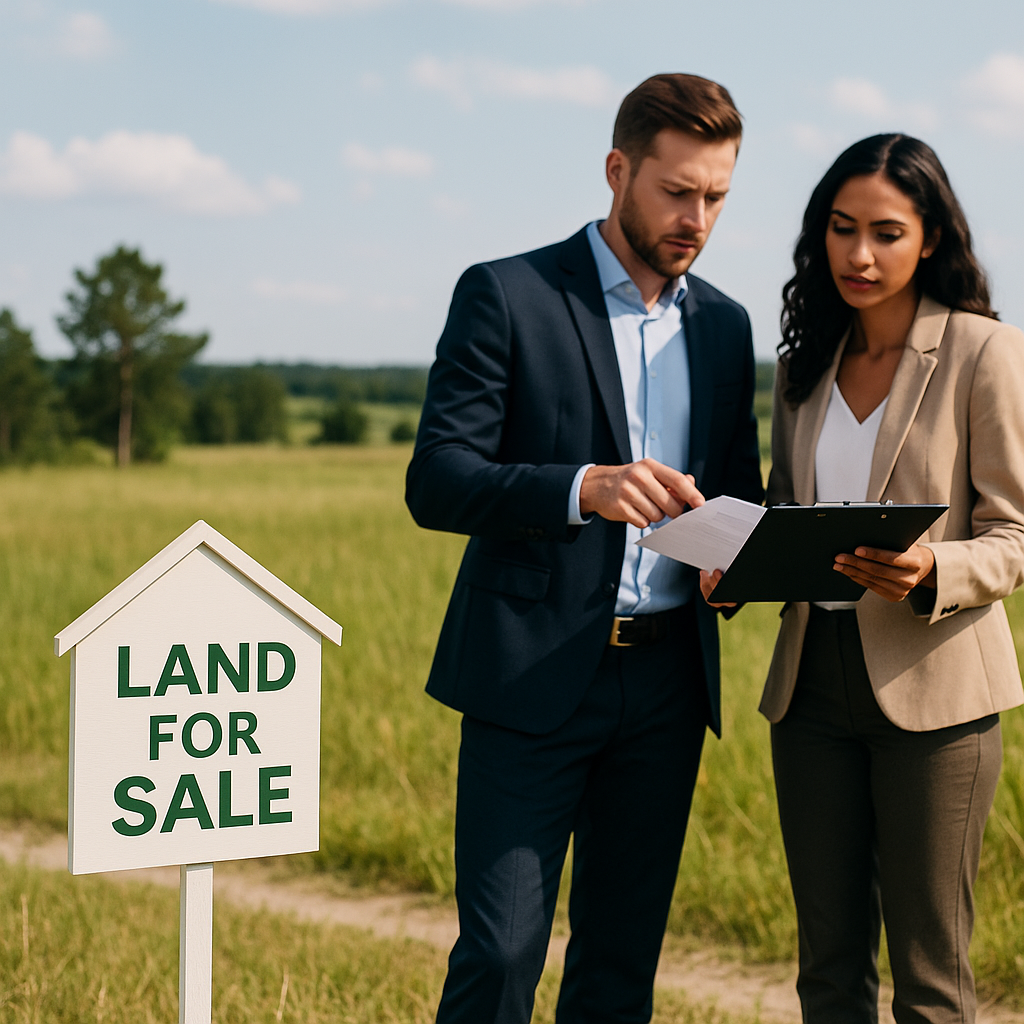
If you want to buy vacant land in Hernando County, Florida, compare parcels by the evidence you can obtain—not by whether the lot is listed, off-market, inexpensive, or near existing homes. A listed parcel may come with a survey, utility information, or seller disclosures; an off-market owner may offer a cleaner price conversation but leave more questions for you to investigate. Neither route establishes that a particular home, driveway, or utility plan will work.
For an absentee owner considering an offer, the same comparison matters in reverse: a credible buyer should be able to say which parcel facts it has reviewed, which facts remain open, and which due-diligence responsibilities appear in the written agreement. Ultimate Land Deals states that it purchases vacant land across Florida through a digital cash-offer process; its specific purchase terms should be confirmed in any written offer. About Ultimate Land Deals
The useful comparison: information already supplied versus information you must create
Do not assume a listed lot is safer or an off-market lot is a bargain. Start by making two columns: documents and confirmations in hand and questions still requiring a source, inspection, or agency response.
| Decision area | A listed parcel can offer | An off-market parcel can offer | What the buyer still needs to verify |
|---|---|---|---|
| Parcel identity | Marketing address, parcel number, map, or prior documents | Owner-provided tax notice, deed, or parcel information | That the documents, legal description, map location, and intended parcel all match |
| Buildability | A listing description or past buyer materials | Direct access to the owner’s history and documents | Zoning, dimensions, easements, buffers, site constraints, and the requirements for the intended project |
| Access | Photos, road descriptions, or a map pin | A chance to ask the owner what access they have used | The legal basis for access, the location of any easement, and who is responsible for any needed work |
| Utilities | A utility statement, nearby-service reference, or prior correspondence | The owner’s bills, correspondence, or prior inquiries, if any | Whether service is available to this specific parcel, what extension or connection questions remain, and which provider should answer them |
| Seller and ownership trail | Listing-agent contact and seller disclosures | Direct communication with the person presenting the property | The seller’s authority to convey and any title or closing issues identified during the transaction |
| Timing and price | Public competition and a defined listing process | Potentially less competition and a direct negotiation | The written price, deposits, contingencies, assignment rights, closing date, and allocation of open costs or issues |
The table is not a scorecard. An owner with a current survey, documented prior work, and organized correspondence may provide a stronger starting file than a sparse online listing. Conversely, a well-marketed parcel can be easier to compare against nearby alternatives. The deciding factor is what can be supported for the specific tract.
Screen the parcel before negotiating the story
A seller may describe a property as residential, buildable, accessible, or near utilities. Treat each description as a lead for a separate check, not as a conclusion.
1. Establish the exact parcel first
Collect the parcel number, legal description, approximate acreage stated in the available records, and a map image. Then search the County’s PropertySearch using the information you have. The tool allows searches by owner name, location, and real-property parcel fields. Hernando Building Division PropertySearch
This is especially important when an owner lives elsewhere, inherited the land, or uses an address that does not describe a vacant tract precisely. A road name, subdivision name, or nearby house is not enough to assume you are evaluating the right lot.
For a direct owner conversation, ask: Which parcel number is being offered, and what document does the owner rely on to identify it? If the answer changes between a tax notice, map, and proposed contract, stop and reconcile the difference before spending heavily on further review.
2. Separate zoning from a buildable-envelope conclusion
Hernando County says zoning districts define land uses and that each district has its own permitted uses, setbacks, and dimensional requirements. The County directs users to identify the zoning district through the Property Appraiser’s General GIS Map with the zoning layer activated. It also cautions that platted lots can have additional easements or buffers beyond the zoning-district setbacks. Hernando County Zoning Districts
That distinction changes how you evaluate both listed and off-market land:
- Zoning label: What district is shown for the parcel?
- Parcel geometry: Where are the lot lines, and what dimensions need confirmation?
- Additional mapped or recorded limitations: Are easements, buffers, or project-specific rules relevant?
- Intended use: What exact structure, improvement, or use are you considering?
Do not convert a zoning label into a promise that a particular plan fits. Hernando County notes that Planned Development Project districts can have customized uses and setbacks and says buyers should contact the Zoning Office directly to confirm requirements for a PDP property. Hernando County Zoning Districts
A practical buyer question is: What would the County need from me to discuss this intended use at this parcel? The Planning & Zoning department lists zoning verification and flood-zone verification among its services and provides Planning & Zoning inquiries at 352-754-4057. Hernando County Planning & Zoning
3. Treat road proximity and utility proximity as different questions
Aerial imagery can help you locate a parcel and see apparent roads, cleared areas, and nearby development. It cannot, by itself, answer whether the parcel has legally sufficient access or whether a provider will serve it.
For access, ask for the documents or map information supporting the route to the parcel. Ask where an easement is shown, whether the route crosses another tract, and whether the proposed contract identifies an access-related contingency or a responsibility for unresolved issues.
For utilities, avoid asking only, “Are utilities nearby?” A better set of questions is:
- Which utility or service provider is being referenced?
- Is the statement based on a parcel-specific response, an existing account, a map, or a nearby property?
- What service is actually being discussed—water, sewer, electricity, or something else?
- What remains for the buyer to confirm before relying on that statement?
This approach avoids a common pricing error: paying as though a service is confirmed when the available information only shows development in the area.
Decide how much diligence belongs before contract
The right level of investigation depends on what you would lose if an assumption is wrong.
For a low-complexity holding purchase, you may prioritize accurate parcel identity, seller authority, zoning information, and a clear written contract, then reserve project-specific questions for later.
For a near-term construction or development purchase, the parcel file should be deeper before you treat the land as comparable to finished-lot inventory. The intended use, access documentation, dimensional limitations, and provider or agency responses deserve more attention.
For an off-market purchase with a large information gap, do not solve that gap with optimism. Either obtain more information, structure appropriate written diligence rights, revise the price for the uncertainty, or pass on the parcel.
The same discipline helps an absentee seller assess an offer. A buyer who identifies open issues may be more useful than one who makes broad claims about value without asking for the parcel number, zoning, or supporting documents.
Compare written offers on responsibility, not just price
When an owner receives a direct offer, the highest stated amount is not automatically the clearest deal. Compare each proposal line by line:
- Exact parcel or legal description covered by the offer
- Purchase price and any stated deposit
- Inspection or due-diligence period and what permits termination
- Whether the buyer can assign the contract, and under what conditions
- Who selects or coordinates closing
- Treatment of title, access, utility, zoning, or other unresolved questions
- Closing deadline and any extension language
- Documents or signatures the seller must provide
For buyers, use the same list when making an off-market offer. Clarity protects both sides from discovering late in the process that they were pricing different assumptions.
A compact pre-offer file
Before you buy vacant land in Hernando County Florida—or respond to a purchase proposal—create one folder containing:
- Parcel number, legal description, and saved map reference
- Owner-name and parcel-search results
- Zoning district information and notes from any County inquiry
- Survey, plat, easement, or prior-title materials available to you
- Access and utility correspondence, labeled by source and date
- Photos and the date they were taken
- The proposed contract and a list of unanswered questions
Label assumptions plainly. “Appears near paved road” is not the same as “access documentation reviewed.” “Utility lines observed nearby” is not the same as “service confirmed for this parcel.” Those distinctions are where listed and off-market comparisons become genuinely useful.
Resources
- Hernando Building Division PropertySearch
- Hernando County Planning & Zoning
- Hernando County Zoning Districts
- Ultimate Land Deals
FAQs
Is an off-market Hernando County lot automatically cheaper than a listed lot?
No. The asking or offered price does not establish the cost of unresolved access, utility, zoning, title, or site questions. Compare the parcel evidence and the written terms before deciding whether one route is more attractive.
Can I rely on a zoning district to decide a house will fit?
No. Hernando County states that districts have their own uses, setbacks, and dimensional requirements, and that platted lots can have additional easements or buffers. Confirm the parcel-specific requirements and your intended use with the appropriate County office. Hernando County Zoning Districts
What is the first public record search to run?
Start by matching the parcel information you have against the County’s PropertySearch, which supports owner-name, location, and real-property searches. Use that result as an identity check, then pursue the specific documents and confirmations needed for your planned use. Hernando Building Division PropertySearch
What should an absentee owner ask a direct land buyer?
Ask which parcel the offer covers, what diligence remains, whether assignment is permitted, what closing path is proposed, and how unresolved issues are handled in the agreement. Request answers in writing rather than relying on an informal summary.